Uriah Heep
David CopperfieldUriah Heep’s defining strategy is to present ambition as humility. First encountered as a young clerk in Mr. Wickfield’s household, he makes himself indispensable, wins a place in the legal partnership, and seeks to bind Agnes Wickfield to him. The contrast between his meek public manner and his private exercise of power gives his rise its menace: once Mr. Micawber exposes the fraud behind the partnership, Uriah’s practiced deference cannot protect him from demands for the return of what he has taken.
Identity and First Impressions
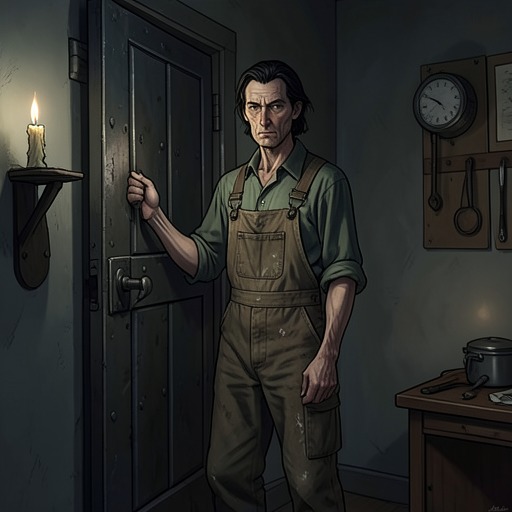
Uriah first appears at Mr. Wickfield’s house as a red-haired youth of about fifteen, though David’s retrospective account notes that he seemed older. He wears decent black clothing and has a close-cropped head; his unusual appearance makes him instantly recognizable, but his social position is more consequential. Uriah is an employee in the household and legal office, not yet a partner, and he says that he has been with Mr. Wickfield for nearly four years. His father has died, and he presents the articles that could advance his legal career as a generous opportunity beyond the limited means of his mother and himself.
The office gives Uriah a position from which to observe both business and visitors. David sees him copying a document in the small circular room, intermittently looking up from the paper to watch him. On another occasion, David finds him reading attentively in the office, marking his place before putting the book away. These are ordinary clerical activities, but the narrative associates them with watchfulness: Uriah is placed among papers and records, listening and looking while others may underestimate him.
His repeated professions of lowliness shape how he explains his dependence on Mr. Wickfield and his gratitude for professional advancement. Yet the manner does not amount to self-effacement. David notices Uriah’s bodily contortions when he expresses enthusiasm, and the performance draws attention to itself even as it claims to be modest. The gap between Uriah’s public posture and his appetite for influence becomes the central pattern of his character.
Advancement and Control
Uriah’s rise takes place through his growing influence over Mr. Wickfield. Agnes later explains to David that Uriah has studied her father’s weaknesses, encouraged them, and used them until Mr. Wickfield is afraid of him. Her account recasts the clerk’s apparent dependence: the young employee who seemed to owe everything to his employer has learned how to make the employer dependent on him. When David hears that Uriah and Mr. Wickfield have become partners, he recognizes the change as alarming rather than reassuring.
The partnership gives Uriah a formal standing in the business, but the arrangement described by those around him is increasingly unequal. David sees Mr. Wickfield retain his former appearance and bearing while submitting to Uriah’s authority, a reversal that makes the change in their positions especially painful. Uriah, meanwhile, presents himself to Betsey Trotwood as ready to help in the family’s difficult circumstances, extending an offer on behalf of his mother, himself, and the firm. His courtesy lets him approach even a hostile household as if he were merely offering service.
Uriah also seeks to make himself influential in David’s affairs. When Mr. Micawber and Uriah are seen walking together, Uriah appears pleased by the association, while Mr. Micawber treats the connection as an occasion to extend his own patronage. Mr. Micawber later tells David that he has visited the Heeps and shared brandy-and-water at their home. David worries that Micawber may have disclosed private information, though he avoids questioning him for fear of causing offence to either him or Mrs. Micawber. The episode shows how Uriah’s social reach grows through apparently friendly contact as well as through business.
Pursuit of Agnes Wickfield
Uriah’s ambitions are not confined to the office. He tells David that he has loved Agnes for years and speaks of his attachment in extravagant terms, while preserving the posture of a humble confidant. His declaration makes the personal object of his designs explicit: he regards marriage to Agnes as a possible extension of the position he has acquired in her father’s household. His language of devotion sits uneasily beside his effort to control the circumstances around her.
He later explains his jealousy as a natural consequence of love, describing the need to keep watch over the person he loves. That explanation clarifies the possessive logic beneath the show of tenderness. Uriah does not present his surveillance as domination; he presents it as anxious affection. In the surrounding plot, however, Agnes has already identified how he exploits her father’s vulnerabilities, and the proposed marriage belongs to the same larger effort to secure power within the Wickfield household.
David’s departure from the old house marks a further change in their relationship. Agnes had filled the home with her influence, and leaving it makes David feel that his former life there has ended. Uriah is so ready to assist with the packing that David suspects he is pleased to see him go. The moment is small, but it places Uriah in the household at the point when David loses his place in it, and makes his helpfulness seem inseparable from the advantages he may draw from other people’s departures.
Exposure and Restitution
Uriah’s authority reaches its fullest point when he controls the firm nominally known as Wickfield and Heep. Mr. Micawber, once employed by him as a confidential clerk, eventually breaks with that position and publicly identifies the firm’s wrongdoing. His accusation describes Uriah as the real force behind the business and names him as a forger and cheat. The exposure overturns the appearance of a partnership between equals: the records and transactions, Micawber alleges, have been wielded by Uriah alone.
When David and his companions visit Uriah after the accusation, Uriah’s response briefly betrays surprise before he resumes his familiar fawning manner. The return of that manner cannot undo what has been revealed. Thomas Traddles answers the situation with a practical demand: Uriah must restore the proceeds of his rapacity, and the partnership books, papers, accounts, and securities must remain in their possession. The response shifts the conflict from exposure to material accountability, insisting on documents and recovery rather than accepting the performance of regret or humility.
The later visit to Uriah in prison confirms the reversal in his circumstances. David has not seen him since the blow and is surprised to find him there; Uriah momentarily reacts to the visitors, then returns to the habitual submissiveness that had once helped him gain access to others. His downfall does not erase the damage or resolve it through a change of character. The account instead emphasizes the difference between the manners he can perform and the evidence of the financial wrongdoing that Traddles requires him to answer for.
Narrative Role
Uriah’s story joins private relationships to professional and financial power. The same strategy recurs across settings: he presents dependence as gratitude, intrusion as helpfulness, and surveillance as affection. His advancement depends on other people accepting these appearances, while Agnes’s warning and Mr. Micawber’s eventual testimony expose the distance between them and the underlying exercise of control.
The legal office is therefore more than a backdrop to his rise. Uriah advances through clerical work, obtains articles through Mr. Wickfield’s support, becomes a partner, and ultimately faces demands centered on the firm’s books, papers, accounts, and securities. Those records make the hidden workings of the business answerable to others. The contrast between his elaborate humility and Traddles’s plain insistence on restoration gives the reversal its force: Uriah can continue to act meek, but the claims against him must be settled in concrete terms.