Uriah Heep's performed humility
David CopperfieldUriah Heep’s performed humility is a sustained social performance: he repeatedly describes himself and his family as lowly, refuses advantages as though accepting them would be presumptuous, and turns deference into a way of conducting conversation. In David Copperfield’s account, the performance is more than a verbal habit. It governs how Heep presents his origins, his education, and his prospects, while helping him gain David’s confidence and personal information.
The language of umbleness
Heep’s defining word is a deliberately repeated version of humble. When David asks whether he is a great lawyer, Heep answers, “Oh, no! I'm a very umble person.” He elaborates that he is “the umblest person going,” and extends the claim from himself to his mother, their home, and his father’s former occupation as a sexton. His father has died, but Heep describes him as now “a partaker of glory”; the account of the family’s past is folded into the same formula of gratitude and low position.
The repetition makes humility sound less like an occasional courtesy than a complete account of who may speak, learn, and advance. Heep calls his circumstances humble, insists that he has much to be thankful for, and repeatedly attributes his opportunities to other people’s kindness. His mother echoes the language, declaring that the family has been and will remain humble, and that they know their station and are thankful in it. Their agreement makes the posture familial as well as individual: in David’s visit, mother and son present one consistent account of their place in society.
Origins and prospects
Heep locates his position in concrete circumstances. He has been with Mr. Wickfield for nearly four years, beginning a year after his father’s death. He explains that Mr. Wickfield intends to provide his articles, an opportunity that would otherwise lie beyond the humble means of Heep and his mother. He presents professional advancement not as an entitlement or a result of his own qualifications, but as a benefaction for which he is obliged to be grateful.
The exchange about a possible partnership makes the tension in this language especially visible. David suggests that Heep might one day become Mr. Wickfield’s partner, even imagining the firm called Wickfield and Heep. Heep shakes his head and says he is much too humble for that. The scene establishes both the prospect of advancement and Heep’s emphatic refusal to claim it openly. His deference does not erase the subject of professional position; it allows the subject to be raised while Heep appears to disown ambition. He describes Mr. Wickfield as an excellent man and presents his own place in the household and business as a source of gratitude.
Learning as a disputed privilege
Heep’s performance also shapes his relation to education. While walking with David, he explains that the Latin expressions and terms in Tidd’s Practice are difficult for a reader of his humble attainments. David offers to teach him Latin, but Heep declines, insisting that he is too humble to accept. He says that people already tread upon him in his lowly state and that possessing learning might outrage their feelings. In this account, education becomes something he must refuse in order to respect the social expectations he attributes to his betters.
Heep turns the refusal into a general rule for advancement: a person like himself should not aspire, and if he is to get on in life, he must do so humbly. When David challenges this reasoning and offers to teach him other things, Heep replies that David is not humble himself and therefore cannot judge what is suitable for those who are. He says he will not provoke his betters with knowledge. The exchange makes his modesty active rather than passive: it rejects David’s offer, claims authority to define what people of Heep’s position may learn, and leaves the offerer cast as someone unable to understand that position.
Courtesy and the extraction of confidence
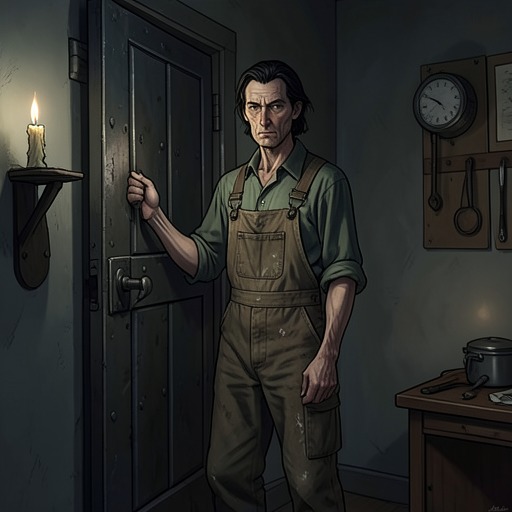
The performance extends from speech into the arrangement of Heep’s visit with David. Heep invites him to the family’s low, old-fashioned home, where David meets Mrs. Heep. She apologizes for kissing her son, explaining that even people of their lowly station have natural affections. The room is a decent half-parlour and half-kitchen, with a table set for tea, a kettle boiling, a chest of drawers with a writing top, Heep’s blue bag, and books headed by Tidd’s Practice. David does not recall any single object as pinched or bare, but remembers that the place as a whole had that spare quality. The scene gives the repeated language of lowliness a material setting without presenting the family as lacking ordinary domestic furnishings or affection.
At tea, Mrs. Heep gradually moves nearer to David while Heep positions himself opposite; together they offer him the best food available and guide the conversation through aunts, parents, and fathers-in-law. David speaks about his own family, but stops short of discussing his stepfather because his aunt has advised him to keep silent on that subject. In retrospect, he recognizes that the two hosts nevertheless drew out information he did not intend to disclose. His youthful frankness had led him to feel like the patron of his respectful entertainers, although they had managed the conversation and obtained what they wanted to know. The courtesy creates an imbalance: David experiences himself as generous and in control, while the scene shows Heep and his mother steering the exchange.
Performance and narrated appearance
David’s observations emphasize that Heep’s humility is staged through both words and bodily presentation. His pointed nostrils expand and contract conspicuously, while his eyes hardly twinkle; he rubs his palms together and stealthily wipes them on his handkerchief. As he makes his claims about refusing learning, he shakes his head and writhes modestly, his mouth widening and the creases in his cheeks deepening. David also compares his seated expression to a carved face on a beam outside his window. These details do not disclose Heep’s private thoughts, but they make the performance visible as a repeated, physical display accompanying the language.
The episode’s irony lies in the distance between David’s initial reading of the encounter and his later recognition of how it worked. He thinks Mrs. Heep agreeable and feels honored as a guest; he even takes credit for being confidential. Yet the repeated declarations of humility, the staged refusals of opportunity, and the hosts’ coordinated questions turn deference into a means of managing appearances and eliciting trust. The passage therefore presents Heep’s umbleness not simply as a claim about social rank, but as a practiced way of speaking and behaving through which he can discuss advancement, resist instruction, and draw information from someone who believes he is only being gracious.