Windsor Terrace
David CopperfieldWindsor Terrace is the City Road home where David Copperfield lodges with Mr. Micawber and his family during his childhood employment in London. The house’s faded gentility, crowded rooms, and eventual emptying under financial pressure make it both a temporary refuge for David and a domestic measure of the Micawbers’ precarious position.
Address and Arrival
Mr. Micawber gives Windsor Terrace, City Road, as his address when Mr. Quinion arranges for him to receive David as a lodger. Knowing that the boy might lose his way through London, Mr. Micawber meets him after work and points out the streets and the shapes of corner houses so he can retrace the route the next morning. The walk turns an unfamiliar city into a journey David can manage, even as his new life is defined by work and dependence on others.
The house is shabby, but, like Mr. Micawber himself, makes as much show as it can. That mixture of outward polish and material strain establishes the character of the place before David has seen its crowded interior. He has been taken on at Murdstone and Grinby’s for a wage he remembers uncertainly as six or seven shillings a week; his first pay also has to cover the cost of carrying his trunk and his dinner. Windsor Terrace is therefore not an independent home for him but a paid lodging secured within the limits of a child’s small earnings.
The Micawber Household
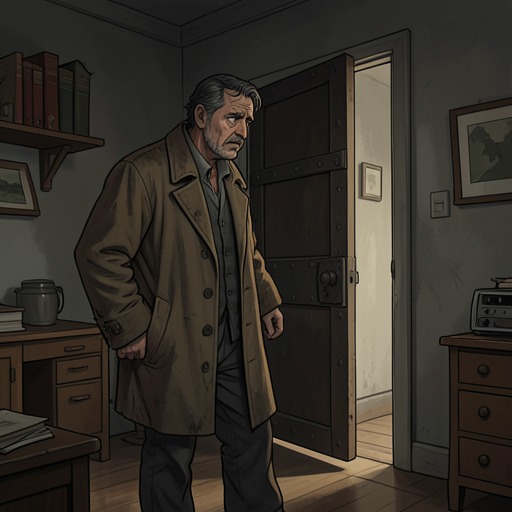
Inside, the first floor is unfurnished, and the blinds are kept down to mislead the neighbours. Mrs. Micawber sits in the parlour nursing one of the twins; David observes that he rarely sees both babies away from her at once. The household also includes Master Micawber, Miss Micawber, and a young servant who says she came from St. Luke’s workhouse. David’s own room is at the back of the top floor: close, scantily furnished, and marked by a stencilled pattern that his imagination sees as a blue muffin.
The arrangement is practical as well as intimate. Mrs. Micawber explains that her husband’s difficulties have made taking a lodger necessary, despite what she had expected before marriage. David is brought into the family’s daily life while he continues to work at the warehouse, and his account registers both the family’s affection and its lack of means. The lodging offers companionship, but it does not shelter its occupants from the debts that govern the household.
Debt and Displacement
Mr. Micawber’s financial crisis ends in his arrest and removal to the King's Bench Prison. Afterward, the household furniture is sold, with only a bed, a few chairs, and the kitchen table left behind. Mrs. Micawber, the children, the servant, and David make their camp in the emptied house’s two parlours, living there day and night until she decides to move into the prison, where Mr. Micawber has obtained a room.
David carries the key back to the landlord, who is glad to have it returned. The beds go to the prison, while David’s own room is hired outside its walls nearby; the servant is also given inexpensive lodgings in the neighbourhood. The separation is not immediate: David says the household has become too accustomed to one another in their troubles to part. Windsor Terrace thus gives way to a scattered arrangement shaped by arrest, sale, and the cost of remaining together.
Narrative Significance
The house links David’s child labour to the Micawbers’ debt-bound domestic life without making their hardships identical. He remains employed at Murdstone and Grinby’s and continues to feel degraded and lonely, while the Micawbers’ crisis turns their home into an emptied shell and then transfers much of family life to prison rooms. Windsor Terrace’s brief promise of shelter is consequently inseparable from its instability: it can receive a lodger and hold a household together for a time, but it cannot protect them from the financial pressures that displace them.