
Storytelling as Cultural Memory
Day of the DeadThis thread traces how traditional stories preserve communal knowledge, give grief a language, and shape what the living pass on.
increasing Bearing strength in each event
 decreasing
Bearing strength in each eventdecreasingElder Brother Finds Beauty
The Beauty That Outlasts Change
A story beneath the cottonwoods
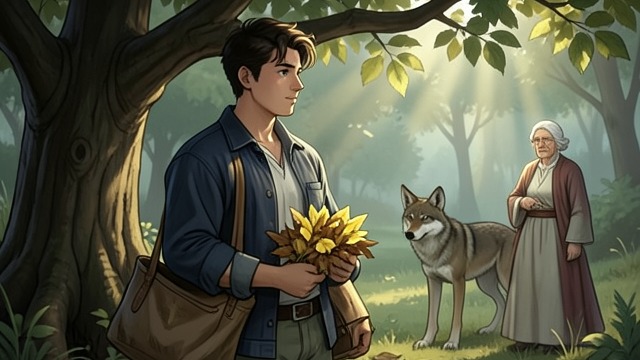
The opening story places I’itoi beneath yellowing cottonwoods, watching children play while age and fatigue gather around an old woman and an old coyote. Their presence makes him consider how living things change: children grow old, animals weaken, and flowers fade.
Creation through attention
I’itoi combines yellow leaves, shadows, sunlight, brown leaves, flowers, and blue sky in a bag. When he opens it, the pieces become butterflies, beautiful creatures that do not age as other things do. Yet the story later reveals that he fell asleep before giving them a song.
The tale makes beauty a creation of careful attention, but it also accepts that no creation is complete. Its mixture of joy and limitation offers the novel a traditional vocabulary for lives marked by tenderness, change, and loss.
The Crying Cradles
Leaves That Hold the Lost
A mother’s grief
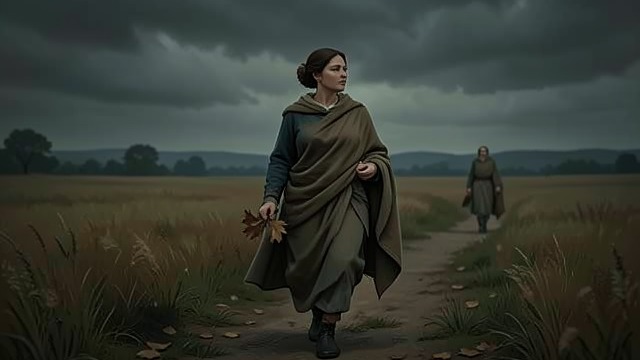
The embedded story follows a Tohono O’odham mother whose treasured baby grows weaker and dies despite her care. The mother keeps her grief inside, then wanders from her home carrying the blanket that had wrapped her child.
Loss becomes a shared burden
At the water, she hears what sounds like babies crying, but finds only dry leaves curled into empty cradles. I’itoi explains that the dead children are safe with him and asks whether the mother is different from all other mothers. She returns to her village able to smile, while her faraway gaze testifies to an encounter that has altered her.
The story does not erase bereavement or make the child’s death less real. Instead, it gives sorrow a communal and spiritual setting, allowing the mother to return to the living without pretending that nothing happened.
Coyote Guards the Water
A Trickster’s Gift
Water and welcome
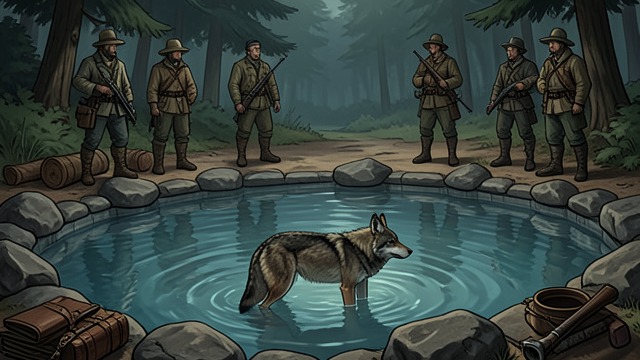
In the Coyote story, hunters discover a pool guarded by Coyote, who claims that other coyotes live beneath the water and asks them not to harm the people. The hunters are puzzled, but they accept the water while Coyote keeps up his protective performance.
Generosity mixed with mischief
Later, an old man brings a baby coyote to the pool, drawing Coyote away from his hiding place. The village takes control of the water, while Coyote runs off laughing at how long his trick had kept the hunters from it.
The tale treats survival as a matter of ingenuity, cooperation, and humor rather than simple virtue. It also makes place part of memory: Ban Thak’s name remains tied to Coyote’s rock and the story of who guarded the water.
Tradition as Inheritance

Knowledge Passed Forward
A living practice
After Gabe Ortiz dies, Lani receives Looks at Nothing’s medicine pouch, an object that carries the memory of two medicine men and their trust in her. Her grief is personal, but the gift also places her inside a longer history of teaching and responsibility.
The next student
When Delia gives birth in the back seat of Diana Ladd’s car, Lani recognizes that the patient instruction she received from Gabe and Nana Dahd was preparation for her to help someone else. Looking at the newborn, she believes he may become a willing student of the traditions his father’s generation did not pursue.
The moment turns inheritance into action rather than possession. The pouch, stories, and practical knowledge matter because they can be carried forward, adapting to new circumstances without losing their connection to the people who taught them.
A Day for the Dead
Remembering the Uncounted
A detective’s measure of justice
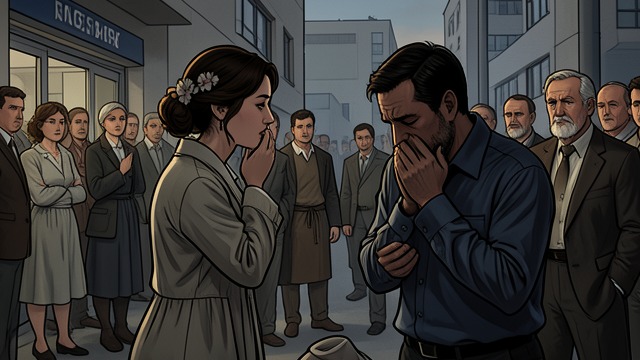
While waiting outside the hospital after the Strykers’ crimes are exposed, Lani hears Brian Fellows mourn the girls whose disappearances went unreported. Many had been treated as though their lives did not warrant investigation, and their killers had therefore been able to act for years.
The day they were owed
Lani answers that someone did care: Brian and Brandon Walker pursued the cases and brought the victims’ stories into the open. Brian calls the result a “day of the dead,” a limited form of recognition in place of the trials and justice the murdered girls never received.
The novel does not confuse remembrance with repair. Its final emphasis is that naming the dead and investigating what was done to them challenges the indifference that enabled their erasure, even when it cannot restore their lives.
At the opening of the narrative
As Delia’s labor begins at the funeral feast
During the account of the ancient village of Ban Thak
After Lani returns to Sells in April 2002
At the close of the novel
