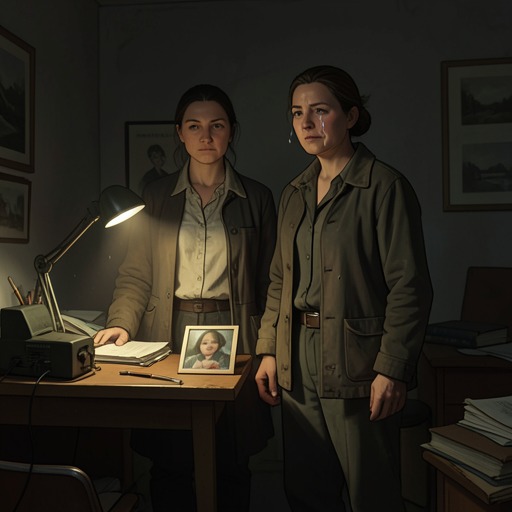
Andrew Philip Carlisle
Day of the DeadAndrew Philip Carlisle is a creative-writing professor at the University of Arizona whose criminal connection to Garrison Ladd shaped both Brandon Walker’s early homicide work and his personal history with Diana Ladd. Carlisle was Garrison’s accomplice in a homicide investigation; after a plea bargain sent Carlisle to prison, his release and pursuit of Diana led to a dangerous confrontation and drew Brandon back into her orbit. The case also left Brandon dissatisfied with what he regarded as an unduly lenient resolution.
Identity and Background
Carlisle worked as a professor of creative writing at the University of Arizona. In Brandon Walker’s recollection of an earlier homicide investigation, the trail led first to Carlisle and eventually to Garrison Ladd, one of Carlisle’s star pupils. Garrison, Diana Ladd’s first husband, was treated as a suspect as the investigation developed. Carlisle’s significance therefore extended beyond his own prosecution: he connected an academic relationship to a homicide case and to the lives of the people caught up in it.
Homicide Case and Imprisonment
The earlier case followed the murder of Gina Antone, a young Indigenous woman killed just off the reservation. Because the killing occurred off reservation and the suspected perpetrators were Anglos, the investigation fell under the Pima County Sheriff's Department. Brandon’s account says the trail led to Carlisle and then to Garrison. As investigators closed in, Garrison died in what was mistakenly believed to be a self-inflicted shooting. The case’s apparent resolution did not satisfy Brandon: Carlisle’s plea bargain struck him as a slap on the wrist, leaving him with lasting doubts about the outcome.
The jurisdiction and circumstances of this case later mattered to Brandon’s recollection of Roseanne Orozco’s murder. Roseanne’s body was found on the reservation in 1970, and investigators assumed she had been killed there by another Indigenous person. That placed responsibility with federal authorities or local tribal police, rather than with the county department that had handled Gina Antone’s case. Brandon remembered that investigations of Indigenous people killed by Indigenous perpetrators on Native lands were often cursory, and that the Papago Tribal Police Force lacked training, equipment, and money. Carlisle’s case was part of the background against which Brandon recognized how differently the two investigations had been handled; he had not investigated Roseanne’s murder himself.
Diana Ladd and Brandon Walker
Diana was widowed after Garrison’s death, and she was already pregnant when she worked to ensure that Carlisle, her dead husband’s accomplice, went to prison. Brandon had questioned Diana during the investigation into Garrison. He was drawn to her, but he was married and maintained professional distance. Six months later, when Diana continued working to see Carlisle imprisoned, Brandon again kept that distance.
Carlisle’s release from prison six years later changed the circumstances. He stalked Diana, and Brandon was again drawn into her life when Carlisle made a nearly successful attempt to silence her permanently. Geet Farrell, then a homicide detective in neighboring Pinal County, was among those who helped rescue Diana. Brandon and Geet remained in occasional contact afterward. In the intervening years Brandon had divorced, but no other relationship had displaced his attachment to Diana; the renewed danger brought them together again.
Narrative Role and Consequences
Carlisle’s role is defined through the consequences of his actions and the way others remember the cases around him. His plea bargain left Brandon with a persistent sense that the earlier investigation had ended unsatisfactorily. His release then transformed an old prosecution into a direct threat to Diana, turning a professional connection into a personal crisis for Brandon. In the later investigation into Roseanne Orozco’s death, the memory of Carlisle’s case also sharpens the contrast between county homicide work and the under-resourced investigations assigned to reservation authorities. Carlisle thus links a sequence of homicide investigations to Brandon’s enduring distrust of easy closure—and to the personal history that began when he first met Diana.