Dolores Lanita Walker
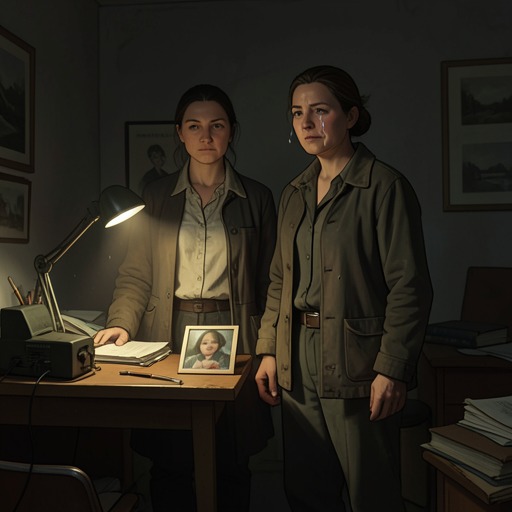
Day of the DeadDolores Lanita Walker, known as Lani Walker, is a Tohono O’odham woman adopted as a toddler by Brandon Walker and Diana Ladd and raised in an Anglo household. Her story follows an effort to make room for more than one inheritance: she seeks a medical education, wants the company of other Native students, and is recognized by Fat Crack Ortiz as having a possible future in traditional healing as well as hospital medicine. Her decision to return home when Fat Crack is ill makes those strands of identity a matter of family responsibility, not merely aspiration.
Identity and Background
Lani was adopted when she was very young and, during her first several years, was also reared by Rita Antone. She grew up within an Anglo family and attended predominantly Anglo schools, while remaining a Tohono O’odham child negotiating the distance between those surroundings and her Native identity. That position shapes her desire to leave home for school: she wants to meet Native students from other tribes who understand the uncertainty of moving between cultural worlds.
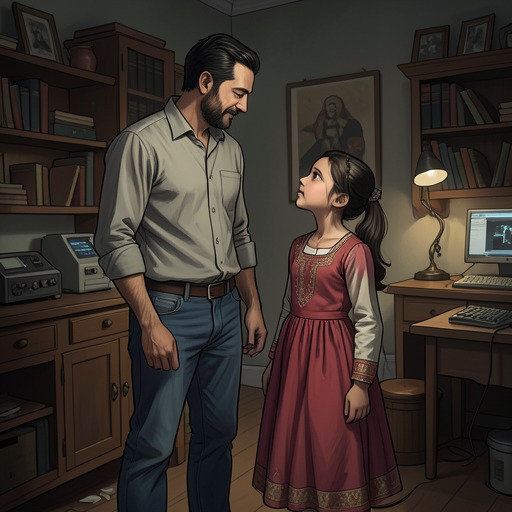
Her choice is not a rejection of Brandon and Diana. Brandon is particularly reluctant to have her study far away, having already lost two of his three sons, and worries about losing her as well. Lani nevertheless persists in choosing a path that will let her encounter peers whose experiences resemble her own. The tension between her parents’ wish to keep her close and her need to develop beyond their household is presented as a family negotiation, not a break in their relationship.
Education and Search for Community
Lani enrolls in INMED, the Indians into Medicine program at the University of North Dakota’s School of Medicine and Health Sciences, and moves to Grand Forks, North Dakota. She is already accepted to the medical school at the University of Arizona in Tucson, so her education away from home is a deliberate stage of preparation rather than uncertainty about whether she will pursue medicine. She expects to return to Tucson after her final exam.
Her living arrangements give concrete form to the community she sought. Her roommates are Margie, a Paiute from Nevada; Darlene, a Rosebud Sioux; and Laura, a Black-foot from Montana. Their shared life includes learning to ski and ice-skate from one another, as well as a common sense of humor and values. They also share the belief that storytelling belongs to winter. The friendships do not erase the differences among their backgrounds; they give Lani a place among people who understand the cultural negotiations she had hoped not to face alone.
Lani’s closest friend, Leah Donner, is a White Mountain Apache whom she meets in a Society and Literature class. Both are strong students and both are orphans raised by adoptive families, though Leah grows up in an all-Indian household while Lani’s adoptive parents are Anglo. Their friendship rests on these points of likeness and difference. Lani entrusts Leah with parts of herself she has not shared widely, including her blond-and-black-people hair charm, her medicine basket, and her worry about Fat Crack Ortiz’s declining health.
Family Bonds and Fat Crack Ortiz’s Illness
Fat Crack Ortiz and Wanda Ortiz are Lani’s godparents, and Fat Crack has always been especially close to her. When Lani learns that he has diabetes, she is home from her studies in North Dakota for Christmas and visits him and Wanda in Sells. She believes he should accept care from Indian Health Service physicians. Fat Crack, who is a student of Christian Science and has reluctantly answered a summons to become a Tohono O’odham medicine man, refuses that care. He chooses to manage his illness through diet and exercise and a regimen combining Christian Science and Native American treatments.
Lani’s response is fear as much as frustration: she understands that his refusal may mean losing him, and she does not want that loss to be inevitable. Brandon counsels her not to make Fat Crack’s illness about her own wishes; he must deal with it in his own way. The exchange clarifies the closeness between godfather and goddaughter. Lani’s concern is not abstract: Fat Crack’s choices affect someone she considers family, and his possible death becomes a reason she wants to be home rather than remain at school.
That pull changes her plans for the summer after graduation. Lani had made a verbal agreement with Leah to volunteer for Doctors Without Borders, and Leah remains signed up. Lani instead intends to return to Tucson as soon as she finishes her last exam. Her decision gives priority to being near Fat Crack while he is sick, even as it disappoints her friend and alters a plan they had made together.
Names, Healing, and a Future in Two Traditions
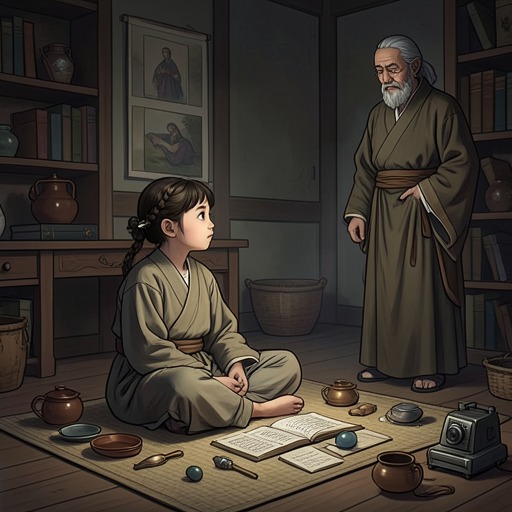
Fat Crack’s conversations with Lani connect her personal history to a possible vocation. He tells her that taking a human life, even in self-defense, carries consequences for her soul and that she must understand why she survived and why Mitch Johnson died. He asks her who she is. Alongside Lani Walker, she answers with the name Nana Dahd gave her, Kulani O’oks, meaning Medicine Woman. Fat Crack treats the name as serious, while the narrative distinguishes it from Forever Spinning, a happier name.
Lani also reveals another name she has given herself after the confrontation in the limestone cave: Nanakumal Namkam, which Fat Crack translates as Bat Meeter. The name is tied to the bat whose timely touch helped her understand the cave’s darkness differently, and to the dried bat bones she later found and kept as a talisman. Fat Crack recognizes this encounter as a source of strength rather than treating it as an incidental detail. The episode gives Lani’s identity a spiritual dimension grounded in experience, memory, and the names through which others have understood her.
Fat Crack says that he has performed the duajida, a nighttime divination ceremony, for her and that the spirits repeatedly indicate she will be two things at once: Kulani O’oks, a medicine woman, and a doctor. He connects this reading to what Rita Antone had told him long before. Lani does not immediately understand how both futures might fit together. The prediction therefore offers possibility rather than a completed resolution: she is pursuing formal medical training, while the names and teachings passed through her family place traditional healing within her sense of who she may become.
Narrative Significance
Lani’s arc is shaped by movement between places and forms of knowledge: from her adoptive home in Tucson to a Native medical program in North Dakota, from a hospital-oriented education to Fat Crack Ortiz’s traditional practice, and from the name given to her by family to one she claims for herself. These are not presented as mutually exclusive choices. Her education and Fat Crack’s reading of her future place her between professional medicine and a community healing role without requiring the story to settle how that balance will ultimately take shape.
Her return home also gives emotional weight to the distance she chose. She leaves to find Native peers and build a future, yet when Fat Crack’s illness worsens, the obligation she feels toward him competes with her plans for the summer. The narrative does not make that choice proof that her studies matter less; it shows that education, family, and cultural belonging remain intertwined. Lani’s future is still open, but the story establishes its central terms: a physician’s training, a goddaughter’s loyalty, and a possible calling as a medicine woman.