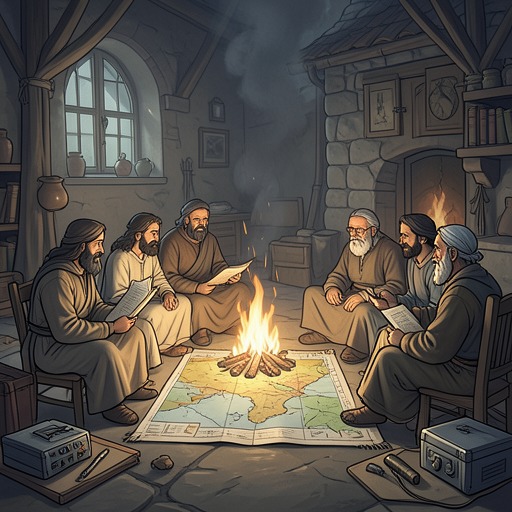
I’itoi
Day of the DeadI’itoi, known also as Elder Brother and Great Spirit, links the book’s traditional stories to the lives and losses of its modern characters. In tales of butterflies, water, and bereaved mothers, he appears as a creator and a guide whose attention turns to the vulnerable; in the contemporary plot, Fat Crack says that I’itoi has chosen Brandon Walker to speak for Roseanne. His significance lies both in the stories he inhabits and in the moral language those stories bring to the novel’s present-day search for the lost and the dead.
Identity and Narrative Presence
I’itoi is introduced through stories told as accounts of events long ago. He is called Elder Brother and Great Spirit, and the butterfly story presents him moving among his people to see whether they have enough water after a long, hot summer. These names and roles place him within a tradition of storytelling rather than providing a conventional biographical portrait. The reader encounters him through what he notices, makes, says, and teaches.
The tales recur between scenes of contemporary investigation and family life. Their openings and direct addresses to a friend preserve the feeling of spoken narration, while their plots give concrete shape to questions that also matter in the modern storyline: who is lost, who answers suffering, and how people live with change and death. I’itoi is not simply an emblem attached to the present-day characters; he belongs to the stories’ own imaginative world, where animals speak and a creator can gather sunlight into a bag.
The Making of the Butterflies
The butterfly-origin story begins with I’itoi watching children play and listening to their laughter. Nearby, an old woman carries firewood, while an old coyote stands with visible ribs and stiff, sore paws. Their weariness saddens him. Under yellowing cottonwood leaves, he thinks about the children growing old, calves becoming heavier, a joyful young colt becoming an old horse, and flowers losing their color. Against all these changes, he longs for something that can remain beautiful and happy as it grows old.
The answer comes from the scene around him. Looking up, I’itoi sees yellow leaves against blue sky and shadows beneath the branches; looking down, he sees sunlight moving across the ground like the dancing children. He laughs when he recognizes that this mixture is what he has been seeking. His bag, which he carries so that he can make things, lets him gather the elements of that vision: yellow and brown leaves, shadows, sunbeams, tiny white flowers, and, when he reaches higher, pieces of blue sky.
After the children gather to watch him, I’itoi is tired from his work. He lies down with his head on the bag, and the children fall asleep beside him. When he wakes, he opens the bag and shakes its contents into the air. The gathered colors and shapes are alive; they float briefly, then dance away into the sunlight, pursued by the children. I’itoi remains in the shade, glad that something beautiful has come into being that will not grow ugly with age.
The story also gives the creation a limitation. The children sing and dance with the butterflies, but the butterflies do not sing. The birds in the cottonwood tree, initially jealous of their beauty, laugh at their silence; I’itoi and the children laugh too. Because I’itoi and the children fell asleep after the butterflies were made, the butterflies were given no song. Their beauty endures, but it is accompanied by that absence. The tale thus holds delight and imperfection together: I’itoi creates what he wished for, yet the circumstances of its making leave something out.
Water, Need, and the Obligation to Help
Another traditional narrative turns to a northern landscape of heat and thirst. Hunters searching for new grounds find a pool in a hollow shaded by mesquite, with a coyote sitting on a rock in its middle. When the coyote sees them, he looks into the pool and calls for someone below not to come out and hurt the people. The hunters are puzzled, since coyotes ordinarily run away and hide. The story recalls a time when people and animals shared a language, placing a moment of mutual recognition at the center of the encounter.
As the hunters later bring their families north, reaching the pond becomes difficult: they are hot and thirsty, and must approach while watching for the coyotes. An old wise man proposes driving the coyotes away or making them share the water. He returns after a week leading a baby coyote on a string. When the villagers’ laughter draws the adult coyote out of his cave, the old man ties the baby away from the water and tells the children to leave it alone. Hungry, thirsty, and lonely, the baby begins to cry. The adult coyotes hear the distress; the mother goes to find food, while the father first chews through the string.
That response supplies the story’s moral contrast. Its narration says that White people may walk away from others who are hurt, injured, or thirsty in the desert, whereas I’itoi’s people cannot deny a call for help; it makes the same point about the coyotes. The adult coyote’s first act is to free the distressed baby, even though the villagers have gathered around and are guarding the water hole. The passage makes compassion visible as action taken before the danger or outcome is settled.
The Lost Girls and Brandon’s Role
I’itoi’s presence enters the contemporary plot most directly through Fat Crack’s interpretation of three women’s histories. He calls Roseanne, Delia, and Lani lost girls. Fat Crack describes Delia’s mother as having saved her and himself as having brought her home; he says Brandon and Diana saved Lani and are giving her back to the people. Roseanne’s situation is different: Fat Crack says that I’itoi has chosen Brandon to speak for her.
Brandon is startled by the claim. He considers it unlikely that I’itoi would take an interest in an aging, discarded Anglo homicide detective, but Fat Crack speaks with such conviction that Brandon finds himself believing him. The exchange gives Brandon’s investigation a meaning beyond solving a case: in Fat Crack’s account, Roseanne’s lostness calls for someone to speak on her behalf. The assertion does not resolve the murder or establish how I’itoi acts; it shows how Fat Crack understands Brandon’s responsibility. Fat Crack also anticipates that the three women will someday be friends, joining their separate stories through the possibility of a future relationship.
Consolation and Continuing Significance
In another embedded tale, a bereaved woman hears someone speaking very softly and knows without looking that it is I’itoi. He tells her that the babies who have left their mothers are with him, resting in cradles made from curled brown leaves, and that they do not want her to remain as she is. She raises her head and smiles at the sound of babies laughing around her. Then she takes her own brown cradle blanket and returns to the village, where the women have cleaned her home and prepared the fire.
The story closes not with an explanation of grief but with a changed way of seeing. When a friend warns the woman away from the fire’s smoke, an older woman recognizes that she has spoken with I’itoi. From then on, her eyes seem to look far beyond what is immediately present. The tale makes the encounter perceptible through the woman’s return and altered gaze, rather than through any public proof. Together with the butterfly creation and the coyote story, it shows I’itoi meeting change and suffering through acts of attention: he notices the old, makes beauty, responds to a mother’s grief, and, in Fat Crack’s understanding, calls Brandon to represent a murdered girl who can no longer speak for herself.