Proposal to Exhume Roseanne’s Daughter’s Remains for DNA Testing
Day of the DeadThe proposal to exhume Roseanne Orozco’s daughter was a pivotal step in Brandon Walker’s renewed investigation of Roseanne’s unsolved murder: it offered a possible scientific route toward identifying the child’s father, while forcing Emma Orozco to confront a painful family history and the question of who had authority over her granddaughter’s remains. Emma consented to the proposed test, but the later decision to exhume the grave without formal permission left the investigation with a serious evidentiary problem.
Background and Investigative Rationale
When Roseanne’s case was first investigated in 1970, investigators considered whether the father of her baby might have killed her. That theory collapsed when they learned that Roseanne’s father was not the baby’s father, and the investigation lost momentum. More than three decades later, Brandon recognized that newer forensic techniques might answer questions the original inquiry could not. Using them, however, meant revisiting the family’s grief rather than treating the old case as a closed file.
The renewed inquiry also involved records that might clarify Roseanne’s final months. In the early 1990s, a grant-supported study had put existing health records from the Sells Indian Health Services Hospital into computers. The study examined Tohono O’odham longevity and tracked diseases associated with deaths on the reservation; records reached back to the 1950s. Brandon believed this meant the record of Roseanne’s appendectomy in July 1970 could be located. But the existence of computerized records did not guarantee access. He expected that a request from him, as a white outsider, might meet courteous refusal, and hoped Emma would have a better chance of obtaining information.
Roseanne had remained ill after the operation and did not return to school when the school year began. That detail helped Brandon consider the period surrounding her death, but the most consequential possible sample lay not in the hospital file: it was the remains of the daughter buried with her mother. If DNA could establish the child’s paternity, it might identify a person the original investigation had never found.
The Grave and the Family’s Account
Brandon asked Emma where Roseanne was buried. She directed him to a small cemetery enclosed by barbed wire near the edge of Big Fields, where Roseanne lay beside her father, Henry Orozco. In a separately fenced plot, two larger headstones stood on either side of a small white cross. The large stones bore the names of Henry and Roseanne; the cross between them had no name.
Emma explained that Roseanne had been unable to name her daughter, so the family had left the child unnamed as well. After the baby was taken for an autopsy, the authorities kept her remains even after the family buried Roseanne. When the remains were finally released, the family placed them between mother and grandfather so the child could be with her mother. Emma confirmed that the baby was a girl. Her account made the proposed test more than a technical procedure: the sample belonged to a child whose brief life had been represented in the cemetery by an unmarked cross, and whose family had already had to wait for her return.
Brandon asked whether the baby had been embalmed, because he needed to know whether a usable DNA sample might remain. Emma did not know; nobody had told the family. The uncertainty left an important scientific question unresolved even as the possible value of testing became clear. Brandon explained that DNA identification techniques had improved, and Emma understood the basic idea from a widely publicized trial. The proposal was to use the child’s remains to identify her father, not to claim in advance that the test would produce a result or solve the murder by itself.
Consent, Authority, and the Exhumation
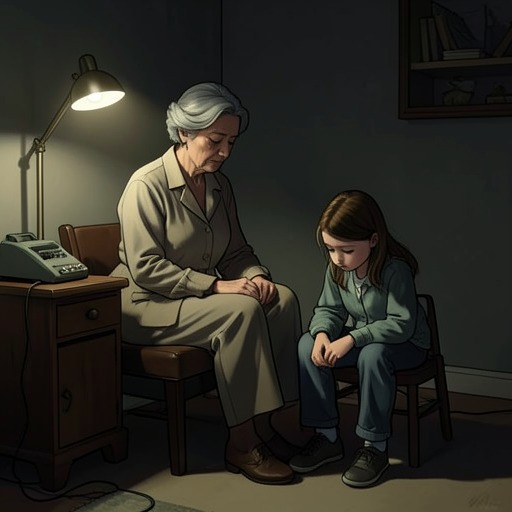
Brandon’s approach to Emma reflected his awareness that direct questioning could be considered impolite among the Tohono O’odham. He made an observation rather than opening with an intrusive question, and avoided looking directly at Emma while she spoke, watching her reflection instead. Her decision to discuss the murder with a stranger and an outsider represented a considerable act of resolve. As she gripped the handle of her walker, she explained that her husband, Henry, had once urged the family to forget the past; after his death, she wanted to know what had happened to her daughter.
When Brandon raised the prospect of digging up the baby, Emma understood the implication and gave him permission to proceed. She told him to let her know if papers needed signing. That assent authorized Brandon, in her view, to pursue the investigation, but it did not settle the separate question of formal tribal approval or how any recovered material would be documented. The difference between a family’s consent and the procedures required to establish admissible evidence became central to what happened next.
Emma later told Brandon that she had not sought permission from the Tohono O’odham Tribal Council because the process would take too long. After dark the previous night, Sam Tashquinth and Emma’s grandson had dug up the remains and brought them to her. Their action achieved its immediate purpose: the child’s remains were available for investigation. Yet the method compromised the chain of evidence. Brandon, working through The Last Chance rather than as a sworn police officer, was caught between the urgency of helping survivors and the need to preserve evidence that could support accountability in court. He thanked Emma and acknowledged the difficulty of her decision, even as the procedural problem remained.
Significance and Limits
The proposed DNA test joined two forms of knowledge that the case had kept apart: the family’s account of where the child was buried and the forensic possibility of learning who her father was. The cemetery itself preserved an intimate family decision—the unnamed baby placed between her mother and grandfather—while the missing information about the autopsy and embalming exposed how little the family had been told. Emma’s cooperation enabled the inquiry, but the hurried exhumation also demonstrated that investigative access and legally dependable evidence are not the same thing.
The episode therefore advances the case without resolving it. The proposed test could reopen the paternity question that investigators had abandoned in 1970, but the evidence provided here does not establish the test’s result or identify the father. Instead, the exhumation marks both a breakthrough and a cost: Roseanne’s family acted to recover a neglected question, while the manner of recovery threatened the formal evidentiary value of what they had found.