Roseanne Orozco cold case reopened
Day of the DeadThe reopening of Roseanne Orozco’s murder case begins not with a new forensic match but with a mother’s decision to ask again. Decades after Roseanne disappeared from a hospital and her body was found in an ice chest beside a road, Emma Orozco turned to Brandon Walker, a member of The Last Chance, to investigate what official inquiries had left unresolved. Listening to Emma and her sister Andrea brought an overlooked hospital lead back into view; pursuing it also revealed how age, racial and institutional power, and weak investigative resources had helped keep the case from being properly examined.
A case left behind
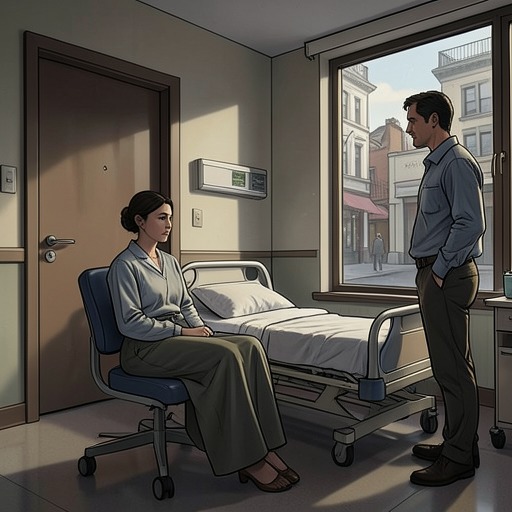
Roseanne’s disappearance followed a hospitalization for appendicitis in the summer of 1970. Andrea recalled that Roseanne remained unwell after the operation and was later admitted for tests. Their father was meant to collect her after work, but when he arrived, Roseanne was gone. The family was told to assume she had left on her own. The following week, her body was found in an ice chest along the road. The place where she had actually been killed was never established.
The case’s jurisdiction had also shaped its investigation. Authorities assumed that Roseanne had died on the reservation and that an Indigenous person had killed her. In Brandon’s understanding, a murder of an Indigenous person by another Indigenous person on Native land fell to either the Federal Bureau of Investigation or local tribal police. The case differed from the earlier murder of Gina Antone, whose death occurred off the reservation and was investigated by the Pima County Sheriff's Department. Brandon remembered reservation investigations in the early seventies as often cursory, and the Papago Tribal Police Force, sometimes called Law and Order, lacked training, equipment, and money. The contrast helps explain the case’s neglect without establishing who killed Roseanne or where the murder took place.
Brandon had not been the investigator assigned to Roseanne’s homicide. At the time he was newly divorced, struggling with alimony and child-support payments, sometimes working as a rent-a-cop, and living with his parents while his father’s health declined. He had been relieved when the case did not come to him and did not follow its outcome. Years later, Emma’s account made clear to him that the investigation had not produced answers.
Listening to the family
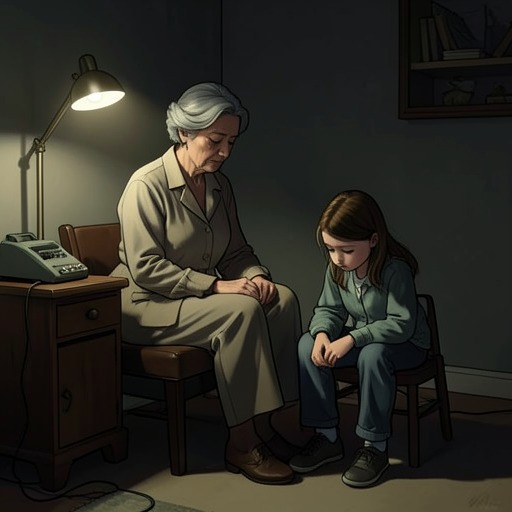
Emma had waited a long time to speak about the murder. Her husband, Henry Orozco, had urged the family to forget what had happened, but after his death Emma wanted to know what became of her daughter. She approached Brandon as Roseanne’s mother, not merely as a relative repeating an old rumor. Brandon understood that seeking answers in the presence of a stranger and a white man went against the reserve and teachings Emma had lived with. Rather than press her with direct questions, which he knew could be considered impolite among the Tohono O’odham, he began with an observation and gave her room to speak. Her hand tightened around her walker as she explained why she had returned to the past.
Andrea supplied an essential part of the family’s memory. She remembered Roseanne as a four-year-old, frightened on her first day of school and distressed when she could not stay in Andrea’s class. A large principal carried the child away and shut her alone in a dark coat closet. Andrea heard Roseanne crying as she was sent back to class. At the end of the day, Roseanne was still tearful; on the bus home she would not answer Andrea. She never spoke again, to her family or at school. Her parents took her to doctors in the area and in Phoenix, and later to a medicine man, but none could help.
That childhood history did not explain Roseanne’s murder, but it showed how much of her life had already been difficult to make legible to outsiders. Andrea had been sixteen when she tried to tell Law and Order that the hospital might be involved in Roseanne’s disappearance. No one wanted to hear her opinion, especially when investigators were convinced their father was responsible. Asked years later what she remembered, Andrea again pointed to the hospital. She did not claim to know who had taken Roseanne; she suggested that someone working there, perhaps an orderly or nurse, or a visitor, could have been involved. Her tentative lead had once been dismissed because of who was speaking and how little authority she was granted.
Following the hospital lead
Brandon treated Andrea’s suspicion as something to check rather than as proof. He wrote down her impression and recognized that cold-case work required following leads earlier investigators had ignored. He also knew the family would need access to medical records. A study funded in part by an Arizona State University grant in the early nineties had entered existing records from the Sells Indian Health Services Hospital into computers, including records dating back to the fifties. The study examined Tohono O’odham longevity and tracked diseases and causes of death; together with tribal casino funds, it helped make the hospital’s kidney dialysis center possible. Roseanne’s July 1970 appendectomy records might therefore be searchable, but their existence did not guarantee access. Brandon expected that a white investigator asking alone would meet a respectful refusal and be told no such records were available.
He asked Emma to accompany him and request Roseanne’s records as her mother. At the hospital, staff said they had no record of Roseanne ever being admitted and suggested that records from so long ago might have been lost. Emma rejected that explanation: the hospital had found her own file, documenting three admissions, including the births of Andrea and Roseanne and her later hysterectomy. For Emma, the discrepancy confirmed that Andrea had been right to suspect someone at the hospital. It did not identify a perpetrator, but it turned a dismissed family intuition into a specific line of inquiry—and made the missing record itself part of the problem Brandon had to investigate.
Evidence, authority, and the limits of the reopening
The investigation also forced a conflict between the family’s urgency and the requirements of a criminal case. Emma arranged for her grandson and Sam Tashquinth to exhume the remains of Roseanne’s baby after dark, without first seeking permission from the tribal council because she believed the official process would take too long. The action obtained the remains, but Brandon recognized that it compromised the chain of evidence. As a member of The Last Chance rather than a sworn police officer, he faced both the need to help survivors pursue answers and the need to preserve evidence that could stand up in court. He thanked Emma for a difficult decision without pretending that its legal consequences had disappeared.
The reopening thus proceeds through two forms of recovery: the recovery of family testimony that institutions had discounted, and the attempted recovery of records and remains that might support further investigation. Andrea’s memory of Roseanne’s silence, her early warning about the hospital, Emma’s persistence over the missing admission record, and Brandon’s effort to verify rather than simply accept a suspicion all become consequential. Yet the evidence presented here does not solve the murder. It establishes why the case deserved renewed attention, identifies a hospital connection to investigate, and leaves the question of responsibility unresolved.