Roseanne Orozco’s murder
Day of the DeadRoseanne Orozco’s murder is both a family’s lasting bereavement and a cold case shaped by whose testimony and deaths received serious attention. Roseanne disappeared from a hospital and was found dead in an ice chest near Quijotoa. For years, her sister Andrea Tashquinth’s suspicion that something had happened at the hospital went unheard, while the investigation on the reservation failed to resolve the crime. The case was eventually linked to Gayle Stryker and Larry Stryker, although the available account does not detail their specific roles in Roseanne’s death.
Disappearance and discovery
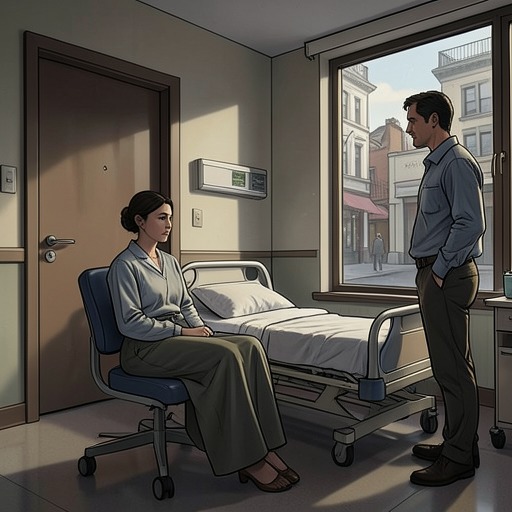
Roseanne had undergone an appendectomy at the Indian Health Services Hospital in the summer. Later, still unwell when school began, she was taken back for tests. Andrea recalled that their father was supposed to collect her after work, but Roseanne was already gone when he arrived. The family never saw her again. The following week, someone found her body in an ice chest along the road.
A highway worker found the body near Quijotoa. Roseanne’s remains had been cut apart and placed in the cooler, giving the case the enduring public nickname Girl in the Box. That name preserved one stark feature of the crime, but did not identify its perpetrator or explain what had happened before her disappearance. Within the family, the discovery became a warning as well as a memory: Leo Ortiz later recalled that his grandmother used the story to frighten children into behaving.
The family’s account and the hospital suspicion
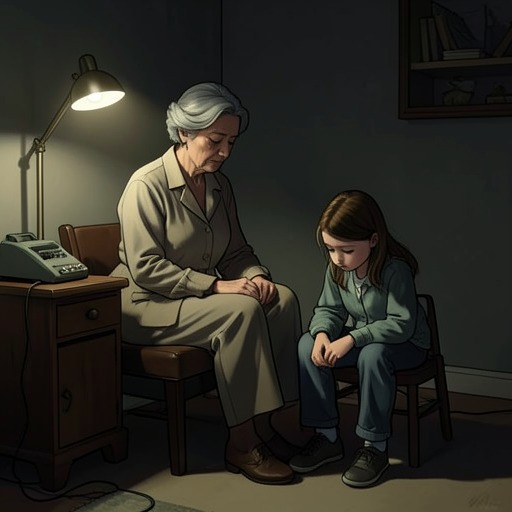
Roseanne’s death followed a childhood marked by a different, earlier silence. Andrea remembered Roseanne’s first day of school: frightened at being separated from her sister, the four-year-old cried, and the principal carried her away to a dark coat closet. After school, Roseanne would not speak. She never spoke again, despite attending school and being taken to doctors in the area and in Phoenix. Their father also consulted a medicine man, who said he could do nothing for her. Andrea’s recollection establishes the depth of Roseanne’s isolation, but does not establish a cause for her later death.
Years afterward, Andrea connected Roseanne’s final hospital admission to her disappearance. She had tried to tell the Papago Tribal Police Force that the hospital mattered, but said no one listened. At sixteen, she found that investigators were not interested in her opinion. The family and authorities instead suspected their father. Andrea believed that Roseanne had been assaulted at the hospital, but she could not identify a perpetrator; she considered possibilities including someone who worked there or a visitor. Her suspicion remained a suspicion, not a proven account of what happened.
Emma Orozco, Roseanne’s mother, also lived with unanswered questions. She said that after the case, her husband Henry urged the family to forget and not dwell on the past. After Henry died, Emma decided that, as Roseanne’s mother, she wanted to know what had happened. Her willingness to revisit the murder meant speaking about a painful family history with Brandon Walker, an outsider to her community. Brandon understood that direct questioning could be impolite among the Tohono O’odham, and treated Emma’s decision to speak as an act requiring resolve rather than as a routine interview.
An investigation obstructed and reopened
The crime’s location complicated jurisdiction. The actual murder site was never found; investigators assumed Roseanne had died somewhere on the reservation and had been killed by another Native person. Under those assumptions, responsibility lay with the Federal Bureau of Investigation or tribal police, rather than with the Pima County Sheriff’s Department. Brandon recalled that the tribal force lacked training, equipment, and money, while Federal Bureau of Investigation inquiries into reservation murders were often cursory. The original investigation produced no resolution.
Records offered a possible route back into the case. A study funded by Arizona State University in the early 1990s had digitized existing health records from the hospital in Sells, including records dating to the 1950s. Roseanne’s July 1970 appendectomy should therefore have been documented. But an archive’s existence did not guarantee access: Brandon expected a request from him, a white man, to meet resistance, and hoped Emma might fare better. When she later said hospital staff had claimed no record showed Roseanne admitted, she rejected that explanation. The staff had found Emma’s own hospital record, listing three admissions, including the births of Andrea and Roseanne. The discrepancy strengthened Emma’s conviction that someone at the hospital was involved, but it did not by itself prove what had happened to Roseanne there.
Long-delayed revelations and the case’s legacy
The case’s consequences extended beyond the original failed inquiry. To obtain Roseanne’s baby’s remains, Emma arranged for Sam Tashquinth and her grandson to exhume them after dark, without first seeking permission from the tribal council. The decision achieved its immediate purpose, but Brandon recognized that bypassing the process compromised the chain of evidence. The episode placed the family’s urgency to pursue answers beside the requirements for evidence that could support accountability in court, as well as the tribe’s role in authorizing action involving remains on the reservation.
The murder’s eventual resolution came through a later conversation, not through the account of the original investigation. After the deaths of Gayle Stryker and Larry Stryker, Brian Fellows told Brandon that both had been involved in Roseanne’s murder, along with other crimes. He promised to explain further when Brandon was well enough; the details were not given in that exchange. In the same aftermath, investigators’ DNA and fingerprint work connected the Strykers to fourteen separate cases, while photographs in Larry’s notebooks depicted additional unidentified girls. Roseanne’s murder thus emerged as part of a wider pattern, even as the surviving account left the exact circumstances of her killing unresolved.
The case turns on the difference between a death that became a public story and a loss that remained immediate to a family. The nickname, the ice chest, and the old hospital records kept traces of Roseanne’s story in circulation; Andrea’s unheeded warning and Emma’s return to the investigation exposed how little those traces had once counted. The later identification of the Strykers changed the understanding of the case, but did not erase the years in which Roseanne’s family had to carry its questions without an answer.