Sells Indian Health Services Hospital
Day of the DeadSells Indian Health Services Hospital stands at the intersection of medical care, Roseanne Orozco’s disappearance, and a cold-case investigation long obstructed by institutional neglect. Roseanne was treated there for a ruptured appendix and later admitted for tests; after the second stay, she vanished before her father could bring her home. Decades later, the hospital’s records became both a potential source of answers and a contested resource whose existence did not guarantee access.
Setting and Medical Role
The hospital served patients in Sells and the surrounding reservation community. Its role in the narrative is not limited to the care Roseanne received: it also represents the institution through which her family sought help, and later the place where investigators hoped to recover a record of what had happened. The hospital’s presence near the community made it central to the family’s account of Roseanne’s illness and disappearance, while the limits of its archives shaped the later investigation.
The hospital’s development is linked to a health-record study funded by a grant from Arizona State University in the early 1990s. Existing records, reaching back to the 1950s, were entered into computers for a study comparing Tohono O’odham longevity with that of other ethnic populations and tracking which diseases accounted for deaths on the reservation. Alongside money from tribal casino operations, the study helped make possible the hospital’s kidney dialysis center. The records thus had a continuing public-health purpose, even as one family’s effort to consult them raised a different question: whether the data could illuminate an old disappearance.
Roseanne Orozco’s Hospitalizations
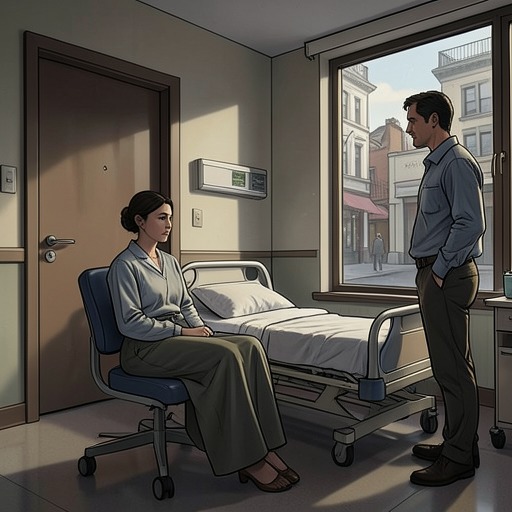
Roseanne’s first hospitalization followed an emergency shaped by the weather and the family’s distance from care. In early July 1970, after the rains began, Emma Orozco and Henry Orozco drove to Tucson, Arizona, for groceries. Returning home, they were stranded for a couple of hours by flooded washes near Ryan Field. Roseanne was unwell, and her sister Andrea Tashquinth took her to the hospital, where treatment was delayed until the family signed the necessary papers. By the time her parents got home, Roseanne’s appendix had burst. The doctors told them that she might die.
Roseanne survived that illness and eventually returned home, but she remained sick. When school began, she was too unwell to attend, so Emma took her to a doctor, who sent her back to the hospital for tests. This second admission became the last occasion on which the family knew where she was. Henry was supposed to collect Roseanne after work; when he arrived, she was gone. The family was told, or came to believe, that she had left by herself. The following week, someone found her body in an ice chest beside a road. Andrea later insisted that something had happened to her sister during the earlier hospital stay and believed Roseanne had been sexually assaulted. That was her conviction, not a finding established by the hospital record.
Records, Access, and the Investigation
The computerized archive gave Brandon Walker reason to think Roseanne’s medical history might still be traceable. Fat Crack Ortiz had told him about the study, and Brandon recalled that a record of Roseanne’s July 1970 appendectomy should be retrievable with only a few keystrokes. Yet he expected that asking for it himself would bring polite refusal: as a white investigator, he thought hospital staff would deny that such a record existed. In his view, the practical availability of information and the ability to obtain it were sharply different matters.
Emma’s search exposed a specific contradiction. She was told that the hospital had no record of Roseanne ever being admitted, with the possible explanation that records from so long ago had been lost. But Emma had located her own hospital record, which documented three admissions: for Andrea’s birth, for Roseanne’s birth, and for Emma’s hysterectomy fifteen years earlier. That surviving history made the claim of a missing Roseanne record harder for the family to accept. It did not establish what had happened to Roseanne inside the hospital, but it gave her relatives a concrete reason to question the explanation they had been offered.
Brandon’s plan depended on records already held by the hospital, but the investigation also confronted the consequences of a decades-long evidentiary gap. Emma and her family later exhumed Roseanne’s baby without waiting for tribal council permission because they believed the approval process would take too long. Brandon recognized the conflict: moving quickly might help survivors pursue answers, while bypassing permission damaged the chain of evidence needed for a case that could stand in court. The hospital’s records and the grave therefore became different kinds of evidence, each governed by access and accountability concerns.
Jurisdiction and Narrative Significance
Roseanne’s presumed murder was thought to have taken place on the reservation and to have been committed by another Native person. Because the actual murder site was never found, this remained an assumption, but it determined which authorities were expected to investigate: the Federal Bureau of Investigation or local tribal police. The investigation into Gina Antone’s murder had followed a different path because she was killed off the reservation and the suspected perpetrators were Anglos; the Pima County Sheriff's Department therefore had jurisdiction. The contrast places Roseanne’s case within a wider pattern Brandon remembered: investigations into killings on Native land could be cursory, while the Papago Tribal Police Force lacked training, equipment, and money. Its effort in Roseanne’s case had produced no resolution.
The hospital is not identified as the site of a proven crime. Its significance lies instead in the unresolved sequence linking treatment, disappearance, and inaccessible or missing documentation. The archive’s promise of information sharpened the family’s suspicion when Roseanne’s record could not be found beside Emma’s. Set against the earlier failure to investigate her death adequately, that absence made the hospital a crucial point of inquiry without making it an answer in itself: the records might establish who treated Roseanne and when, but the evidence presented leaves the family’s central question unresolved.