
The Meaning of Knightly Conduct
De brief voor de KoningThe story tests the gap between formal rules and the moral duties that give knighthood its purpose.
increasing Bearing strength in each event
 decreasing
Bearing strength in each eventdecreasingRules of the Vigil
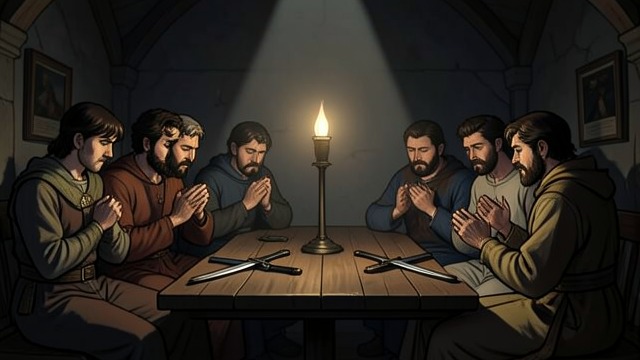
Rules of the Vigil
Ceremony and discipline
The candidates must fast, pray, and keep silent before receiving their swords. The ritual aims to prepare them for a life of service and restraint.
A rule under pressure
Tiuri’s night watch becomes meaningful only when the silence is interrupted by a plea for help. The test asks whether a rule is an end in itself or preparation for moral action.
The Plea at the Door
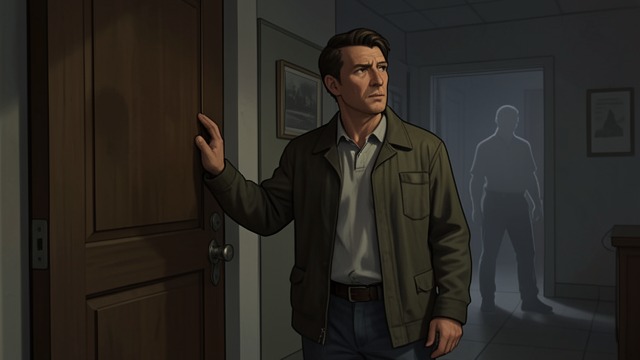
The Plea at the Door
Duty becomes concrete
A stranger asks for help, and Tiuri can no longer treat knighthood as an abstract list of virtues. He risks the ceremony because a person may be in danger.
An ethical choice
His action violates procedure but expresses compassion. The story leaves open whether obedience or mercy is the deeper measure of a knight.
Honor Under False Accusation
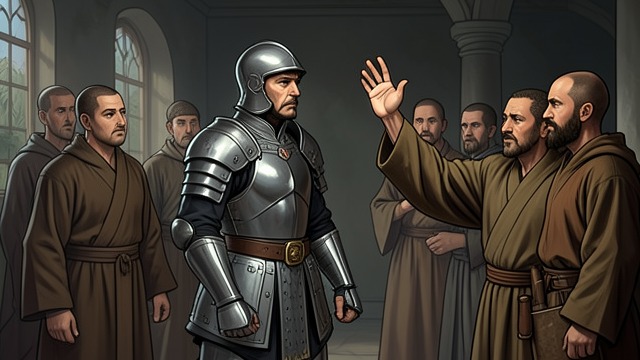
Honor Under False Accusation
Grief distorts justice
The Grey Knights accuse Tiuri without hearing his account. Their pursuit tests whether a righteous purpose excuses unfair treatment.
Courage without retaliation
Tiuri defends himself but continues to speak truthfully. Ristridin’s eventual apology shows that honor requires admitting error as well as courage in combat.
Mercy and Jaro

Mercy and Jaro
Rescue without reward
Tiuri risks falling into the gorge to save a man he already suspects. He acts before learning whether Jaro deserves trust.
The enemy interrupted
Jaro cannot bring himself to kill the person who saved him. Mercy does not erase his past, but it creates space for a different choice.
Recognition Without Ritual
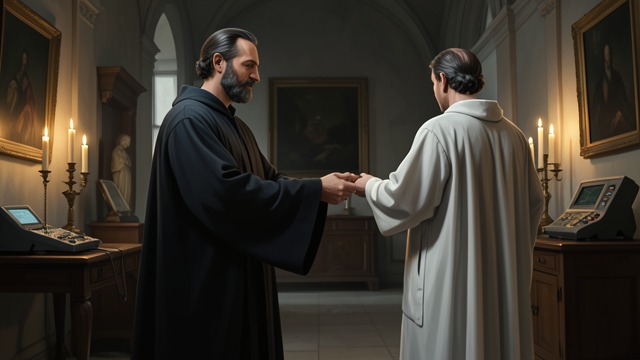
Recognition Without Ritual
Conduct before ceremony
Dagonaut tells Tiuri that he demonstrated knightly character by answering the plea and completing Edwinem’s mission. The formal ceremony acknowledges a status his actions have already earned.
A renewed vigil
Tiuri asks to leave the banquet and finish the night watch he abandoned. The return to the chapel joins moral choice with ritual rather than setting them against each other.
Before the midnight summons
Shortly after one in the morning
At Mistrinaut Castle
On the mountain path
At Dagonaut’s final banquet
