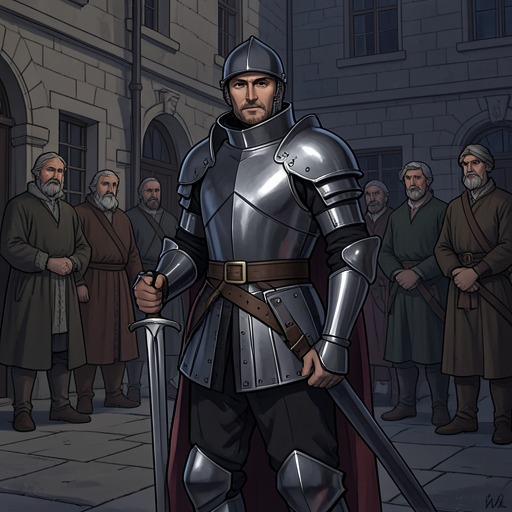
Een ridder moet toch helpen als het hem gevraagd wordt
De brief voor de KoningThe expression “Een ridder moet toch helpen als het hem gevraagd wordt?” is the moral hinge of the stranger’s appeal to Tiuri. It recasts helping not as an optional kindness but as something a knight is expected to do when asked—and makes that expectation outweigh the rules Tiuri has been keeping in order to receive knighthood.
The Appeal
The stranger speaks while Tiuri is on vigil before his expected knighting. Tiuri has already protested that the visitor should have gone elsewhere: because he has broken the vigil’s rules, he believes he can no longer be knighted the next day. The stranger answers with the expression, insisting that Tiuri will have genuinely earned the honour by helping. The appeal thus meets Tiuri inside the very code he fears he has violated.
A Choice Between Duties
The stranger’s request is urgent and specific. A letter of immeasurable importance must be carried to the Inn at Yikarvara, where it is to be given only to the Black Knight with the White Shield; Tiuri is also charged to guard it as he would his own life. With the journey expected to take several hours, the stranger says Tiuri could return by seven, in time to appear before King Dagonaut. The request therefore presses against the vigil’s rules without simply asking Tiuri to abandon his future knighting.
From Maxim to Mission
Tiuri concludes that he cannot refuse. The rules for a prospective knight matter, but the appeal for his help matters more, and he agrees to take the letter. The expression’s force lies in that reversal: an act that appears to disqualify him from knighthood becomes, in the stranger’s account and in Tiuri’s decision, a demonstration of the service knighthood requires. It sets the ethical principle in motion as a concrete mission, bound to a protected letter, a named recipient, and a return before the king.