Ristridin, leader of the Gray Knights
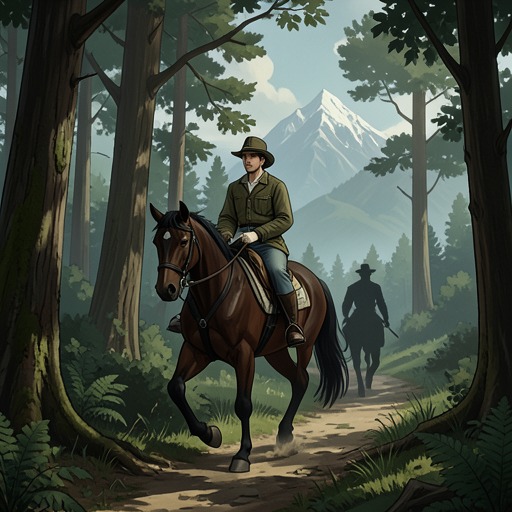
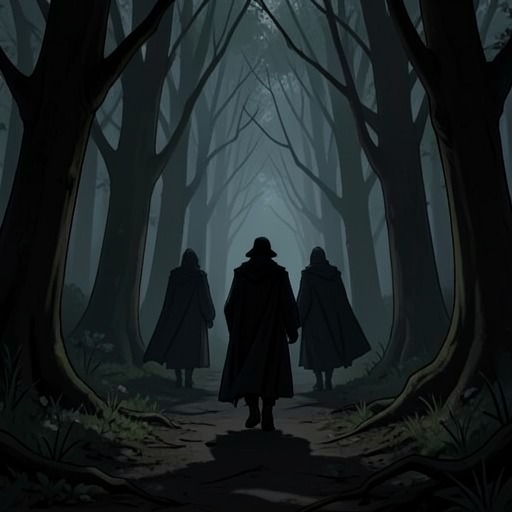
De brief voor de KoningRistridin, leader of the Gray Knights, is first bound to Tiuri by a grave mistake: he helped pursue the young man under the belief that Tiuri had murdered the Black Knight with the White Shield, taken his ring, and fled on his horse. His decisive change is not merely a correction of that belief. Ristridin publicly admits the accusation was false, personally asks forgiveness for the harm he caused, and later helps save Tiuri’s life. His movement from pursuer to ally gives the conflict between them a moral turn, while his memories of Edwinem place Tiuri’s mission within the history of a friendship and a kingdom in danger.
Identity and Character
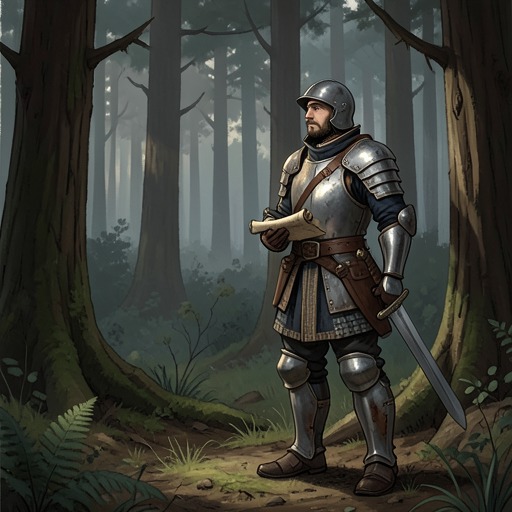
Ristridin is a knight and the leader of the Gray Knights. The account also identifies him as a wandering knight, one whose travels have taken him through many lands. Although his ancestral castle is not far from the Kingdom of Unauwen, he says he has visited that realm only once. His experience makes him a link between neighboring kingdoms, but it does not make him omniscient: in Tiuri’s case, he acts on a mistaken accusation before he has established the truth.
The narrative presents him as capable of both force and candor. He has treated Tiuri harshly while consumed by anger and vengeance, yet he is able to name those feelings without pretending they excuse him. Later, when Tiuri is injured and isolated after a fight, Ristridin leaves him a horn and tells him to sound it if danger threatens. The change is visible in conduct: a man who once helped hunt Tiuri now places a means of calling for help within his reach.
Pursuit, Accusation, and Reconciliation
When the Gray Knights are pressed to explain why they sought Tiuri, Ristridin initially remains silent. The castle lord insists that he owes Tiuri an answer: Ristridin had believed the charge and acted on it, even if he no longer finds it credible. With a torch turned toward Tiuri’s face, Ristridin finally states the accusation plainly and says that he now believes it false, calling heaven as witness to his judgment.
The admission does not erase what Tiuri has heard. He recoils at the suggestion that he could be the murderer of the knight whose mission he has taken up, and the narration stresses the shock of seeing his own character recast as a killer. The accusation strikes him as both appalling and absurd. Ristridin’s declaration therefore opens the way to reconciliation but does not make the injury disappear; Tiuri must first confront the fact that men who pursued him believed him guilty of the very crime that had endangered the mission.
The following morning, Ristridin seeks Tiuri out rather than relying on the public admission alone. He says that seeing Tiuri again makes his mistake seem even more foolish, asks forgiveness for what he did, and acknowledges that rage and a thirst for revenge blinded him. Tiuri accepts quickly, blushing and almost ashamed that a famous, much older knight should speak to him in this way. Ristridin offers his hand, and Tiuri grips it firmly. Tiuri finds that he likes him, even though it remains difficult to reconcile this serious, courteous man with the knights who had hunted him. Their handshake marks a personal change as well as a settlement of the accusation: Tiuri can now distinguish Ristridin himself from the harm done by the pursuing party.
Edwinem and the Wider Conflict
Ristridin’s friendship with Edwinem gives him a history independent of Tiuri’s immediate ordeal. He remembers Edwinem as a good and noble man who fought against evil, and tells Tiuri that they had fought side by side despite serving different kings. He begins to tell how they met, presenting their friendship across political borders as a matter of shared action rather than identical allegiance.
In Ristridin’s recollection, the events began in the spring, when he was staying with his brother at Castle Ristridin by the Gray River. Bendoe and Edwinem had promised to join him there so that the three could travel to Wilderness Wood, a place none of them had visited before. Then messengers announced that knights from Unauwen were approaching. Ristridin rode out to meet a small, splendid procession: its knights wore white armor and white shields with rainbow-colored cloaks, and Edwinem rode at the front on a black horse.
The party was traveling to Eviellan as envoys of King Unauwen. At Edwinem’s request, the knights had crossed through Ristridin’s country so that the two friends could meet briefly. Edwinem could not join the planned adventure because his king had entrusted him with a more important task: the mission to seek peace with Eviellan. The visitors stayed one day and one night as guests at Ristridin’s brother’s castle. The group was hopeful, but Edwinem alone remained withdrawn and silent. That contrast gives Ristridin’s account a note of foreboding without claiming that he then knew what awaited his friend.
Ristridin’s story is also limited. The narration notes that he tells of Edwinem’s adventures and of the final journey, but that his account does not mention the letter for King Unauwen, which the narrative identifies as the cause of Edwinem’s flight and death. The gap matters: Ristridin can testify to Edwinem’s character and their shared past, while Tiuri carries forward the secret mission that the remembered story leaves unspoken.
From Pursuer to Protector
Ristridin’s changed allegiance becomes practical during the attack in which Tiuri is outnumbered. Tiuri has been fighting two attackers when more close in; the others arrive just in time to rescue him. Ardanwen has already saved Tiuri from a blow with an axe, kicking one of the riders so that he lies dead. Ristridin explains the danger, then watches the far side of the scene as dusk gathers and the woods are already dark. Before leaving Tiuri briefly, he gives him his horn and makes clear that it can summon help if danger returns.
Tiuri is wounded, tired, and grateful that the immediate danger has passed, but he does not know what has happened to the rest of the party or whether they are still fighting the Red Riders. He keeps the letter close when he hears footsteps. Against this continuing uncertainty, Ristridin’s horn is a small but concrete sign of the trust now placed between them: the former pursuer leaves Tiuri with a way to call him back. Ristridin’s arc thus turns on accountability followed by action. He cannot undo his earlier pursuit or restore Edwinem, but he can acknowledge the wrong, accept Tiuri’s forgiveness, and stand beside the young messenger whose mission is bound to his dead friend’s last journey.