BCH Homes
Dead ShotBCH Homes is a Boise-based development company whose proposed Statenville subdivision provides the first concrete connection between the town’s growth ambitions and the deaths of three young men. The company’s plan is presented as an ordinary real-estate project, yet its disputed land acquisition and the names attached to the zoning controversy make it one of the investigation’s most consequential leads.
Development Project and Local Context
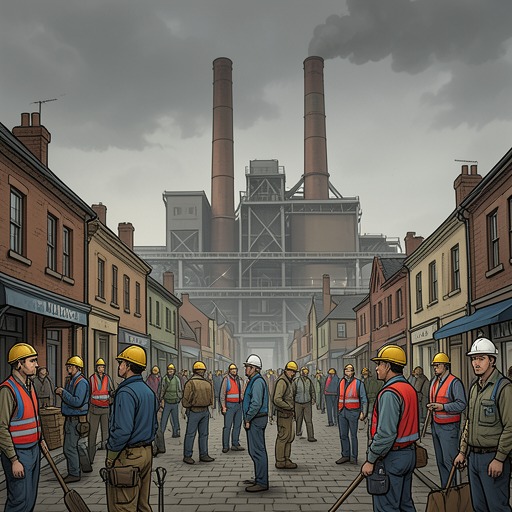
BCH Homes sought to build a 100-home subdivision on property in Statenville that was still zoned as agricultural land. The project was tied to the town’s anticipated expansion and to rumors that a new pulpwood plant would relocate there within 18 months. BCH Homes recognized the expected influx of workers and residents as an opportunity to supply new housing, turning projected industrial growth into a development prospect.
The proposal placed BCH Homes at the center of a contentious city-council dispute. The property’s possible rezoning provoked opposition from local residents who feared that the subdivision would reduce their property values or otherwise alter the character of the surrounding area. The conflict therefore extended beyond a technical zoning decision: it pitted a Boise developer’s growth-oriented investment against residents’ claims about land, community stability, and the preservation of Idaho topsoil.
The Contested Land Sale
The land had been sold to BCH Homes by Brady Perkins, a farmer whose comments appeared in a report by Guy Thompson. Perkins said he believed he was selling the property to another farmer and accused BCH Homes of posing as a buyer under false pretenses. He also expressed regret that productive Idaho topsoil might be covered with pavement.
His account left room for uncertainty. Cal Murphy wondered whether Perkins sincerely objected to the sale or was attempting to protect himself from the growing local disdain directed at him for selling the land to an outsider. That ambiguity made the transaction significant in two ways: it established BCH Homes as a company willing to acquire valuable agricultural property for urban expansion, while also showing how resentment over the sale had spread among Statenville residents.
Connection to the Three Deaths
The BCH Homes dispute becomes a possible investigative lead when Kelly Mendoza shows Cal Murphy a two-week-old copy of The Register bearing the headline “Boise Developer, City Clash.” The article names several people involved in the rezoning controversy, and Kelly circles the surnames Murray, Reid, and Gold—the same surnames belonging to the three dead teenagers.
The coincidence immediately raises the possibility that the youths’ deaths were connected to opposition against BCH Homes. Cal remains skeptical. He notes that other people were quoted in the article without losing family members and questions why a developer would allegedly target the sons of outspoken residents rather than pressure the city commissioners directly. The exchange establishes BCH Homes not as a proven perpetrator, but as the institutional focus of a hypothesis that forces the reporters to look beyond the official claim of simple overdoses.
The suspected link gains weight because official explanations around the deaths are unstable. Sheriff Jones insists that the three victims died of drug overdoses, although toxicology reports are still pending, and methamphetamine was reportedly found at all three scenes. Kevin Mendoza later rejects the idea that the victims simply overdosed, saying that his initial findings indicated they had bled to death; when pressed, he is ordered to treat the deaths as drug overdoses and cancel the toxicology screens. BCH Homes thus enters a narrative in which the classification of death itself is subject to institutional pressure, even though the available evidence does not establish that the company directed or caused that pressure.
Narrative and Structural Significance
BCH Homes represents the respectable public face of Statenville’s expansion: homes, investment, projected employment, and the promise of a larger town. The same project also concentrates competing interests in one piece of land. Its proposed subdivision connects outside capital to local government, farmers to developers, and public claims about progress to private fears about displacement and declining property values.
The company’s importance lies less in any confirmed action than in the questions its presence makes possible. A zoning headline becomes a clue; three family names become a pattern; and an apparently routine development project becomes part of the reporters’ attempt to determine whether the deaths were accidents, drug-related tragedies, or consequences of a wider structure of concealed power. BCH Homes therefore functions as the plot’s bridge between land-use politics and the town’s hidden criminal economy, while the evidence deliberately preserves uncertainty about the company’s direct responsibility.