Cold River Canyon sting operation
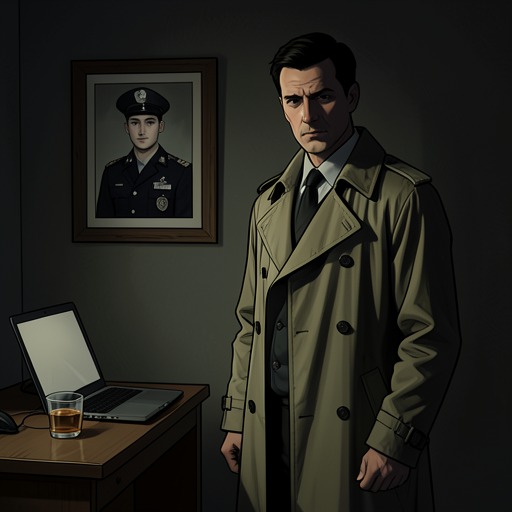
Dead ShotCold River Canyon sting operation is the decisive confrontation that converts Cal Murphy and Kelly Mendoza’s apparent abduction into an FBI-managed trap. Mayor Gold intends to stage their deaths as a rock-climbing accident at Cold River Canyon, while Cal, Kelly, and federal agents secretly arrange the scene so that Gold’s threats, admissions, and violence can be recorded and acted upon. The operation ends with Gold killing Mercer and then leaping into the canyon, while Cal and Kelly survive and the evidence becomes the foundation for their public account of Statenville’s corruption.
Causes and Background
The operation grows out of Cal and Kelly’s investigation into the deaths of three high-school student-athletes and the wider system protecting Cloverdale Industries. Their work has repeatedly collided with information control. Guy Thompson initially sends Cal to the sheriff’s office to obtain usable information, insisting that he report back and keep Kelly with him for the newspaper’s photographic coverage. Yet the local official account reduces the deaths to drug overdoses, while Joseph Mendoza and Hunter Jones tell Guy that townspeople supposedly want only funeral arrangements and flowers. Guy, already compromised by a monthly payment of one hundred twenty-dollar bills in exchange for ignoring Statenville’s secret, pressures Cal to abandon serious reporting and write only a reaction piece. The threatened warning letter likewise tells Cal to keep quiet, conceal the previous night’s events, and avoid even telling Kelly or Guy.
The pressure becomes more dangerous because Gold’s control is not merely political. He runs Statenville through obedience, money, and violence, while preserving the town’s prosperity by suppressing knowledge of Cloverdale Industries’ drug operation. His employee screening system is designed to protect the company’s secret, and workers understand that disclosure could cost them their wages and lead to long federal prison sentences. That system fails when Buddy Walker, apparently an ordinary basketball coach helping his elderly mother, passes the background check while actually operating as a deeply embedded federal agent. Mercer is also an FBI agent, and the two men have spent years gathering evidence on Gold’s organization, its facilities, and the movement of its drugs. Their undercover work traces back to Gold’s former identity as Carmen Deangelo, a Scarelli crime-family captain whose gold-coin murder signature resurfaced after the killing of a United States senator’s nineteen-year-old son in Portland.
By the time the Cold River Canyon plan is formed, the stakes extend beyond the reporters’ safety. The FBI wants Gold, the drug ring, the people who transport and sell its product, and possibly a mole inside its own operation. Mercer has already misdirected Walker’s search party and learned more of Statenville’s secrets, but his motives remain suspect. Cal learns that Mercer and Walker are under investigation as possible moles, while federal officials also fear that one of their agents may be responsible for the deaths that began the investigation. The canyon therefore becomes both a criminal ambush and an institutional test: the FBI must let Gold reveal himself without allowing him to kill the witnesses.
The Planned Trap
Gold chooses the exact position where he had stood less than a day earlier and waits for Mercer’s patrol car. He knows Cal and Kelly are being brought to him in the back of Mercer’s squad car, and he has already invented the explanation for their deaths: a rock-climbing mishap sending their bodies to the bottom of the canyon. The August heat and exposed rock faces do not deter him. He regards the scene as the final reinforcement of the fortress he has built around Statenville and its drug empire.
Cal recognizes that Mercer has deceived him and does not protest when the reporters are taken from the vehicle. Cal and Kelly perform shock at the double-cross, drawing on both genuine surprise and deliberate acting. Their handcuffed appearance is essential to the plan because it convinces Gold that the danger has passed. Gold approaches them with his arms outstretched and a grin, pleased that the two reporters who threatened his power are finally within his reach. His language frames them as persistent irritants and announces his intention to destroy them personally.
The apparent capture is controlled from outside the scene. Before the meeting, Cal and Kelly’s FBI liaison warns that survival is not guaranteed if Gold becomes desperate, but the bureau commits its resources to protecting them. Kelly’s determination prevents Cal from withdrawing, and the FBI places a sniper and a full tactical team on a ridge overlooking the canyon. The agents also use Kelly’s iPhone as a concealed recording device. Gold does not know that she still has it; the open line permits the tactical team to follow the confrontation and respond to developments in real time. The operation thus turns Gold’s confidence in a private execution into the condition that makes his own words and actions observable.
Confrontation at the Canyon
Gold initially believes that the reporters are helpless. He moves toward them while they stand a safe fifteen yards from the cliff edge, treating the handcuffs and Mercer’s custody as proof that his plan is working. The physical arrangement matters: the cliff promises a staged accident, the patrol car provides an official-looking route into danger, and Mercer’s apparent betrayal supplies the authority Gold needs to approach without resistance.
The value of the scene changes when Cal challenges him. Gold points his gun at Cal, but Cal warns him to reconsider because a red laser dot is aimed at Gold’s shirt and heart. Gold looks down and recognizes that a sniper can kill him in seconds. Even then, he keeps his weapon trained on Cal, showing how completely his habitual control has narrowed into defiance. Cal follows the warning by telling him to put the gun down or lose a hand. The exchange reverses the apparent hierarchy: Gold still has the local weapon and the political history, but the reporters now possess concealed evidence, federal surveillance, and a lethal countermeasure.
The trap’s most important result is not simply that Gold becomes vulnerable. His conduct supplies the proof that an official investigation or courtroom argument might otherwise struggle to obtain. The FBI knows that an admission made under such circumstances could later be weakened by legal challenges, but it also understands that a revealing newspaper story could force Gold into a desperate move. The operation is designed around that gap between what can be formally proved and what can be publicly exposed. Kelly’s recording preserves the encounter, while the sniper and tactical team ensure that Gold’s attempt to silence the witnesses cannot be completed.
Collapse and Aftermath
The confrontation ends when Gold turns and leaps into the canyon after killing Mercer. His death prevents the mastermind from escaping and removes the immediate threat to Cal and Kelly, but it also closes off the possibility of a conventional confession or trial. The FBI’s uncertainty about Mercer’s motives becomes immaterial once Gold kills him, and the chain of speculation surrounding the mole no longer controls the outcome. What began as an intended execution of two reporters becomes the destruction of both the corrupt intermediary and the criminal leader who believed he could command the entire town.
Cal and Kelly survive the canyon for the second time in less than twenty-four hours. Kelly then signals the sniper with the iPhone and asks the tactical team to come down and remove their handcuffs, confirming that the device was not merely a private safeguard but the operational link between the trapped reporters and the federal force above them. Their survival also preserves the witnesses needed to interpret what happened: without them, the canyon could have been presented as another accident; with them, the event can be connected to Gold’s threats, Mercer’s betrayal, the drug network, and the system that protected it.
The operation’s consequences continue through publication. The next day, Cal’s story appears in two newspapers, carrying his byline and presenting the material gathered through the investigation. The printed account marks a final shift from controlled local information to public disclosure. Earlier, Guy Thompson had tried to limit Cal to a disposable reaction piece, while the warning letter demanded silence and the town’s authorities insisted that suspicion was not evidence. After Cold River Canyon, the reporters possess a recorded confrontation, federal corroboration, and the deaths of the men who had tried to turn the canyon into a grave. The sting therefore does not merely rescue Cal and Kelly; it changes who controls the story.