Journalistic pursuit of truth
Dead ShotJournalistic pursuit of truth is presented as both a professional duty and a form of moral resistance. In the world of The Warren Omissions, reporting is not merely the production of publishable copy; it is the effort to make reality visible when events refuse to arrive in an orderly, intelligible form. The principle gives Cal Murphy his deepest purpose, places him in conflict with the institutions around him, and turns the newspaper newsroom into one of the novel’s central arenas of power.
Definition and Professional Ethic
The idea is established through a simple standard of journalism associated with the newspaperman who taught the narrator that real newspapermen drink coffee and always print the truth. It is reinforced by the claim that, in the real world, the right thing never happens in the right place and the right time, so journalists and historians must make it appear that it has. Truth therefore requires labor: facts must be found, ordered, checked, and brought before the public rather than passively awaited.
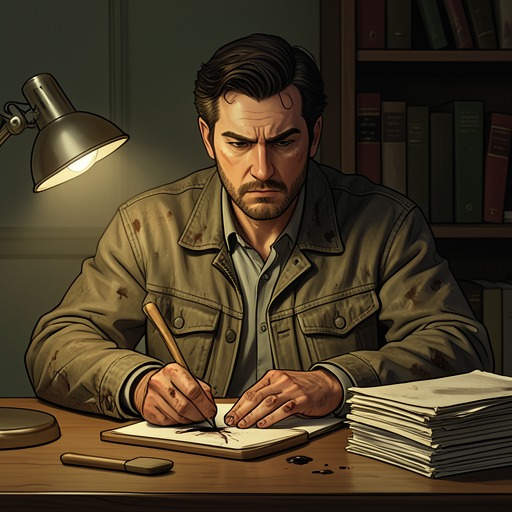
For Cal, this ethic is not an abstract slogan. When he tells Guy Thompson that he is supposed to keep digging because something strange is happening and people will want to know about it, he treats public curiosity as a legitimate consequence of public danger. His investigation begins with the deaths of Cody Murray, Devin Reid, and Hunter Jones, but the larger object of inquiry is the system that has made those deaths difficult to understand. The duty to report becomes a duty to resist convenient explanations.
Investigation Against Official Silence
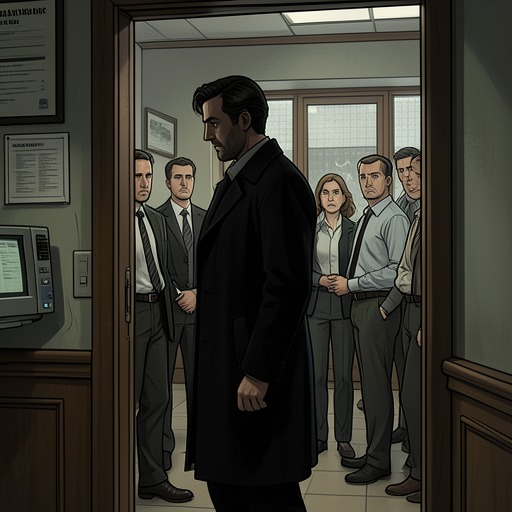
The pursuit of truth develops through repeated friction with official and institutional gatekeepers. Guy instructs Cal to go to the sheriff’s office and ask Jones for information, then to report back so the newspaper can determine its next move. The assignment initially places journalism near official authority, but it soon becomes clear that access to information is conditional and politically managed. According to Joseph Mendoza and Hunter Jones, the town wants nothing beyond funeral arrangements and instructions about where to send flowers for the boys’ families. That account reduces a disturbing public event to ceremonial grief and discourages further questions.
Cal refuses to accept that reduction. He considers whether the deaths could involve a serial killer, contaminated water, the Statenville Sasquatch, suicide, or a cult, and the range of possibilities emphasizes how little the available explanation accounts for. The uncertainty does not make investigation irresponsible; it makes investigation necessary. Even while the unanswered questions resemble the outlandish premises of an episode of The X-Files, Cal remains determined to uncover the truth rather than select the most reassuring theory.
The conflict reaches the newsroom when Guy Thompson orders Cal to write only a reaction piece. Such an article is described as little more than a man-on-the-street poll: a reporter interviews people, quotes them, and lets their responses stand in for the story. The reassignment destroys Cal’s hope of producing a major investigation or even a strong article for the newspaper’s files. More importantly, it converts editorial control into a method of containment. By replacing inquiry with reaction, the institution can appear responsive while avoiding the facts that might expose corruption.
Evidence, Sources, and Ethical Limits
The principle does not mean that every rumor can be printed. In a conversation with a coach, Cal hears that Cody Murray’s and Devin Reid’s bodies may have appeared to have been mauled by a mountain lion, although the coach knows of no drug that would produce such injuries. The coach frames the rumor as possibly useful to grieving parents who might otherwise blame themselves for not paying enough attention to their sons. He then asks Cal not to report what he has said.
Cal’s response shows the tension between truth-seeking and responsible publication. He has been recording the conversation on a digital recorder, but he promises not to attribute the information to the coach. He reserves the possibility of asking permission to use the material later as an unnamed source if it proves connected to a suspicious death and could help catch a killer. The coach agrees only under those conditions, and Cal’s promise recognizes that investigative journalism depends not only on persistence but also on protecting sources and distinguishing a lead from a verified fact.
The same ethical pressure appears in the warning letter addressed to Cal Murphy. The anonymous writers describe themselves as allies, say that they possess information capable of placing him in the national spotlight, and insist that he keep quiet, invent a cover story, and stop asking questions because knowledge of events in the community would put him at risk. They also demand that he show the letter to no one, including Kelly Mendoza and Guy Thompson. The letter attempts to convert information into leverage: truth is offered as a reward, withheld as a privilege, and threatened as a danger.
Courage, Resistance, and Personal Cost
The pursuit of truth becomes most explicit after Cal concludes that Jake Dawkins may have lied about the circumstances of his automobile crash. Cal reasons that Dawkins could be involved in a sheriff’s-office effort to stop the investigation into the deaths of Statenville’s three football heroes. From that point, the danger surrounding the story changes its meaning. If someone is trying to kill Cal, make the attempt look accidental, or merely silence him temporarily, then his investigation may be approaching secrets that powerful people want concealed; the presence of both local obstruction and mysterious kidnappers suggests that more than one secret is in play.
Rather than treating the threat as a reason to withdraw, Cal sees it as confirmation that the investigation matters. He privately commits himself to continuing, plans to use the assigned reaction piece as cover, and asks Kelly Mendoza to keep the work discreet. His resolve is not presented as fearless certainty. He has to form theories, discard them, and act without knowing whether the deaths are murders, accidents, or events that will remain unexplained. The ethical choice lies precisely in proceeding under uncertainty.
Guy Thompson understands the danger more clearly than his orders initially reveal. In a private conversation, he tells Cal to abandon his “little Sherlock Holmes fantasy” and stop looking for the truth for his own good. Later, Guy’s commands become more direct and violate the journalistic instincts he once cultivated. He knows that Cal will not stop pursuing a story capable of exposing deep corruption, because such a story is exactly what journalists dream of finding. His fear is not simply that Cal will disobey an editor; it is that Cal’s pursuit of truth may end in his death.
Publication and Significance
The principle finally moves from private conviction toward public record when Cal’s story appears in two newspapers the next day under the byline “By Calvin J. Murphy” for The Tribune. That publication matters because the novel has repeatedly shown how information is filtered: the sheriff’s office controls access, the town suppresses curiosity, Guy Thompson attempts to redirect the assignment, and the anonymous letter demands secrecy. The published story represents a breach in that chain of containment.
Journalistic pursuit of truth therefore functions as the novel’s counterforce to managed perception. It does not guarantee immediate justice, eliminate uncertainty, or protect the reporter from retaliation. It does establish a method for converting scattered clues, protected testimony, danger, and institutional resistance into an account that others can examine. The concept’s decisive significance lies in that act of exposure: when authority attempts to make silence look like social harmony, reporting insists that unexplained deaths remain public facts rather than private inconveniences.