Scarelli crime family
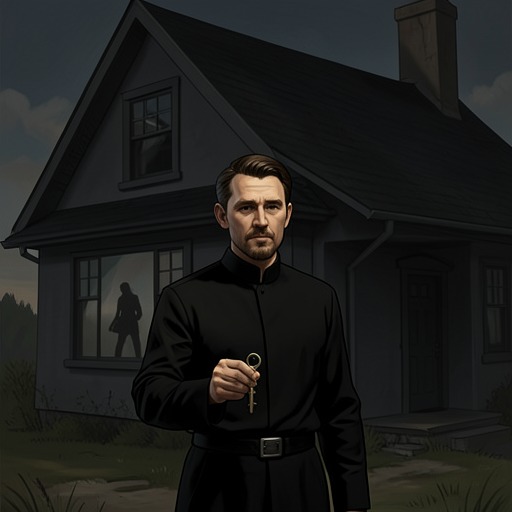
Dead ShotThe Scarelli crime family is the criminal organization from which Nathan Gold emerged and against which the Federal Bureau of Investigation ultimately measures the full scale of his criminal career. Although the family operates largely outside the immediate action in Statenville, it supplies the underworld history, methods, and threat that connect Gold’s Idaho drug empire to a much older network of organized violence. Its importance lies in the contrast between Gold’s carefully manufactured identity as a civic leader and his earlier life as Carmen Deangelo, a Scarelli captain suspected in more than a dozen murders.
Origins and Criminal Structure
The family is established as a Boston-based mob organization with enough power to place senior figures such as Gold, then known as Carmen Deangelo, in positions of authority. When Mercer joins the Federal Bureau of Investigation, his first assignment at the Boston field office is to find ways to bring down the Scarelli mob bosses. Gold is described as a rising captain with considerable promise before he nearly disappears from the bureau’s knowledge. For roughly twelve years, investigators assume that Deangelo has been quietly killed and buried somewhere undiscoverable, a mistaken conclusion that allows him to rebuild himself under another name and in another region.
The organization’s criminal culture is tied to targeted murder as well as drug trafficking. In Boston, Deangelo develops a distinctive crime-scene signature: a nineteenth-century gold coin placed in the mouth of each victim. The Federal Bureau of Investigation identifies at least a dozen murders marked by these rare coins, but the cases are difficult to prosecute because many of the victims belong to a rival mob. Their identities and affiliations make the killings look, to investigators, like part of the underworld’s internal violence. The passage presents the family’s environment as one in which murder can be treated as useful, expected, or even administratively convenient when it removes an enemy without producing a public trial.
Gold’s Disappearance and Return
Gold’s transformation from Carmen Deangelo into Nathan Gold is the organization’s most consequential individual escape. He leaves Boston not because he has abandoned crime, but because he wants to abandon the burdensome murder work associated with it. In his later reasoning, selling drugs is a transaction between product and buyer, whereas killing is the dirty labor that consumes part of the killer’s soul. That distinction does not make his new enterprise lawful or humane, but it reveals the self-justifying logic by which he separates commercial exploitation from direct violence.
For years, the disguise works. Statenville appears to the wider world as an ordinary agricultural community whose major crimes are drunk driving and occasional meth-lab construction. Even personnel in the Federal Bureau of Investigation’s Salt Lake field office barely know where the town is, although it lies only a short drive away. Gold uses that obscurity to establish Cloverdale Industries and construct a prosperous local order whose official calm conceals industrial-scale drug production. His control of the town depends on money, obedience, and the belief that protecting the local economy protects the community itself, but the narrative makes clear that this civic language mainly disguises Gold’s personal power and profit.
The Signature That Reconnects the Family History
Gold’s anonymity ends when the old gold-coin signature reappears in Portland approximately twelve years after the last Boston murder. The victim is not a rival mob member but the nineteen-year-old son of United States Senator Tom Brazenworth, a young man described as having fallen in with the wrong crowd. Because the victim’s status guarantees serious attention, the Federal Bureau of Investigation is called in. Agents recognize the calling card, search for Deangelo, identify his new alias, and trace him to Statenville.
The Portland murder also exposes the limits of Gold’s attempt to divide his past from his present. He regrets leaving the signature, believing that local investigators might overlook a detail that Boston agents would analyze immediately, but the connection is eventually made. Street rumors in Seattle, Portland, and Salt Lake City further point investigators toward a small Idaho town containing a drug plant capable of commercial production and a fleet of vehicles moving product throughout the Pacific Northwest with little apparent detection. The Scarelli family therefore functions as the hidden genealogical link between an old pattern of mob killings and the newer Cloverdale Industries operation.
Federal Infiltration and the Statenville Network
Once the Federal Bureau of Investigation confirms that Carmen Deangelo is living as Gold, it places deep-cover agents in Statenville. Walker and Mercer enter the town with carefully constructed identities, professional credentials, and even selected minor encounters with the law on their background checks so that Gold will not become suspicious. Their assignment is broader than arresting Gold: the bureau wants evidence against everyone connected to the operation, including the people who sell and transport Cloverdale’s drugs across state lines.
Gold’s organization depends on a layered network rather than on a single visible headquarters. He conducts rigorous background checks on Cloverdale Industries employees, warns them that disclosure could cost them their well-paid jobs and send them to federal prison, and reinforces the seriousness of the organization’s business at closed corporate gatherings. Local authorities help maintain the appearance of normality by defining suspicious deaths as overdoses, limiting what reporters can learn, and using trumped-up charges against investigators. Cal Murphy’s arrest for possession of an open container and driving under the influence, despite his knowledge that the charges would not withstand a real court, shows how the local machinery can be used to intimidate anyone approaching the secret.
The same structure reaches into everyday administration. Sheriff Jones presents Devin Reid’s death, along with the deaths of the other two young men, as a simple drug overdose and says that methamphetamine was found at all three scenes, while withholding the toxicology results that might establish what actually happened. When Cal Murphy and Kelly Mendoza continue asking questions, the newspaper’s editor reports that Joseph Mendoza and Hunter Jones insist that nobody in town wants anything except funeral arrangements and flowers for the families. This language of community grief becomes another means of closing off inquiry. The Scarelli model is thus not shown only through guns or assassins; it survives through controlled information, purchased loyalty, manipulated law enforcement, and the suppression of evidence.
Collapse and Consequences
The organization’s concealment begins to fail when Walker and Mercer penetrate Cloverdale Industries and determine the scale of the operation. Mercer misdirects the search for Walker, gains the confidence of the Statenville Sheriff’s Department, and learns increasingly sensitive information before discovering the central secret. The agents intend to expose not merely a local manufacturer but the entire chain of production, sale, and interstate movement. Their work places the Scarelli family’s former captain under federal scrutiny and turns Statenville’s apparent prosperity into evidence of a criminal economy.
Gold’s final confrontation with Cal Murphy and Kelly Mendoza reveals how completely the investigation has destabilized the system he built. He wants the reporters dead because they refused to accept the coroner’s account of three teenagers overdosing on the same batch of drugs. In Cold River Canyon, Gold kills FBI agent Elliott Mercer by shooting him twice and pushing him from a cliff, then chooses to leap into the canyon himself rather than face prosecution. Cal threatens to reveal Gold’s whereabouts to the Scarelli family and let its members take him back to Boston with the Federal Bureau of Investigation’s approval, invoking the organization as the punishment awaiting the man who escaped it.
The official aftermath confirms the scale of the old criminal history. Gold, identified again as Deangelo, is suspected in the murders of more than a dozen people during his years as a captain for the Scarelli crime family. The Federal Bureau of Investigation seizes Cloverdale Industries and shuts down its operations while investigating the alleged drug-making plant. The family itself is not shown being dismantled, but its former captain’s death, the exposure of his alias, and the federal seizure of his enterprise destroy the protective distance that had separated Boston’s mob history from Statenville’s present-day corruption. In that sense, the Scarelli crime family remains both an offstage power and the shadow under which Gold’s entire empire is finally judged.