Seattle
Dead ShotSeattle functions in the novel as more than a background city: it is the professional horizon against which Cal Murphy measures his stalled life in Statenville, the media market that gives his investigation reach, and the destination toward which his career finally turns. At first, Seattle belongs to other people and better opportunities. By the end, Cal’s reporting has crossed into the city’s newspapers, broadcast outlets, and sports department, transforming an imagined escape into an earned professional return.
The City as an Unreachable Career Ideal
Seattle first appears through Cal’s friendship with Josh and through Cal’s attachment to baseball journalism. Josh urges Cal to leave what he mocks as a newsless Idaho town and come “up here to Seattle,” while Cal remains at The Register in Statenville, where his most notable assignment has been a little-league tournament story. The contrast is not merely geographic. Seattle represents a larger newsroom, a denser professional world, and the possibility that sports writing might become a career rather than an aspiration.
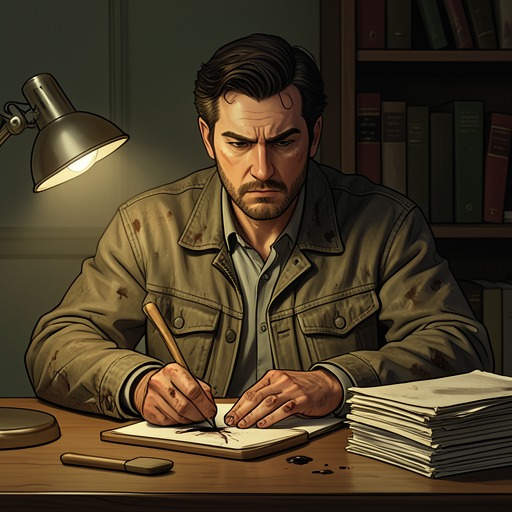
Cal’s vintage poster of Ken Griffey Jr. in a Mariners uniform makes that imagined future visible. He has carried the poster from one residence to the next, including the dorm room he once shared with Josh at the University of Washington. The object links Seattle to Cal’s earlier ambitions and to a version of himself that still expects to cover the Mariners for The Seattle Times. His loyalty to the poster is therefore both sentimental and competitive: Josh identifies with Randy Johnson, while Cal identifies with Griffey, and their opposing Seattle heroes mirror the friends’ different trajectories—Josh’s calculated advancement and Cal’s more openly ambitious struggle to make use of his talent.
The city also exposes Cal’s professional insecurity. He values Josh, but Josh has won the internship in The Times’ sports department that Cal wanted. More than three dozen graduates competed for the position, and Josh emerged as the successful applicant. Cal’s resentment is partly comic in its private form—he imagines Josh trapped in traffic and formatting Formula One agate for a second job—but the jealousy reveals how completely Seattle has become the measure of advancement. Cal does not simply want to visit the city; he wants recognition there.
Seattle and the Expanding Investigation
The investigation into Cody Murray’s death gradually changes Seattle from an emblem of escape into an active destination for evidence and publication. Cal and Kelly Mendoza uncover a local athletic culture in which drug use is normalized or ignored. Mike Miller recalls warning Cody’s father about his drug use and receiving the answer that, if the drugs helped Cody get ahead, he supported them. Miller also explains the athletic logic behind methamphetamine use: it could provide energy, prolong workouts, and help an athlete build the physical appearance that college coaches valued. Those observations connect Cody’s death to a wider system rather than treating it as an isolated tragedy in a remote town.
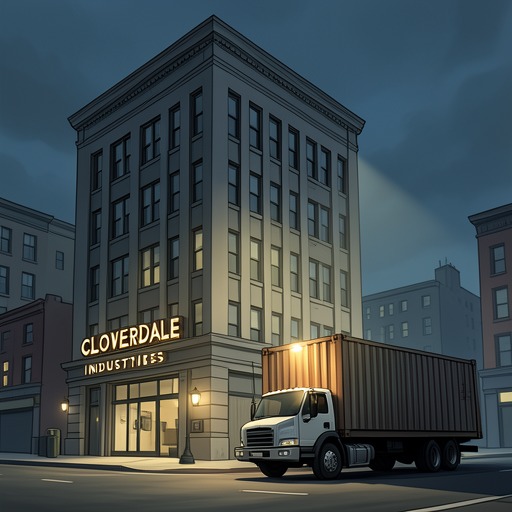
That local story acquires regional scale when the investigation reaches Cloverdale Industries. The rumors surrounding the operation describe a drug plant in Idaho with vehicles moving product throughout the Northwest, and later FBI accounts state that the network extended as far north as Vancouver and as far east as Denver. Seattle is consequently one of the places through which the story’s consequences travel. It is not just the city Cal hopes will notice him; it is part of the territory affected by the operation he is trying to expose.
The danger of that pursuit becomes physical before the story reaches its public audience. Cal is shot in the arm while he and Kelly are near a dock, and they must crawl toward an open bay while the gunfire continues. Later, as they flee on a Yamaha VMAX, Kelly holds Cal from the rear seat. His attention briefly shifts from constructing theories about Cloverdale Industries to the intimacy of her embrace, but the scene refuses the conventions of a triumphant action romance: there is no assurance that everything will be fine, and survival remains the immediate concern. Seattle’s promise therefore stands in sharp contrast to the precarious road by which Cal may reach it.
Publication, Broadcast, and Public Reach
Guy Thompson provides the decisive bridge between Cal’s evidence and Seattle’s media institutions. After Cal and Kelly survive, Guy instructs them to combine Cal’s story with Kelly’s best photographs and send the package to The Salt Lake Tribune and The Seattle Times. The instruction recognizes that the investigation is no longer merely a local report. Its subject—the flow of drugs from Cloverdale Industries into Salt Lake City and across the Northwest—requires regional circulation, and its credibility depends on the pairing of firsthand reporting with visual documentation.
The resulting article becomes a front-page story in both Salt Lake City and Seattle. Dave Youngman strengthens the Salt Lake version by adding the connection between the case and his city, while The Seattle Times publishes its own version. Kelly’s photographs capture the people and places involved, giving the story a visual force that complements Cal’s investigation. Seattle thus becomes the site where the hidden Idaho operation is converted into public knowledge, and where Cal’s work is judged not as a small-town curiosity but as consequential enterprise reporting.
The city’s response extends beyond print. After the exposure of Carmen Deangelo’s identity and death, Cal’s email fills with interview requests from media outlets across the country. Among them is an invitation from the “Mitch in the Morning” program on 950-AM KJR in Seattle to discuss Cody Murray’s death. Cal accepts because the broadcast offers the opportunity he had lacked to properly eulogize Cody, an outstanding quarterback whose future had seemed unexpectedly promising for an eight-man player. Seattle’s media ecosystem gives Cal two forms of recognition at once: investigative authority through The Seattle Times and sports authority through a Seattle radio audience.
Return and Professional Transformation
The final movement toward Seattle is embodied in Josh’s arrival at Boise Airport and the envelope bearing The Times logo. By then, Cal is no longer merely asking whether Seattle might offer him a chance. He has become the subject of national interview requests because he learned Carmen Deangelo’s identity and helped reveal the mayor’s criminal history. The city that once represented Josh’s advantage now acknowledges Cal’s work on its own terms.
Josh tells Cal that the envelope contains an offer to join The Times as an enterprise reporter on its sports staff. The offer combines the two ambitions that had seemed divided at the beginning of the novel: serious investigative reporting and sports journalism. Josh’s role is important but not sufficient by itself. He mentions their friendship and reminds the sports staff that he had beaten Cal for the internship, prompting jokes at his expense; the editor then retrieves Cal’s resume and asks whether Cal would want a sports position. Cal responds by jumping up and down and embracing Josh without caring how their relationship appears. The gesture resolves the earlier rivalry not by denying it, but by allowing professional recognition to replace the old hierarchy.
Seattle’s significance therefore changes across the narrative. Early on, it is a place Cal imagines from a distance while sleeping through another day in Statenville, a city linked to Josh’s traffic, his internship, and the career Cal failed to secure. During the investigation, it becomes a crucial publication center for evidence about Cloverdale Industries and the regional drug network. At the conclusion, it is the place that offers Cal an enterprise-reporting post on a sports staff. Seattle is finally not an escape from failure but the institutional acknowledgment of work performed under danger, grief, and uncertainty.