Statenville triple deaths
Dead ShotStatenville triple deaths begins as three apparently separate deaths but functions as the decisive rupture in Statenville’s public image. Cody Murray, Riley Gold, and Devin Reid are described officially as young victims of drug overdoses; the speed of their deaths, the inconsistencies surrounding the bodies, and the authorities’ insistence on a convenient explanation instead turn the case into the story that Cal Murphy and Kelly Mendoza cannot abandon. What first looks like a local tragedy becomes the pressure point through which the town’s protected secrets begin to surface.
The First Death and Cody Murray’s Ambition
Cody Murray’s death is introduced through the contrast between extraordinary athletic drive and private vulnerability. Statenville’s greatest football star in fifty years, he is a six-foot scrambling quarterback from a rural Idaho eight-man team who has nevertheless secured several major scholarship offers. Even while trying to relax on a Sunday afternoon with a sports magazine, Cody cannot remain still; constant motion defines him both on and off the field, and he dreams of one day appearing on a magazine cover.
His pursuit of athletic improvement has already crossed into drug use. Cody knows steroids are dangerous and difficult to obtain in a rural town, so he tells himself that he needs only a small, harmless boost for his workouts. The drug initially appears to him as assistance rather than a threat, but his use has begun to loosen from performance enhancement into simple pleasure. That shift matters because the death is not framed as an isolated act of recklessness. It grows from a sporting culture that rewards a powerful body, endurance, and visible competitiveness while leaving little room for caution or uncertainty.
The physical scene destroys the language of controlled athletic achievement. Cody first scratches at an itch above his elbow, then runs outside searching for relief. He removes himself from the house, digs both hands into his forearms, falls into the grass, rolls, and scratches while crying out. The itching feels like fire across his skin; his body becomes covered in bleeding welts as he writhes under the Idaho sun. After one final spasmodic convulsion, the itching stops and so does his breathing, leaving streaks of blood across his chest. The grotesque image makes the official simplicity of a drug death difficult to accept, especially because the victim is someone the town has built into a symbol of promise.
The Official Explanation
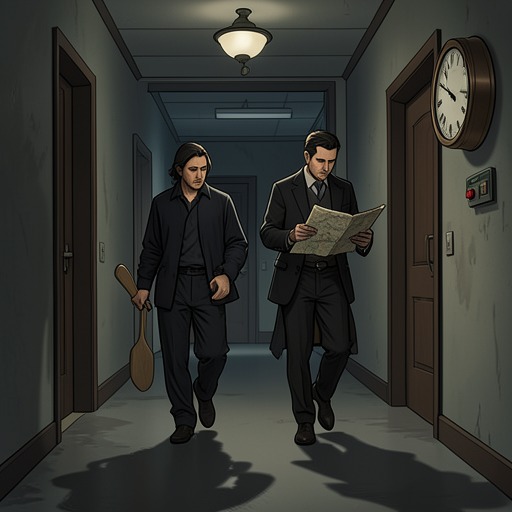
Cal Murphy learns of the case from his editor, Guy Thompson, on a Monday morning. Guy orders him to get dressed and come to the newsroom immediately, announcing that Statenville has a double murder. He identifies the first two victims as Cody Murray and Riley Gold, and the wording initially gives the deaths the force of a deliberate attack rather than a private medical crisis.
The next official account sharply reduces that sense of danger. When Cal and Kelly question Sheriff Jones, he says the boys threw away their talent for a meth high and describes the deaths as drug overdoses rather than murders. Cal asks directly about the third victim, and Jones identifies him as Devin Reid, Jim Reid’s son. Jones then objects to Cal’s repeated use of the word murder, insisting that all three died from a simple drug overdose.
The numbers and timing make the explanation unstable even before the investigation develops. Cal points out that the three deaths occurred within a twenty-four-hour period and asks whether that should seem suspicious. Jones concedes that it is suspicious in principle but argues that suspicion is not evidence. He presents the existence of meth at all three scenes as though it settles the matter, while also admitting that the toxicology reports will not return from Boise for at least two weeks. The exchange exposes an official strategy built from partial disclosure: authorities release one usable fact, meth at the scenes, while withholding or postponing the information that could establish how the victims actually died.
The medical evidence is pressured into conformity as well. Kevin Mendoza initially believes that the victims bled to death, but the response he receives is an emphatic declaration that they overdosed on drugs. When he notes that toxicology cannot confirm an overdose for several days and insists that drugs were not ultimately what killed them, the caller treats the conclusion as settled and cancels the toxicology screens. The deaths are therefore not merely investigated; their meaning is administratively fixed before the available tests can establish it.
Athletic Culture and the Social Background
The deaths are connected to a local athletic culture in which performance is treated as a justification for chemical risk. Mike Miller tells Cal and Kelly that promising athletes commonly use some type of drug and that few people in Statenville, including parents, seem to care. Miller recalls warning Cody’s father about possible drug use after practice. Cody’s father laughed and said that if the drug helped his son get ahead, he supported it. That reaction turns private ambition into family approval and shows how the pressure surrounding the athletes is distributed across the community rather than imposed by the boys alone.
Miller also explains why meth could appear attractive to an aspiring athlete. He has heard that it provides energy, allowing a person to work out longer; longer workouts can produce greater strength and physical ability. In the recruiting culture he describes, college coaches may care less about intelligence than about how an athlete looks when getting off the bus. The result is a destructive hierarchy of values: academic preparation is displaced by bodily display, and the body is treated as a credential that must be continually intensified.
Cody’s story embodies that logic with particular force. He wants his achievements to remain his own, yet he seeks a chemical kick to make those achievements possible. The phrase “harmless … at first” marks the gap between intention and consequence. The drug’s danger does not arrive as a remote warning; it enters through a familiar athletic desire to endure more, become stronger, and escape the limits of an ordinary body. The deaths thus reveal a form of violence that is both personal and cultural, produced by the collision between competitive masculinity, parental complicity, and a town’s willingness to admire results without examining their cost.
From Local Tragedy to Threatened Investigation
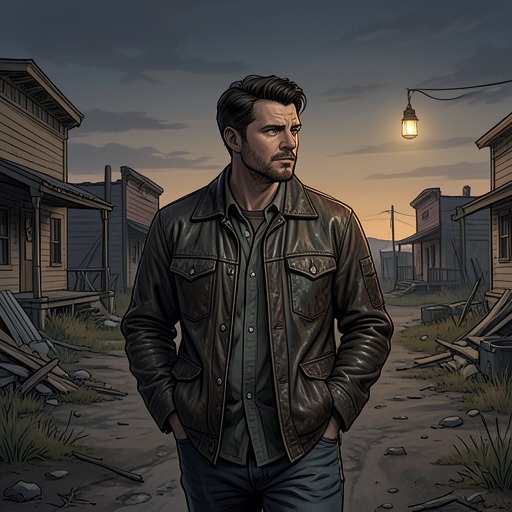
The case changes value for Cal and Kelly when the three deaths cease to look like an unfortunate pattern of youthful drug use and begin to suggest deliberate concealment. Their questions meet evasions, staged openness, and a clear pressure to accept the overdose explanation. Statenville’s small-town rules discourage direct confrontation, and the newspaper itself follows those unspoken limits. The investigators understand that information is being managed, but they initially lack the authority to force the issue.
That imbalance becomes explicit when Cal is arrested on trumped-up charges of possessing an open container and driving under the influence. He knows the charges will not hold in a proper court: he rarely drinks and had not been driving with alcohol in his vehicle. He recognizes the arrest as an intimidation tactic by someone with power, and Sheriff Jones has him booked, photographed, and mocked throughout the process. Cal had believed that uncovering the truth about three suspicious deaths would benefit Statenville; inside the jail cell, he realizes that the secret he is approaching is more threatening to powerful people than he had understood.
The investigation consequently moves beyond the question of what killed Cody, Riley, and Devin. It becomes a contest over who is allowed to define the deaths. The authorities’ preferred account protects the town’s reputation and preserves the appearance of a peaceful community, while Cal and Kelly’s reporting threatens to connect the victims to a wider structure involving drugs, officials, and those who benefit from silence. The deaths are the first visible evidence of that structure, but the effort to suppress their meaning becomes nearly as important as the deaths themselves.
Consequences and Narrative Significance
The triple deaths propel the main conflict of the book. They bring Cal and Kelly together as investigators, draw Guy Thompson into the danger surrounding their reporting, and eventually place Cal in direct physical peril. During the pursuit of the story, Cal is shot in the right arm while Kelly tries to move him toward an open dock; later, while fleeing on a motorcycle, Cal feels Kelly’s embrace around him and momentarily experiences intimacy amid the danger. These later scenes show how the deaths continue to govern the characters’ lives: the victims are absent, but their case dictates where the survivors go, whom they trust, and what risks they accept.
The deaths also establish the book’s central contrast between public order and hidden violence. Statenville presents itself as a quiet town with little serious crime, yet the official response to three deaths in one day is not open inquiry but classification, delay, and coercion. Meth found at the scenes becomes a substitute for explanation. The victims’ identities as talented young athletes make the tragedy more pointed, because the same qualities that promise them a future—discipline, physical endurance, and the desire to leave Statenville—are entangled with the pressures that help destroy them.
As an event, Statenville triple deaths therefore marks both an ending and a beginning. Cody Murray dies in a scene of extreme bodily suffering; Riley Gold and Devin Reid complete the pattern that authorities attempt to reduce to overdose. But the pattern cannot remain contained. The three deaths initiate Cal Murphy and Kelly Mendoza’s investigation, expose the consequences of a community’s tolerance for performance-enhancing drug use, and turn the supposedly peaceful Statenville into a place where uncovering the truth can provoke arrest, gunfire, and flight. Their decisive significance lies in that transformation: three deaths become the evidence around which the town’s entire moral and political order begins to crack.