Statenville's dark secret
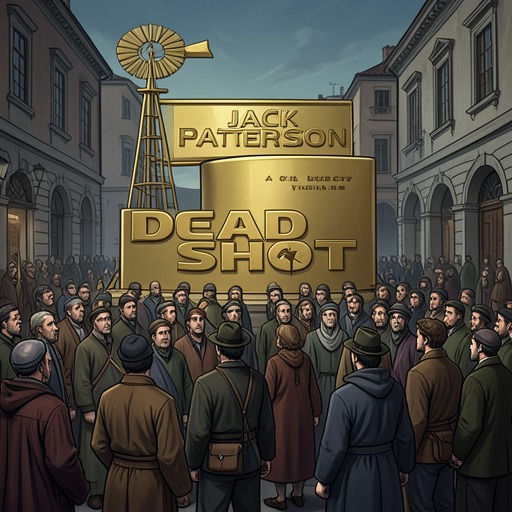
Dead ShotStatenville's dark secret is not merely a hidden crime but a governing system: the town's prosperity depends on an illicit drug operation protected by local power, bought loyalty, controlled information, and violence. Its central justification is that the money keeps Statenville alive, yet the same arrangement turns residents into uninformed pawns and makes dissenters expendable. The secret therefore links the deaths of local youths, the suppression of reporting, the intimidation of Cal Murphy, and the criminal operation at Cloverdale Industries into one structure of social control.
Nature and Economic Foundation
Statenville's secret is managed as a bargain between public prosperity and private criminality. Gold can run the city by telling people what to do, helped by a small town with an unusually large budget, but concealing the source of that prosperity requires a far more intricate network. Gold and his inner circle have decided that as few people as possible should know what is happening. Secrecy reduces the chance that a conscientious objector will come forward, while generous payments make silence appear practical rather than morally difficult.
The town's visible success is the secret's strongest defense. Gold looks at what he has created and sees a boomtown rather than a failing rural community: people have jobs, money, and what appears to be a genuine dream. He asks whether they care where the money comes from, but the residents never receive the information needed to answer that question. The decision has been made for them. Statenville's people are treated as pawns in a get-rich scheme, with empty pockets filled when necessary to prevent questions and with murder reserved for those who cannot be managed by money.
Gold's own complicity reveals how the system recruits respectable figures. Guy Thompson accepted a monthly brown paper bag containing 100 twenty-dollar bills, counted every time, in exchange for behaving as though Statenville were only a sleepy town. Guy had left The Tribune because he wanted a quieter life free from daily crime, corruption, and the fear that a reporter's mistake might destroy his career. Statenville seemed to offer that peace through Rotary Club dinners, Garden Club photographs, and mayoral elections. The secret corrupted that retreat by converting his silence into a paid obligation.
Rules, Silence, and Enforcement
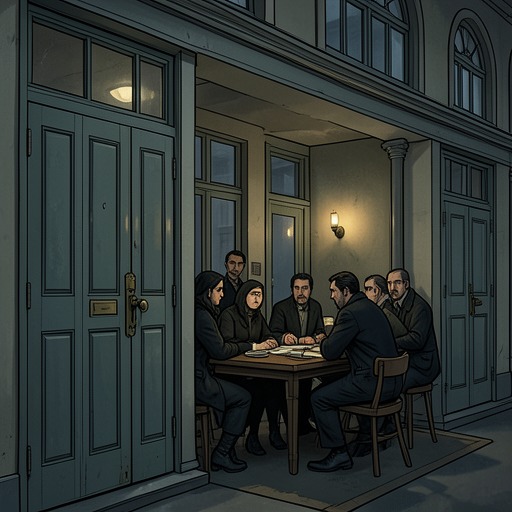
The secret operates through an internal code called the Golden Rules. When Cal Murphy encounters Willie Nelson, Willie explains that more powerful forces control Statenville and that everyone appears friendly until someone approaches the town's secret. Willie presents himself as a warning from the system's margins: he had once been a successful businessman, but after discovering the secret he lost everything. He tells Cal that knowledge cannot be undone and that anyone who tried to print the truth would be identified before the newspaper reached the press.
The punishment for discovery is described in terms of transformation and erasure. Willie warns that Cal could be turned into someone like him or, if he were lucky, killed. The warning makes the secret more than confidential information; it is a mechanism that classifies people according to whether they can be absorbed, discredited, or removed. The town's apparent friendliness is therefore conditional, and its civility functions as the surface expression of coercion.
Gold's methods follow the same graduated logic. New employees undergo rigorous background checks, and existing employees are reminded at closed corporate gatherings that exposure would cost them their paychecks and could send them to federal prison. Curious citizens, disgruntled employees, and trespassers can usually be persuaded with a handgun or cash. Those who cannot be persuaded are associated with an unused rocky quarry in a secluded canyon. The system combines rewards, threats, reputational pressure, and physical disposal rather than relying on one form of force.
The Secret in Public Institutions
The town's secrecy is reproduced by institutions that should expose wrongdoing. When three youths die within a day, Sheriff Jones insists that the deaths are simple drug overdoses rather than murders. He identifies Devin Reid as the third victim and argues that suspicion alone cannot produce a conviction. At the same time, he admits that methamphetamine was found at all three scenes, then retreats behind the claim that official knowledge must wait for toxicology reports from Boise. Information is released in a controlled fragment, enough to appear cooperative while preventing the reporters from pursuing the larger pattern.
The newspaper becomes another site of containment. Guy orders Cal to visit the sheriff's office, report back, and work with Kelly Mendoza on a dominant photograph for Wednesday's paper. Yet when Cal and Kelly continue digging, Guy says that local authorities report that nobody wants to know anything except funeral arrangements and where to send flowers. His pressure is not simply editorial disagreement: it turns the community's supposed desire for quiet into a reason to suppress inquiry. Later, Guy orders Cal to write only a reaction piece, reducing the investigation to a shallow collection of public responses and crushing the possibility of a major story.
The secret also depends on misleading narratives. After Cal's abduction, an anonymous letter calls him an important ally but demands that he keep the previous night's events quiet and invent a cover story. It promises information that could place him in the national spotlight while threatening him with harsher persuasion if he refuses. The letter specifically orders him not to tell Kelly or Guy. Its strategy is characteristic of Statenville: truth is dangled as a reward, withheld as a privilege, and surrounded by threats so that obedience can be made to resemble patience.
Cloverdale Industries and the Cost of Exposure
Cloverdale Industries is the operational center through which the secret becomes regional rather than merely local. Workers invoke the Golden Rule when reporters break into the facility, and employees are instructed to move product discreetly toward Seattle, Portland, and San Francisco. The code thus connects corporate discipline to distribution: secrecy protects not only Statenville's reputation but also an organized supply route.
The system's reach becomes especially clear through Buddy Walker. Walker has spent five years undercover in Statenville, posing as a basketball coach and part-time janitor while investigating what is suspected to be one of the Pacific Northwest's largest drug cartels. His cover gives him access, but the duration of the deception has worn him down. He still needs to determine how far the cartel extends, who its key players are, and how large a federal sweep must be before the operation can be dismantled.
Gold's background-check system fails when Walker passes as an ordinary coach who needs extra work to help support his elderly mother. Walker's apparent law-enforcement history contains nothing unusual enough to raise suspicion, allowing him to penetrate the facility. Once Gold learns that a federal agent has access to every room and has been working with another agent, the secret enters an emergency phase. Gold tells himself that destroying the operation would turn Statenville into a ghost town, but he recognizes that his actions are not truly for the town or its people.
Operation Fuego is abandoned in favor of Operation Cleanup. Gold has Walker and Mercer restrained, then forces them to take methamphetamine so that planted evidence can undermine any federal case. Walker can be represented as a drugged janitor and a coach whom witnesses might accuse of giving drugs to students, including those who died. The secret survives by converting investigators into apparent criminals, making truth itself vulnerable to the evidence manufactured by the people being investigated.
Consequences and Narrative Significance
The deaths of the youths expose the moral cost that Statenville's prosperity has concealed. Gold's family knew that Riley Gold had begun experimenting with drugs, but Nathan Gold and his wife chose to ignore it; Riley's death still shocks them. Gold uses the language of justification to soothe the town's collective conscience, even though many residents do not know that a secret exists and therefore cannot consent to the bargain imposed in their name.
Guy's crisis marks the moment when the secret begins to break through the roles that sustain it. Three suspicious deaths in one day revive the investigative instincts he had abandoned when he left The Tribune. He has been paid to suppress what he does not know, but reality now confronts him with victims whose deaths may be connected to the secret. He wonders whether he can continue suppressing the truth even if doing so costs him the money or something worse.
Cal Murphy becomes the system's decisive exception. Gold believes almost everyone has a price, but he also knows that there are exceptions, and Cal has become one of them. Cal and Kelly's persistence carries the buried pattern from crime scenes and official evasions toward publication. Even when Mercer tries to control the story for what he calls the greater good and needs to discover what the reporters know, his ability to dictate the narrative begins to fail. The final movement toward Cal's story appearing in two newspapers shows the secret's central defeat: information that was meant to remain local, paid for, and deniable enters a public record beyond Statenville's immediate control.
Statenville's dark secret is therefore both the plot's hidden subject and its governing metaphor. It shows how prosperity can be used to excuse exploitation, how institutions can turn uncertainty into silence, and how a repeated rule can make organized criminality feel like ordinary civic discipline. The town's success is real, but so are the deaths and the coercion that finance it. What the secret finally reveals is not only what Statenville hides, but how a community can be persuaded to defend a system whose benefits it enjoys without ever being allowed to judge its cost.