The Register
Dead ShotThe Register is Statenville’s weekly newspaper and the principal institutional arena in which the novel’s struggle over truth becomes visible. It is at once a modest local workplace, a source of public information, and a mechanism vulnerable to political and commercial control. Through Cal Murphy and Kelly Mendoza’s investigation, the paper shifts from repeating an approved account of three teenagers’ deaths to carrying evidence that connects those deaths to a larger drug operation and corrupt power structure. Its history in the story is therefore a history of compromised journalism moving, under pressure, toward disclosure.
Nature and Setting
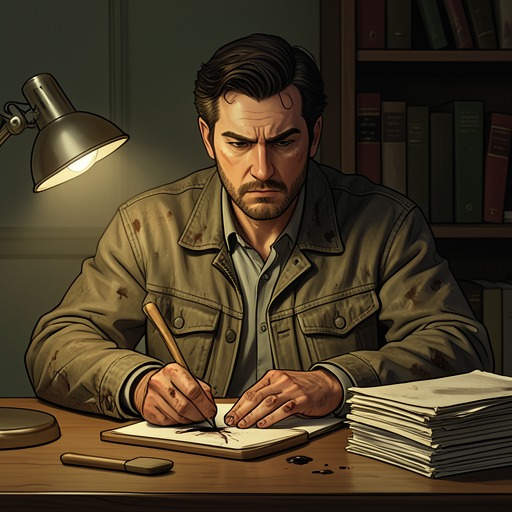
The Register publishes only once a week, a schedule that gives its reporters little prestige and leaves them working under the peculiar mixture of slow local routine and sudden crisis. Cal Murphy experiences the job as one of the few positions available to him: he had dreamed of covering the Mariners for The Seattle Times, but could find only a general-assignment reporting post in Statenville. The paper’s limited reach reinforces his sense that the town is an obstacle to a larger career, especially when an outside voice mocks him for having a best clip about a little-league tournament and for maintaining only seven followers on Twitter.
The newsroom is cramped and worn rather than glamorous. Cal’s desk occupies the second row of four, with Edith Caraway at reception and Earl Munroe nearby handling obituaries and typesetting. Edith and Earl have each worked at the paper for more than twenty years and appear to have settled into its permanent scale. Behind Cal sits Kelly Mendoza’s workstation in the photo department, alongside the space used by Kelly’s cousin Sammy Mendoza, whose society assignments are dominated by gossip about relationships and luxury cars. These physical arrangements make the paper feel less like a powerful metropolitan institution than a tightly packed local ecosystem in which reporting, photography, family connections, production, and social knowledge overlap.
The paper’s workday is governed by practical pressures. Cal’s iPhone wakes him at 8:30 on a Monday in the middle of August, abruptly ending the late mornings that seem to be one of the few benefits of being an underpaid reporter. When Cal and Kelly return from reporting, the remaining staff are preparing the week’s edition for its Tuesday-night press deadline, while Cal still has mundane duties to complete. The ordinary machinery of publication continues even as the investigation threatens the town’s most protected stories.
Editorial Authority and Information Control
The Register’s newsroom is governed by Guy Thompson, the sixty-two-year-old editor whose unruly hair, impatient manner, and commanding position embody the paper’s daily authority. When Cal arrives, Guy is already taking a call, stretching his phone cord from his office and demanding a pen and pad from his assistant. His authority is practical and immediate: he assigns reporting, controls tone, and decides what can reach the paper’s readers. At one point he directs Cal to visit the sheriff’s office, ask Sheriff Jones what he will provide, and return so that the next step can be determined. Reporting begins within this chain of permission, access, and editorial judgment.
That authority is compromised by pressures from above. Guy repeatedly receives demands from Joseph Mendoza, the publisher, to reduce coverage of the three teens’ deaths. At one point another call leaves Guy feeling like nothing more than a managing editor, someone who makes no real decisions but merely ensures that employees do what they have been told. Joseph, looking across the newsroom from the building’s only walled office, remembers that he once cared about truth but now finds that lies pay better. The contrast between Guy’s visible editorial frustration and Joseph’s protected office shows how information control travels through the paper: pressure enters through the publisher and is transmitted downward as softened coverage, narrowed claims, and orders to meet a predetermined public narrative.
The official story is similarly shaped by local authority. The deaths are presented as simple drug overdoses, even though methamphetamine is found at all three scenes and toxicology reports have not yet returned from Boise. The insistence on the word “overdose” turns an unresolved medical and criminal question into a settled public explanation. The paper is expected to reproduce that explanation rather than investigate why three young people died. Joseph and Sheriff Jones convey the community’s preferred subject matter as funeral arrangements and where to send flowers, a framing that converts possible scandal into private mourning and discourages questions about causes.
The paper also operates inside a broader political system. The consolidation of the Statenville Police Department with the Brooks County Sheriff’s Department was designed by Mayor Nathan Gold, who had held office for twelve years without term limits. The arrangement made Gold appear visionary to some observers and controlling to others. Because the newspaper reports on a town whose municipal leadership and law-enforcement structure are closely connected, its access to official information is also a form of dependence. The same system that can supply statements, charges, and investigative authority can determine which account becomes printable.
Cal Murphy, Kelly Mendoza, and Investigative Resistance
The Register becomes more than a career dead end when Cal and Kelly refuse to accept the town’s explanation of the deaths. Cal’s ambition initially points away from Statenville: he wants to write for The Seattle Times and sees The Register as an unlikely stepping stone. Yet the local paper gives him proximity to the community, access to its institutions, and an assignment that gradually becomes more consequential than the metropolitan sports career he imagined. His work at The Register places him where the protected story is first encountered and where its contradictions can be assembled.
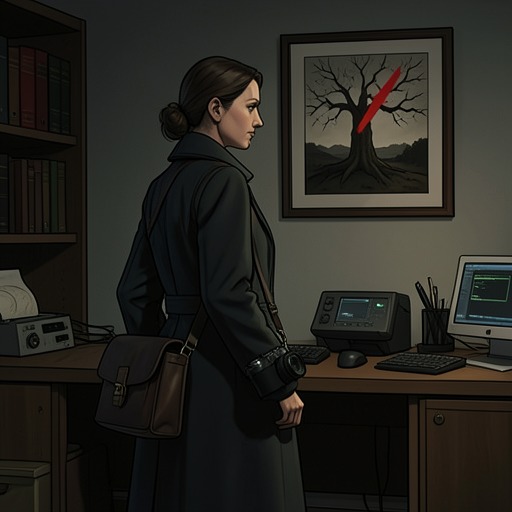
Kelly’s position in the photo department makes the investigation evidential as well as verbal. The paper’s reporting does not depend only on Cal’s prose; Kelly can supply photographs and other material capable of supporting what the newsroom is being pressured to suppress. Their collaboration turns the newspaper into a joint investigative instrument. The paper’s small scale, which first appears to limit Cal’s future, also allows the reporter and photographer to follow a story across scenes, records, witnesses, and physical evidence.
The investigation brings direct danger to the institution’s staff. An anonymous warning tells Cal and Kelly that they are viewed as important allies but urges them to keep the previous night’s events secret, create a cover story, and continue doing their jobs without asking questions. The warning treats journalism as useful only while it remains controllable. Later, Cal is arrested on inflated allegations of possessing an open container and driving under the influence, despite knowing that he had not been driving with alcohol in his car. He understands the arrest as a bullying tactic connected to the investigation. The paper’s reporters are not merely denied information; their legal vulnerability is manipulated to make continued reporting costly.
The pressure reaches the newsroom’s operations. With two hours left before deadline, Guy has received six unanswered messages between Cal’s and Kelly’s phones. He sends Mindy Nicholson to Cal’s apartment, then loses contact with her as well. The newsroom begins to fall apart precisely because its two strongest personnel have disappeared. Guy’s anger and panic reveal the practical consequence of intimidation: suppressing a story can also disrupt the labor required to produce the paper itself.
From Local Paper to Public Exposure
The Register’s decisive transformation occurs when the suppressed investigation finds an outlet beyond Statenville. Cal has always dreamed of writing for The Times, but he never expected that the opportunity would arrive through a mind-bending conspiracy supported by hard evidence, or that he would produce a front-page story before his friend Josh. Guy contacts editors at The Salt Lake Tribune and The Seattle Times and tries to persuade both papers to publish Cal’s work. From his home email, Mercer later sees messages to those editors describing an impending story by Cal Murphy and noting that Kelly Mendoza will provide photographs and other evidential material. The correspondence reveals that the story has been prepared for circulation outside the local gatekeeping system.
Guy’s decision to pursue publication elsewhere marks a moral reversal. Earlier, the paper’s editorial structure transmits instructions to tone down the deaths; now its editor works to move the evidence past the people who have tried to contain it. He is uncertain whether his former paper, The Salt Lake Tribune, will run the story, but he succeeds in arranging publication there and in The Seattle Times. The Register thus becomes both the site where the truth is obstructed and the origin point from which that truth escapes.
The publication gives Cal and Kelly a new sense of safety while they ride back toward Salt Lake City in a government-issued SUV. Their three-day ordeal no longer appears to them as adventure for its own sake; it has become work aimed at uncovering truth and finding justice. The newspaper’s function has expanded from producing a weekly local edition to enabling a public record that can reach readers beyond Statenville and challenge the town’s official version of events.
Collapse and Aftermath
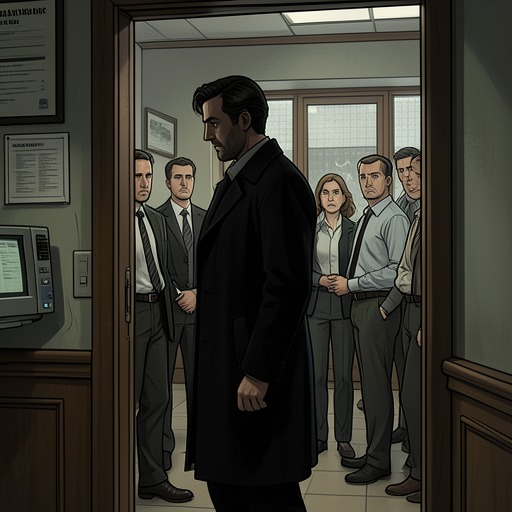
When Cal and Kelly return to The Register late Thursday morning, the remaining employees stand and applaud. The reaction confirms that the story has traveled quickly and that the paper’s staff recognize the importance of what their colleagues have accomplished. The magnitude of the news seems to require a special edition, suggesting that The Register might finally answer the crisis with its own expanded public statement.
That edition is never printed. Guy is gone, while Federal Bureau of Investigation agents search the publisher’s office for evidence linking Joseph Mendoza to the illegal activity involving Nathan Gold and Cloverdale Industries. Joseph is expected to lose control of the paper because of those ties, and Sammy Mendoza may face jail time, making him an unlikely successor to the family business. The paper’s ownership structure is therefore destabilized at the moment its journalism achieves its greatest public force.
The likely future of The Register passes toward Kelly Mendoza. If she chooses to remain in Statenville, the keys to the Mendoza family’s “treasure trove”—the newspaper itself—may be handed to her while she is still young. This ending leaves the institution neither wholly redeemed nor simply destroyed. Its old leadership is implicated, its planned special edition is silenced by events, and its future depends on whether Kelly can inherit the paper without inheriting the secrecy and compromises that shaped it. The Register’s significance lies in that unresolved transition: a local newspaper built to manage information becomes the vehicle for exposing the system that tried to manage it.