The warning letter to Cal Murphy
Dead ShotThe warning letter to Cal Murphy is the tangible message left behind after Cal’s road ambush, kidnapping, and unexplained return to his apartment. It does not identify its writers, disclose the community secrets they claim to control, or end the danger surrounding the investigation. Instead, it converts uncertainty into a deliberate threat: Cal is told that he matters, that he is being watched, that silence is required, and that disobedience will bring further punishment. The letter therefore functions both as a warning and as evidence that the forces obstructing the investigation are organized, informed, and close enough to reach him at home.
Discovery and Immediate Context
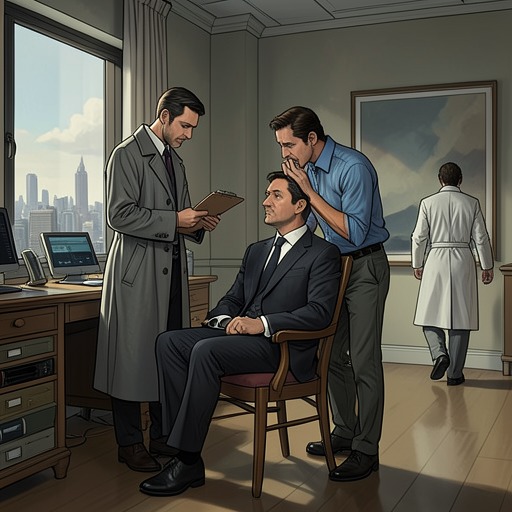
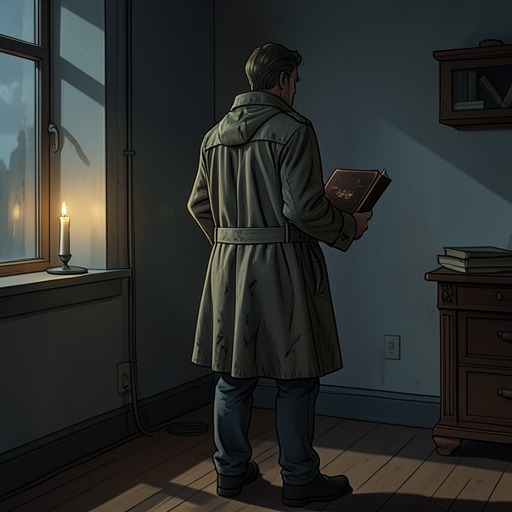
Cal notices the letter only after Kelly Mendoza’s car horn interrupts his brooding at his apartment. It lies unopened on his dresser and is addressed to him as “Mr. Cal Murphy.” He stuffs the envelope into his pocket before leaving, treating it as something that must be secured rather than casually examined. The gesture reflects the changed conditions of his life: after being forced off the road, bound to a chair by masked men, threatened over his reporting, and returned to his own bed, Cal trusts no one except Kelly Mendoza.
The letter arrives at a moment when Cal is already trying to reconstruct what happened. His memory includes a large truck striking his car from behind, the vehicle stopping between trees, the airbags deploying, his blackout, and the masked kidnappers’ command that he stop putting his nose where it did not belong. Jake Dawkins’s account of the accident conflicts with Cal’s recollection: Dawkins had described more extensive damage, while Cal remembers that the car was not smashed. That discrepancy leads Cal to suspect that Dawkins may have been involved in a sheriff’s-office effort to stop his inquiry into the deaths of Statenville’s three football heroes. The letter gives that suspicion a written, intentional form without resolving who stands behind it.
Contents and Method of Threat
Cal reads the letter aloud to Kelly. Its writers apologize for the previous night’s “rude introduction,” while emphasizing that the encounter gave him no names or faces. They claim to regard him as an important ally, but insist that the time is not right to provide answers. The letter says that information exists and will be supplied later, yet warns that events in the community would place Cal at risk if he learned about them prematurely. Its immediate instruction is simple: remain quiet, create a cover story, and perform his job without asking questions.
The promise attached to the demand is carefully calculated. If Cal complies, the writers say, they will eventually present him with information that could put him in the national spotlight for his reporting skills. The letter thus addresses both his fear and his professional ambition. It offers the reward of recognition while making clear that the reward will be controlled by the same anonymous people who have already abducted him. If he refuses, the writers threaten “other ways of persuasion,” adding that he is better off not experiencing them. The message never needs to describe those methods in detail: the kidnapping supplies the missing demonstration.
The closing instruction extends the secrecy beyond Cal himself. He is told not to show the letter or discuss either it or the truth about the previous night with Kelly Mendoza or Guy Thompson. This demand is significant because the letter attempts to isolate Cal from both his closest investigative partner and his editor. It does not merely ask him to stop publishing; it seeks to regulate the flow of knowledge inside the newsroom and to prevent the threat from becoming corroborated evidence.
Cal’s Response and Investigative Consequences
Cal calls the letter disturbing, while Kelly immediately asks how its writers know his name. Cal cannot answer her. He admits that he has already violated two instructions by telling her what really happened and reading the letter to her. Kelly promises to keep the secret unless something horrible occurs, but Cal dismisses her concern and insists that nothing will happen to him. His reassurance is undercut by the very object in his hand: the letter is proof that something has already happened and that its perpetrators expect to act again if necessary.
Rather than producing submission, the warning helps Cal interpret the kidnapping as evidence of proximity to a larger secret. After comparing the letter with the suspicious account of the crash, he concludes that someone may be trying either to kill him and disguise the attempt as an accident, to cover up such an attempt, or merely to keep him quiet temporarily. In each possibility, the pressure itself becomes a clue. Cal reasons that powerful people would not expend such effort unless his reporting had brought him near important information, and he suspects that more than one secret is operating beneath the town’s official story.
The letter also changes the practical shape of his work. Guy Thompson has ordered him to produce a reaction piece rather than the ambitious investigation he wanted, and Guy has earlier directed him to visit the sheriff’s office, ask Jones for information, and report back. Cal decides to use the reaction piece as cover while he continues digging into the deaths. The warning therefore does not remove journalism from the plot; it makes journalistic procedure part of Cal’s defensive strategy. A routine assignment becomes camouflage, while the letter becomes a private source and a sign that the public narrative is being managed.
Narrative Function and Significance
As an object, the letter gives material form to an otherwise unseen power. The kidnappers remain unidentified, but their message demonstrates surveillance, advance knowledge of Cal’s identity, access to his apartment, and confidence that threats can substitute for disclosure. The unopened envelope initially appears ordinary and becomes charged only when Cal connects it with the previous night’s violence. Its physical movement—from the dresser, into his pocket, and finally into the conversation with Kelly—marks the passage from private danger to shared suspicion.
The letter also establishes a revealing contradiction in the antagonists’ control of information. They claim that Cal is an “important ally,” yet they deny him the facts needed to understand the alliance. They promise material that could elevate him nationally while forbidding him to speak to the people closest to him. Their offer presents coercion as cooperation: Cal is invited into a secret order only on terms that preserve the writers’ power over timing, knowledge, and publicity.
That contradiction links the letter to the wider conflict around Cal Murphy’s reporting. Guy Thompson wants a usable newspaper product and a dominant photograph; the sheriff’s office offers or withholds official information; Joseph Mendoza and Hunter Jones describe a town supposedly interested only in funeral arrangements and flowers; and the anonymous writers demand that Cal suppress what he knows. Each pressure attempts to define what can be known and when it may be published. The warning letter is the most intimate version of that control because it reaches Cal in his home, but it ultimately has the opposite effect intended by its authors: it confirms his suspicion that Statenville’s account of the three deaths is being protected and gives him another reason to pursue the truth.