
The Requiem and Funeral
Death of a SalesmanThe final scene at Willy Loman's grave, where the family and Charley reflect on his life and death, revealing the play's central themes.
increasing Bearing strength in each event
 decreasing
Bearing strength in each eventdecreasingThe Sparse Funeral
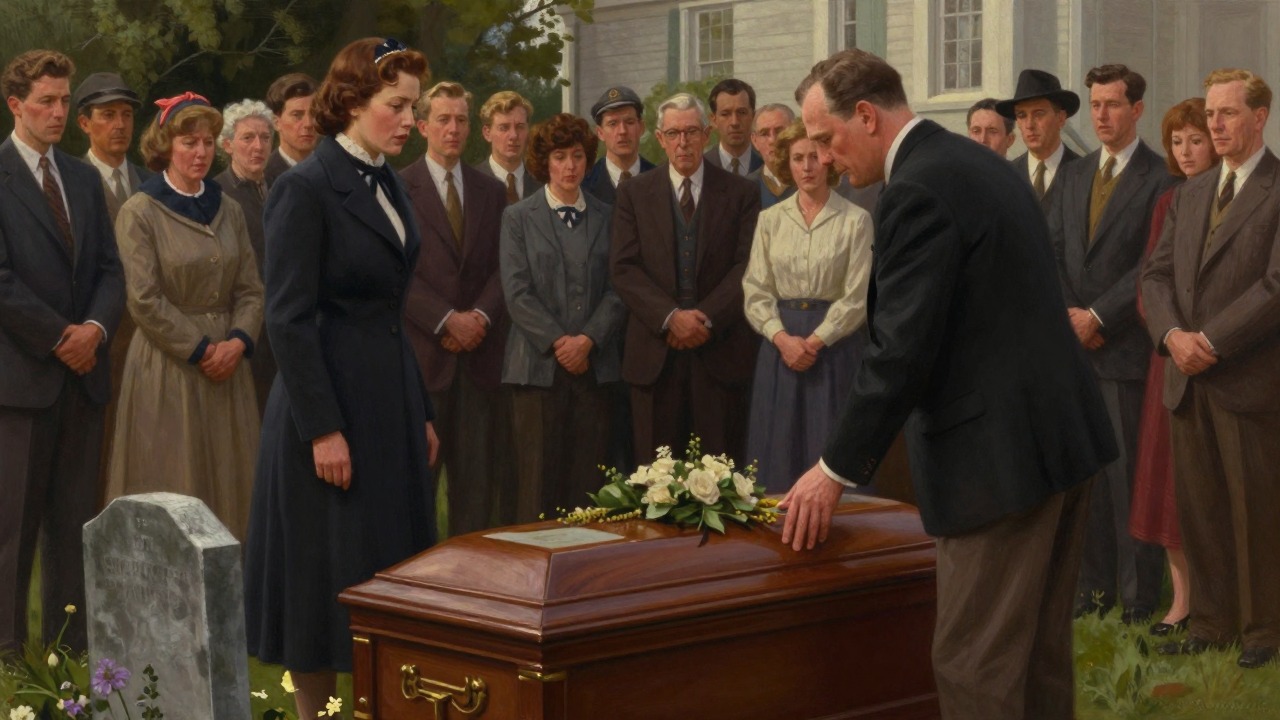
A Lonely Goodbye
The Absence of Mourners
Linda stands at the grave, bewildered that no one else attended. She had expected the crowds Willy always spoke of, but only family and Charley are present. The empty space underscores the gap between Willy's self-image and reality.
Charley's Comfort
Charley gently tells Linda that it was a nice funeral. He understands that the world does not reward failure. His presence is a quiet testament to his friendship with Willy.
The Finality
Biff and Happy stand somberly. The grave is fresh, and the flute music plays softly. The family is left to make sense of the death.
Biff's Understanding
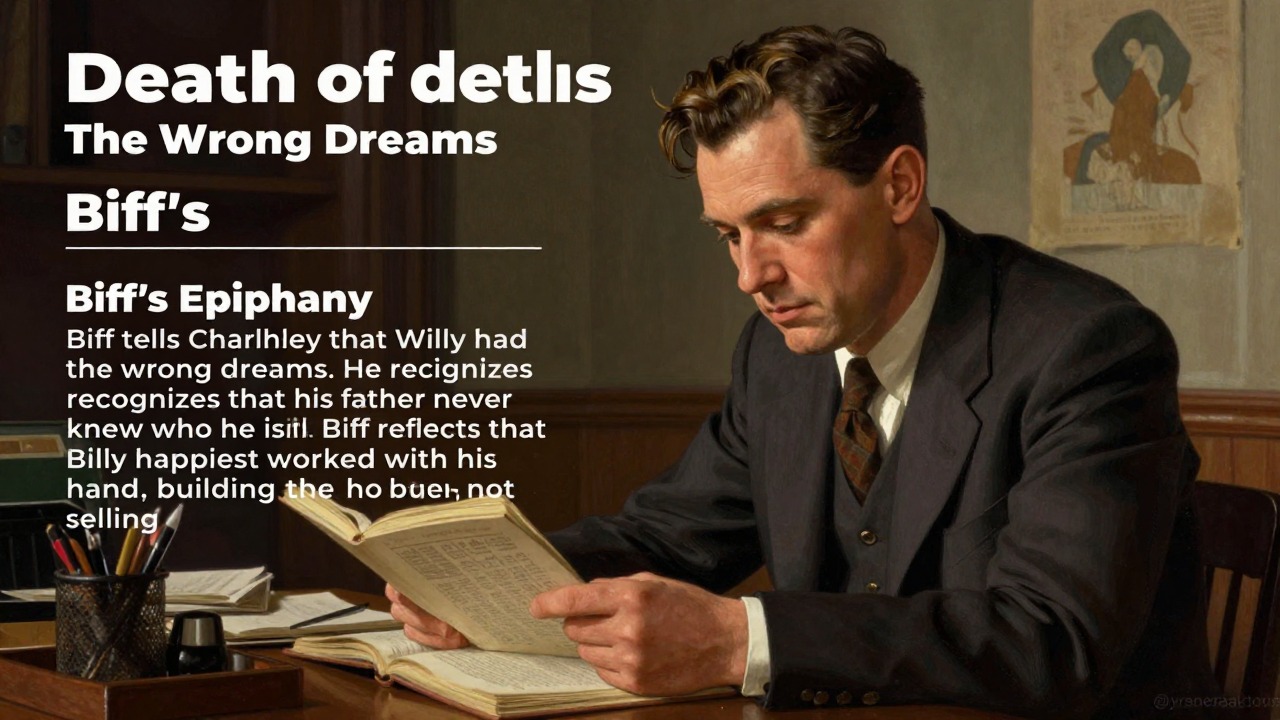
The Wrong Dreams
Biff's Epiphany
Biff tells Charley that Willy had the wrong dreams. He recognizes that his father never knew who he was. Biff reflects that Willy was happiest working with his hands, building the house, not selling.
The Rejection of the Salesman's Life
Biff understands that the dream of being well-liked and successful was a trap. He decides to return to the West, to live a life of physical work and honesty. He has finally found his own identity.
A Son's Farewell
Biff's insight is both sorrowful and liberating. He can now see his father clearly, without the haze of expectation. He invites Happy to join him, but Happy refuses.
Charley's Speech
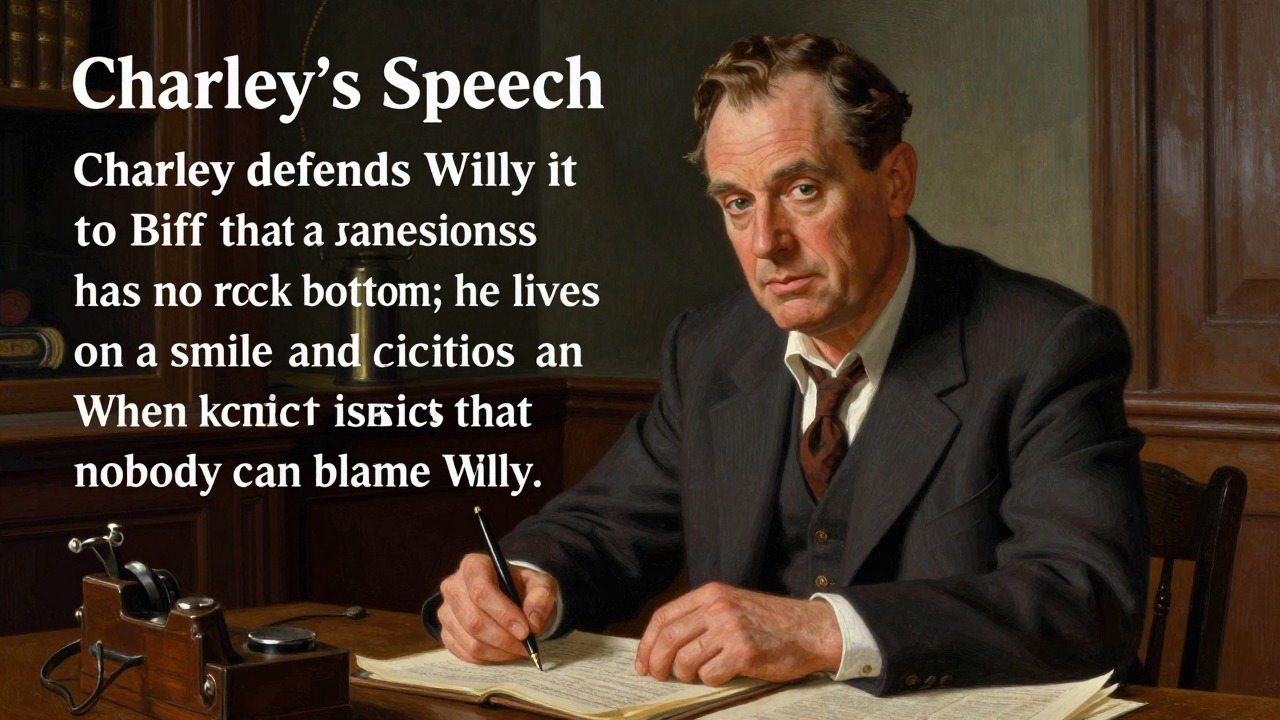
A Salesman's Defense
The Code of the Salesman
Charley defends Willy to Biff. He says that a salesman has no rock bottom; he lives on a smile and a shoeshine. When they stop smiling back, it's an earthquake. Charley insists that nobody can blame Willy.
The Territory of Dreams
Charley's famous line, "A salesman is got to dream, boy. It comes with the territory," encapsulates the play's view of the salesman's existence. He acknowledges the necessity of illusion for survival.
The Human Cost
Charley's speech is a eulogy for the common man, trapped by the very dreams that sustain him. It is a compassionate but unflinching look at Willy's life.
Linda's Goodbye
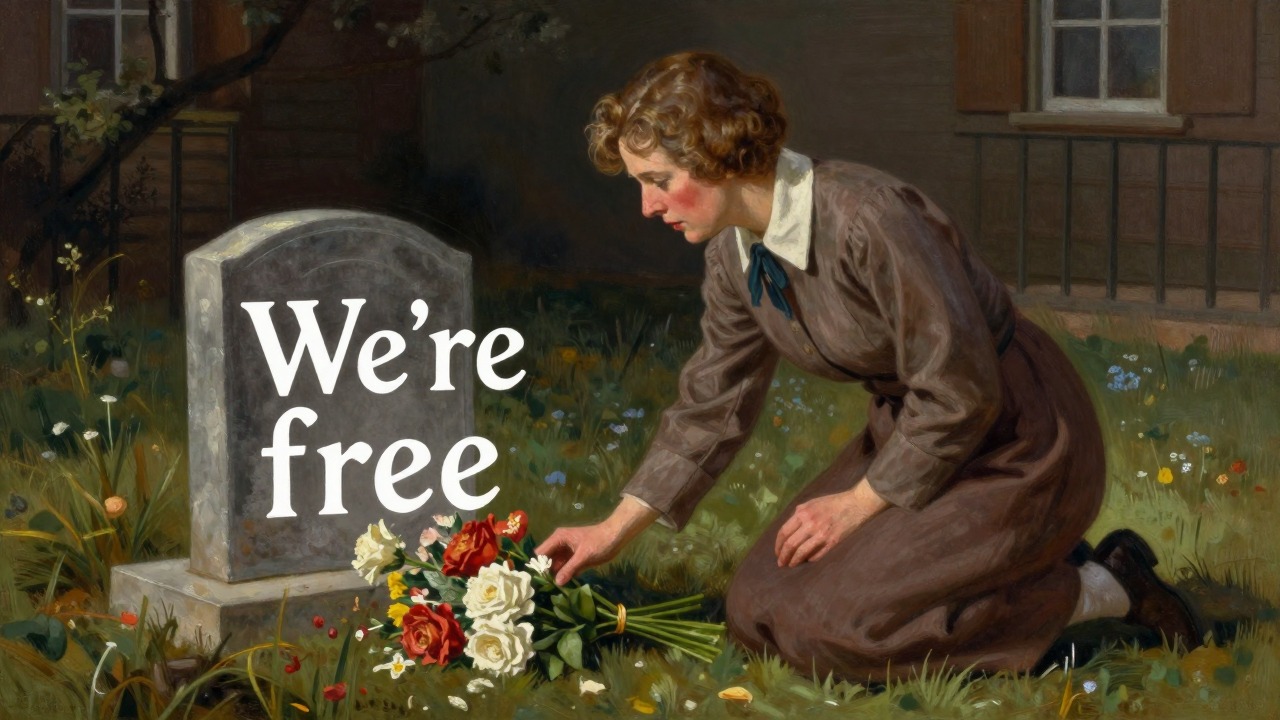
We're Free
The Final Payment
Linda kneels and lays flowers on the grave. She cannot cry. She tells Willy that she made the last payment on the house today. They are finally free and clear.
The Tragic Irony
Linda's words "We're free" are a heartbreaking irony. They are free of debt, but also free of Willy. She realizes that now there will be nobody home. Her sobs release the grief she has held back.
The Flute Fades
Biff lifts Linda and carries her away. The flute music returns, reminding of the lost pastoral world. The apartment towers rise sharply as the stage darkens, leaving only the memory of Willy Loman.
The day after the suicide
At the graveside
At the graveside
At the graveside, final moment
