
Happy's Pursuit of the American Dream
Death of a SalesmanTraces Happy Loman's relentless but hollow pursuit of success, women, and approval, mirroring his father's flawed values.
increasing Bearing strength in each event
 decreasing
Bearing strength in each eventdecreasingHappy's Bedroom Talk
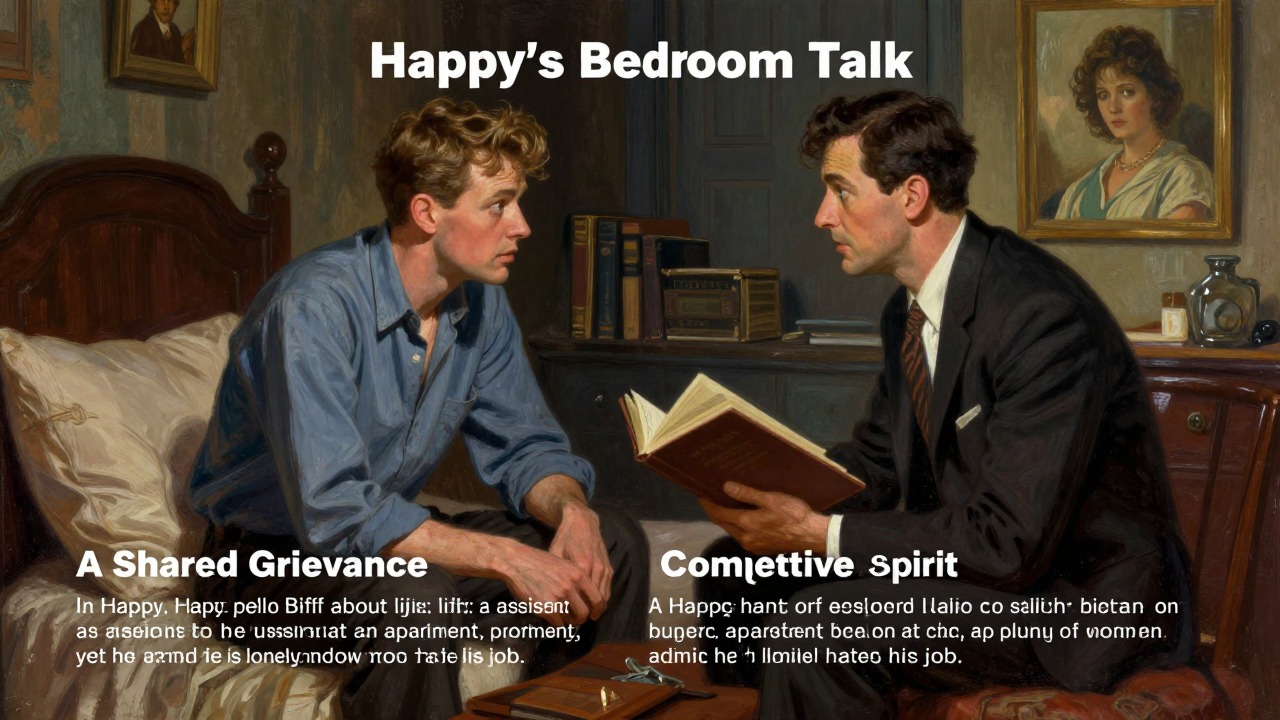
The Younger Son's Confession
A Shared Grievance
In the bedroom, Happy tells Biff about his life: a job as assistant to the assistant buyer, an apartment, a car, and plenty of women. Yet he admits he is lonely and hates his job.
The Competitive Spirit
Happy reveals his habit of seducing women engaged to executives, calling it an overdeveloped sense of competition. He is proud of his ability to get what he wants, but he also feels disgusted with himself.
The Dream of the Loman Brothers
Happy enthusiastically supports Biff's idea to go West together, but he quickly backtracks, saying he wants to first make it big in the city. He is torn between the desire for freedom and the need for corporate validation.
Picking Up Girls
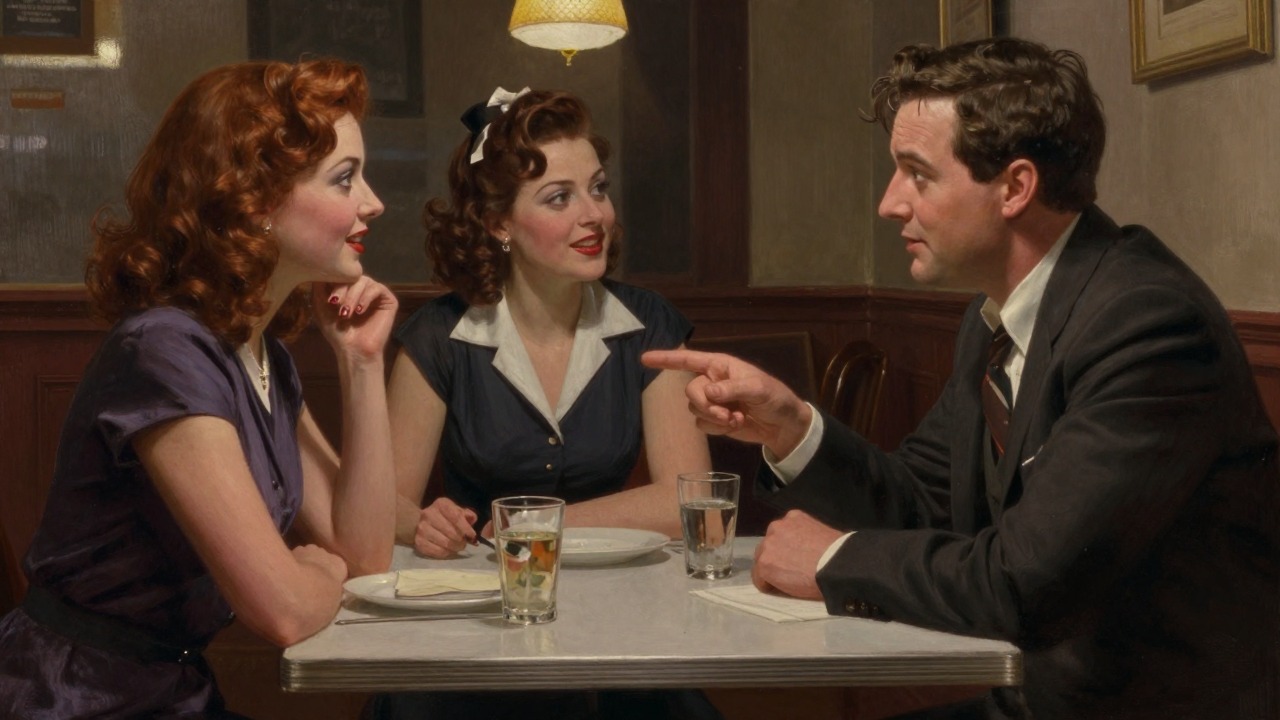
The Predator at Play
The Setup
At the restaurant, Happy immediately spots two attractive women and invites them over. He uses his charm and lies about his brother being a New York Giants quarterback. He is skilled at manipulation.
The Empty Conquest
Happy's interaction with Miss Forsythe and Letta is superficial. He offers champagne, makes jokes, and plans to take them out after dinner. But the pursuit is mechanical, a routine he performs out of habit.
Abandoning His Father
When Willy breaks down, Happy is more concerned with saving face and the evening with the girls. He leaves the restaurant with them, abandoning his father. This act reveals his selfishness and his inability to confront reality.
At the Funeral
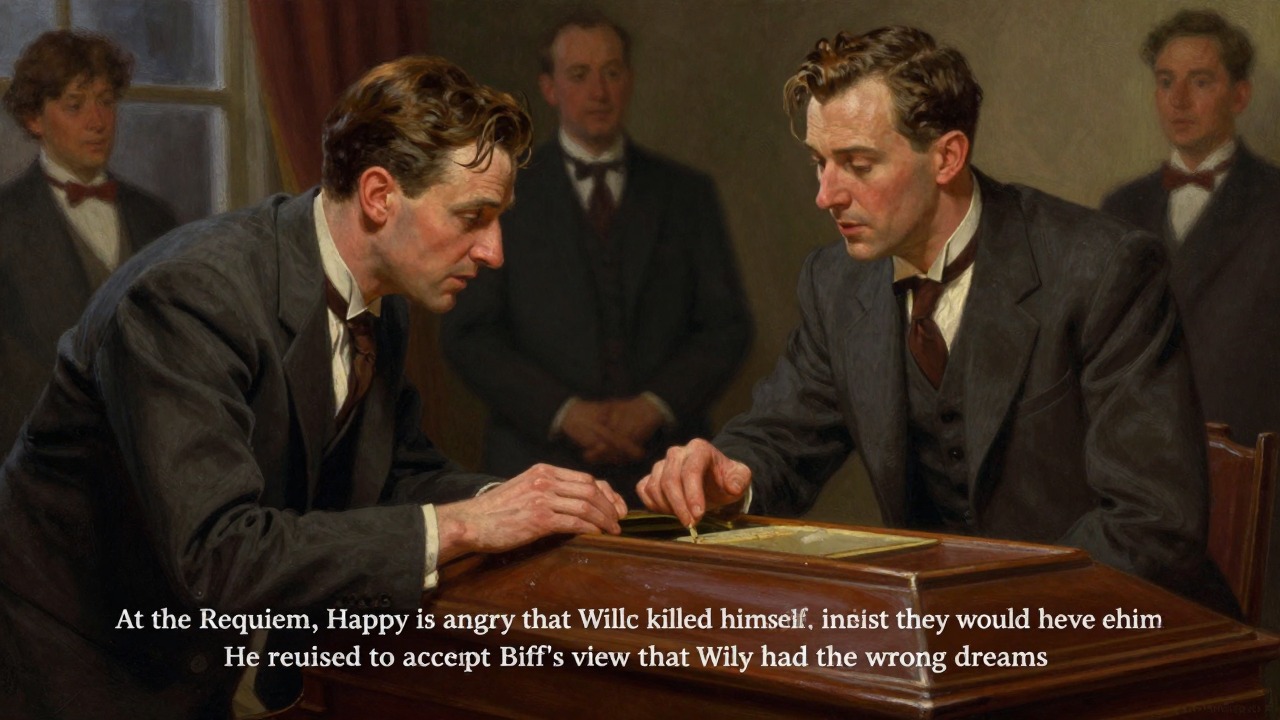
Vowing to Win
Defending His Father
At the Requiem, Happy is angry that Willy killed himself. He insists that they would have helped him. He refuses to accept Biff's view that Willy had the wrong dreams.
The Loman Legacy
Happy declares that he will show everyone that Willy Loman did not die in vain. He will stay in the city and win the racket for him. He clings to the dream of being number-one man.
A Different Path
Happy's final vow contrasts sharply with Biff's decision to leave. He embodies the continuation of Willy's values, a tragic repetition that suggests the cycle will not break.
First night, present day
Second night, at Frank's Chop House
The day after the suicide
