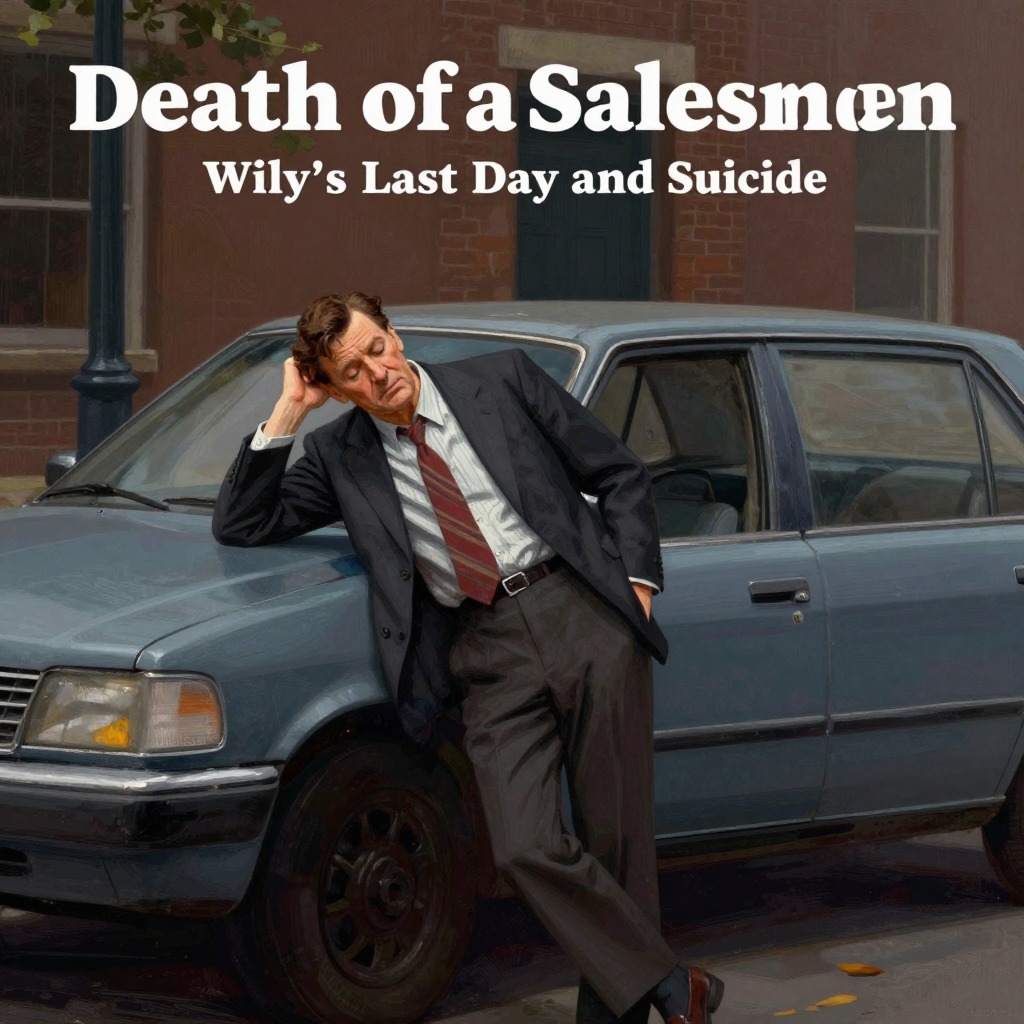
A salesman is got to dream
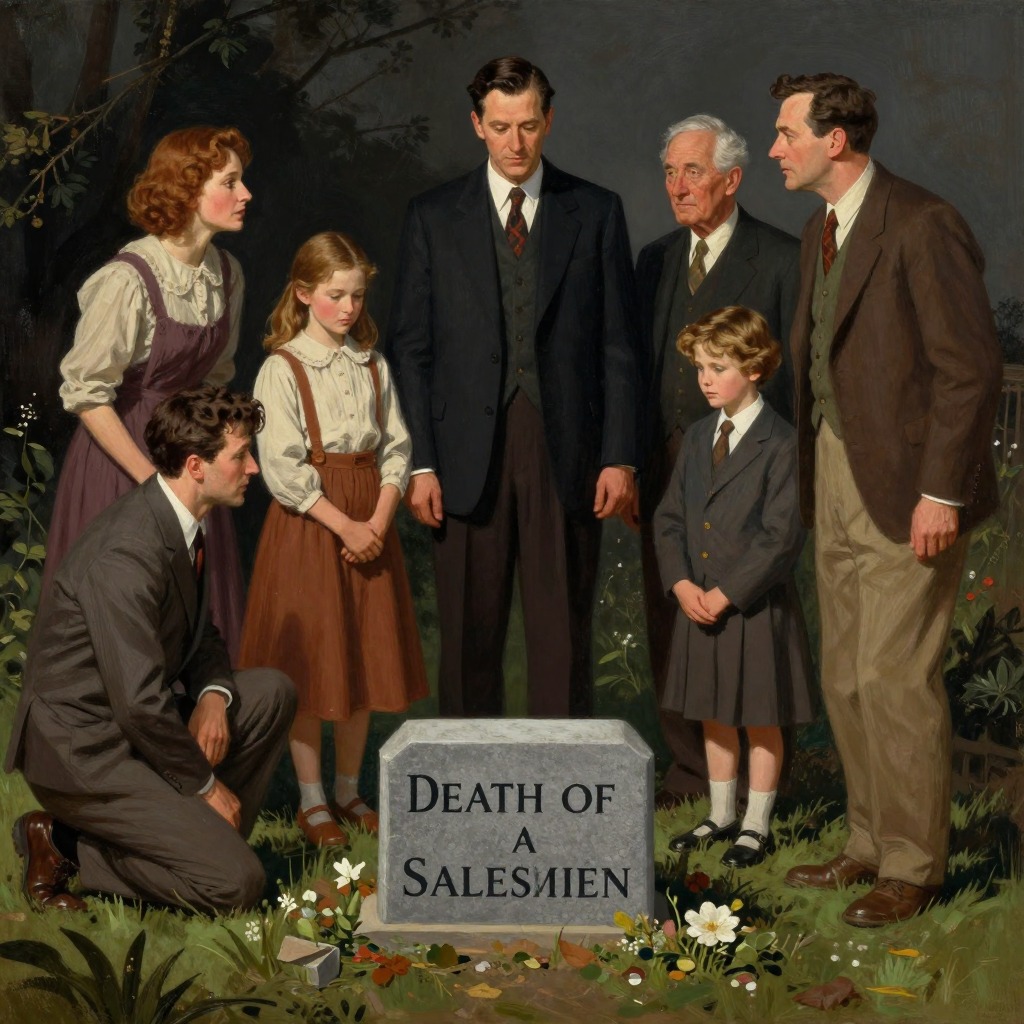
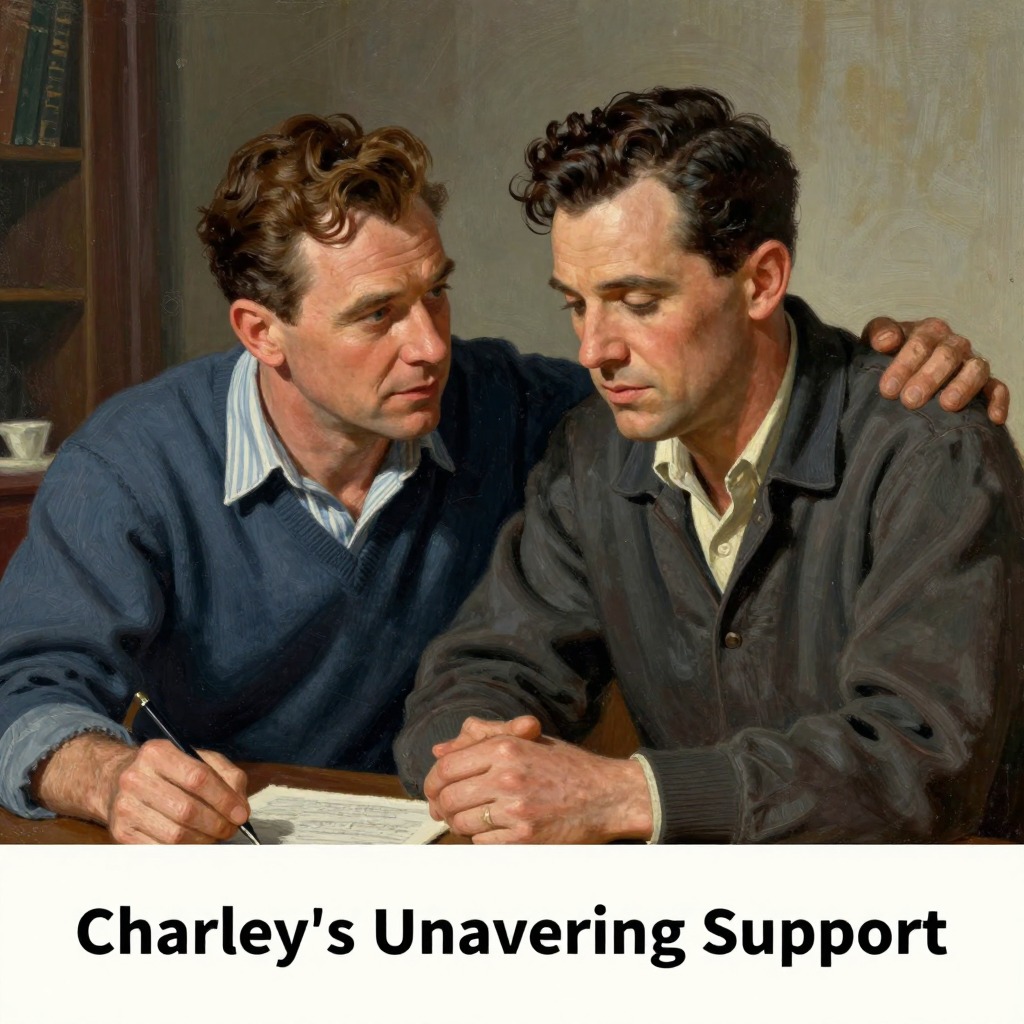
Death of a SalesmanCharley, Willy Loman's pragmatic next-door neighbor, delivers the play's most distilled statement of its central paradox. Standing at Willy's grave in the Requiem, he says, "A salesman is got to dream, boy. It comes with the territory." The line is not a defense of Willy's specific choices but a recognition that the occupation itself—selling—demands a perpetual faith in a better tomorrow, a faith that overrides evidence and logic. Charley, who has offered Willy a job and lent him money, understands that the very structure of a salesman's life makes disillusionment not merely painful but existentially annihilating.
The Dream as Professional Necessity
Charley's formulation links dreaming directly to the salesman's craft. Earlier in the play, he tells Willy, "The only thing you got in this world is what you can sell." A salesman sells himself—his charm, his smile, his confidence. Without the dream that tomorrow will bring a big order, a breakthrough, a transformed life, the salesman has nothing to offer. The dream is his inventory. Charley's eulogy makes explicit what the play has dramatized: Willy's relentless optimism, his inflation of small victories, his refusal to accept failure, are not personal quirks but the tools of his trade. "A salesman is got to dream" is a job description.
The Territory as Inescapable Condition
The second half of Charley's remark—"It comes with the territory"—extends the principle from an individual to a collective fate. The "territory" is the salesman's beat, the route he travels, but also the entire social and economic landscape he inhabits. In that landscape, a man who cannot dream cannot function. Charley, who runs a successful business and whose son Bernard becomes a lawyer arguing before the Supreme Court, is not himself a dreamer in Willy's mode. Yet he recognizes that the salesman's life has "no rock bottom"—no fixed foundation of skill or product. A carpenter leaves a built stair; a doctor leaves a healed patient. A salesman leaves only the impression he made, and when people stop smiling back, "that's an earthquake." The dream is the only anchor in a life that otherwise offers none.
The Dream as Cultural Imperative
Arthur Miller's introduction to the play reinforces Charley's insight as a cultural diagnosis. Miller writes that when Charley says "a salesman is got to dream," he "sums up not only Willy's life but a central tenet of his culture." In an immigrant society that has "chosen to reject the past," faith in the future is not optional. The American Dream, which promises that effort and likability will be rewarded, becomes a binding creed. Willy is a true believer. His tragedy is not that he doubts the dream—he never does—but that he cannot see that the dream has failed him, and so he blames himself. Charley's line, spoken at the grave, acknowledges that the dream was always the only possible response to the salesman's condition, and that blaming Willy for holding it is to blame him for doing his job.
The Dream's Double Edge
Charley's formulation is compassionate but not sentimental. He does not say the dream is true, only that it is necessary. The play itself shows the destructive cost of that necessity: Willy's suicide is the logical endpoint of a life spent chasing an illusion that can never be cashed in. Yet Charley's words also grant Willy a kind of dignity. Willy was not a fool; he was a man doing what his profession and his culture demanded. The line "A salesman is got to dream" thus becomes the play's most economical expression of its central theme: the tragic gap between the human need for meaning and the inadequate, even lethal, forms that a commercial society offers to satisfy it.