The insurance
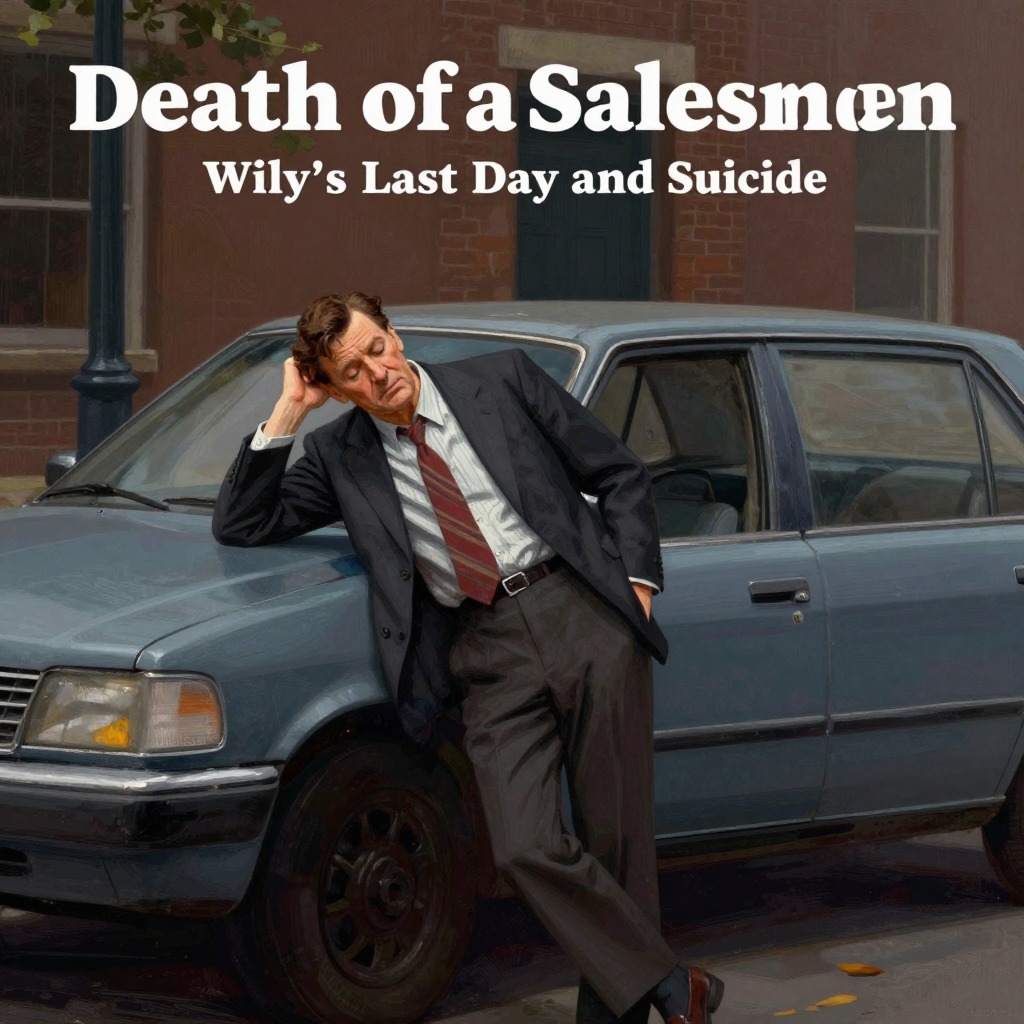
Death of a SalesmanThe insurance policy that Willy Loman has maintained for years becomes the central mechanism of his final, desperate act. It is not merely a financial safety net but the object around which his last hopes crystallize, the means by which he hopes to transmute a life of dwindling commissions and humiliating failure into a single, decisive gesture of provision and significance.
The Policy as a Tangible Legacy
In the climactic garden scene, as Willy plants seeds by flashlight in the middle of the night, he presents the insurance proposition to the apparition of his brother, Uncle Ben, with the language of a business deal. He describes it as "a guaranteed twenty-thousand-dollar proposition," something "on the barrelhead" — gilt-edged, certain, material. Unlike the elusive promises of salesmanship, the appointments that never materialize, the personality that no longer opens doors, the insurance payout is something he can imagine as solid and graspable. He tells Ben, "I see it like a diamond, shining in the dark, hard and rough, that I can pick up and touch in my hand." This is the same diamond that Ben has always associated with the riches of the jungle, and Willy now recasts his own death as the ultimate expedition into that darkness, one that will yield a fortune for his son.
The Calculation of Worth
Willy's reasoning rests on a cold arithmetic that he believes will finally silence Biff's disillusionment. He calculates that the twenty thousand dollars will give Biff the capital he needs — the start that Willy himself never had — and will restore the son's admiration. "Can you imagine that magnificence with twenty thousand dollars in his pocket?" he asks Ben, imagining Biff's future success and, more importantly, Biff's gratitude. The policy becomes the instrument of a posthumous reconciliation: Willy convinces himself that Biff "will worship me for it," that the funeral will be massive, attended by all the old-timers from Maine to New Jersey, and that Biff will finally see what his father was — a man known, a man who mattered. The insurance money is meant to purchase the respect that Willy could never earn while alive.
The Risk of Infamy
Yet even in his resolve, Willy is haunted by the fear that his act will be judged not as sacrifice but as cowardice. Ben warns him directly: "It's called a cowardly thing, William," and later adds, "He'll call you a coward." Willy recoils at this possibility, insisting, "No, that would be terrible." He needs the act to be read as heroism, not desperation. The insurance policy, in his mind, transforms the suicide from an admission of defeat into a strategic investment — a final sale that will yield the highest commission of his career. He tells Ben that the twenty thousand "changes all the aspects" because it is not "another damned-fool appointment" but a concrete, undeniable achievement.
The Unspoken Irony
The play never reveals whether the insurance company actually pays the claim. Willy's own words betray a nagging doubt — "How can they dare refuse? Didn't I work like a coolie to meet every premium on the nose?" — and Ben's reply, "They might not honor the policy," hangs unanswered. The policy, like so many of Willy's dreams, rests on a faith that the system will honor its promises, a faith that the play's events have repeatedly shown to be fragile. In the Requiem, Linda stands at the grave and speaks of the house being finally paid off, of being "free and clear," but the insurance money — the very thing Willy died to secure — is never mentioned. The silence around it suggests that the transaction may have failed, that Willy's final deal may have been as hollow as the ones he could no longer close. The policy, which he imagined as a diamond, remains an abstraction, a promise that may or may not be kept, leaving his sacrifice ambiguous and his legacy uncertain.