Willy Loman's firing
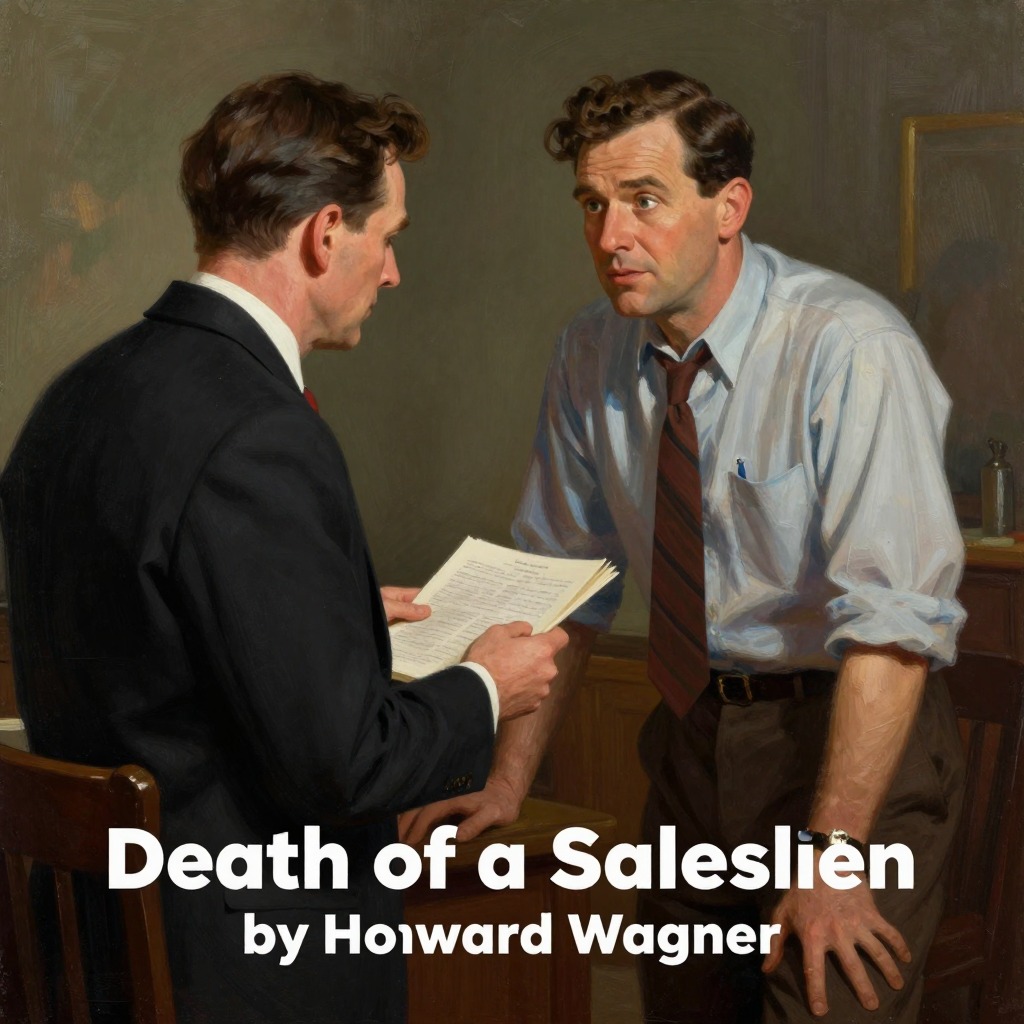
Death of a SalesmanWilly Loman's firing by Howard Wagner is the decisive professional catastrophe that strips him of his last source of income and dignity, shattering his identity as a salesman and driving him toward his final, desperate act. The event occurs in Act Two, when Willy, exhausted and unable to continue traveling, goes to Howard's office to request a New York-based position. Howard, the young son of the firm's founder Frank Wagner, coldly refuses, dismisses Willy's decades of service, and ultimately tells him he can no longer represent the company. The firing is not merely a loss of employment; it is the final, public confirmation that Willy's belief in being "well liked" and his faith in the American Dream have failed him completely.
The Confrontation
Willy enters Howard's office with a specific request: he wants to stop traveling and work in New York, needing only sixty-five dollars a week to get by. Howard, however, is preoccupied with demonstrating his new wire recorder, a gadget that captures his children's voices and his wife's hesitant greeting. Willy tries to explain his exhaustion, reminding Howard that he was with the firm when Howard's father carried him into the office as a baby. Howard responds with a flat refusal: "there just is no spot here for you." Willy, growing desperate, recounts the story of Dave Singleman, an eighty-four-year-old salesman who died in the smoker of a train, attended by hundreds of buyers and salesmen. He argues that selling once had "personality," "respect, and comradeship, and gratitude," but that today "it's all cut and dried." Howard remains unmoved, repeating that business is business. When Willy insists that he put thirty-four years into the firm and cannot pay his insurance, Howard tells him to pull himself together and go home.
The Dismissal
Howard's final words are a direct termination: "I don't want you to represent us. I've been meaning to tell you for a long time now." He tells Willy he needs a long rest and that when he feels better, they can see if they can work something out. Willy, grasping at straws, asks to go to Boston, but Howard refuses. He suggests Willy turn to his sons for help, a suggestion that deeply wounds Willy, who replies, "I can't throw myself on my sons. I'm not a cripple!" Howard then orders Willy to drop off his samples and leaves the office, pushing the wire recorder table out with him. The firing is delivered with a bureaucratic coldness that contrasts sharply with Willy's emotional appeals and his memory of the firm's founder.
Aftermath and Consequences
Immediately after the firing, Willy is left alone in the office, staring into space. The music of his brother Ben is heard, and Ben appears, offering a vision of escape to Alaska. Willy's mind, now unmoored, oscillates between the memory of Ben's promise of wealth and the crushing reality of his dismissal. He later tells Charley that he was fired, calling Howard a "snotnose." Charley offers him a job, but Willy refuses, unable to accept charity from the man he has always envied. The firing directly precipitates Willy's final crisis: he goes to the restaurant to meet his sons, hoping for good news from Biff's meeting with Bill Oliver, but that hope also collapses. The loss of his job, combined with the failure of his sons, leaves him with no remaining avenue for redemption. He turns to the only asset he has left: his life insurance policy. The firing is the final, irreversible blow that convinces Willy that his only remaining value is the twenty thousand dollars his death will bring, a sum he imagines will make Biff "magnificent" and prove to the world that he was "known."