
Private Secrets and Public Exposure
Death on the NileThe passengers’ concealed motives and vulnerabilities threaten to become public, making secrecy a source of both protection and danger.
increasing Bearing strength in each event
 decreasing
Bearing strength in each eventdecreasingA Secret Engagement

News Kept Close
A private request
Jacqueline reveals to Linnet that she is engaged to Simon and asks for help finding him work. Their conversation is intimate, but it also introduces the secret that will later become public scandal.
Trust under pressure
Linnet welcomes the news without understanding how her response will affect the friendship. Personal confidence does not guarantee that a secret will remain harmless.
A Hidden Financial Crisis

The Trustee’s Concealment
A meeting staged as chance
Pennington hides that he received Linnet’s marriage news before leaving New York. He presents himself as a family friend surprised to meet the newlyweds.
A lie with consequences
His concealed urgency reflects a financial predicament and a desire to obtain signatures. Once Poirot notices the travel labels, the invented account begins to unravel.
A Daughter’s Hidden Burden
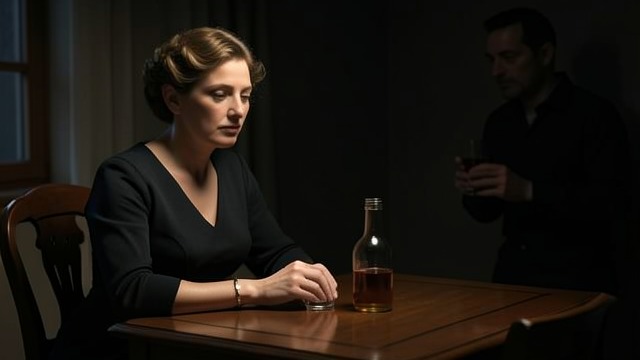
Concealment as Care
The drinking secret
Rosalie disposes of her mother’s hidden alcohol and lies about it to protect her from humiliation. Her secrecy is an act of care, though it makes her appear suspicious.
The burden recognized
Poirot sees that the secret isolates Rosalie and gives her permission to speak without exposing Salome. The episode distinguishes protective silence from concealment of a crime.
Tim’s Criminal Double Life

A Thief Behind Good Manners
The concealed scheme
Tim’s gentle appearance and close relationship with his mother hide his role in jewelry substitutions. Poirot links him to Joanna through earlier stories and the imitation necklace.
Truth partially admitted
Tim confesses to stealing the pearls but refuses to implicate Joanna without evidence. His selective honesty protects another secret while allowing him to face his own offense.
The Murderers Exposed

Secrecy Becomes Evidence
Witnesses nearly speak
Louise tries to profit from what she saw; Salome is about to identify someone who entered Louise’s cabin. The effort to keep secrets hidden creates successive murders.
Exposure and consequence
Poirot’s reconstruction reveals Simon and Jacqueline’s conspiracy. Their secret cannot survive the details they left behind, showing that concealment does not remove the consequences of an action.
During Jacqueline’s arrival at Wode Hall
After Pennington learns of Linnet’s marriage
During Rosalie’s night-time trip to the rail
During Poirot’s investigation of the pearl theft
Near the end of the return voyage
