
Appearances and Hidden Identities
Death on the NileThe novel repeatedly contrasts what people seem to be with what they conceal, from polished identities to false clues and counterfeit jewels.
increasing Bearing strength in each event
 decreasing
Bearing strength in each eventdecreasingThe Perfect Heiress
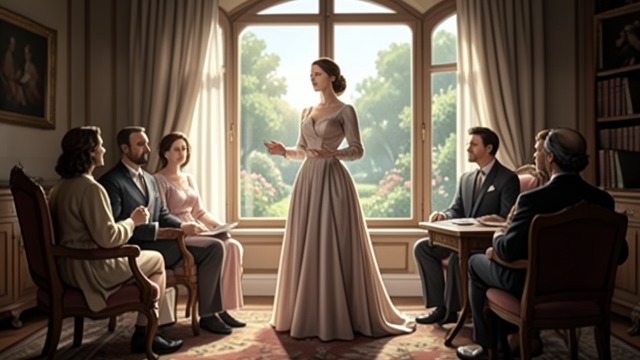
A Life That Looks Complete
Public admiration
Linnet appears to possess beauty, money, health and intelligence. Her surroundings reinforce the impression that she can make any desired future real.
Hidden cost
Joanna and Poirot notice that Linnet’s efficient interventions can override other people’s choices. Her charitable self-image does not erase the power imbalance beneath her actions.
A Happy Couple’s Mask
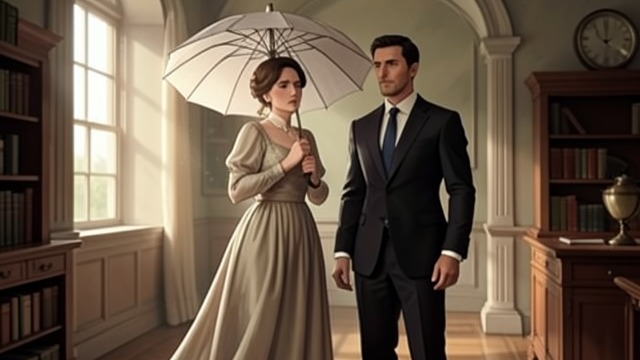
Joy and Strain
The admired marriage
The Doyles appear to be a loving, successful couple, admired by other travelers. Simon’s attentiveness and Linnet’s radiant confidence support the public picture.
Signs beneath the surface
Poirot sees strain in Linnet’s eyes and a tightly gripped parasol. The image of uncomplicated happiness conceals fear, guilt and a danger the couple cannot control.
The Blood Letter
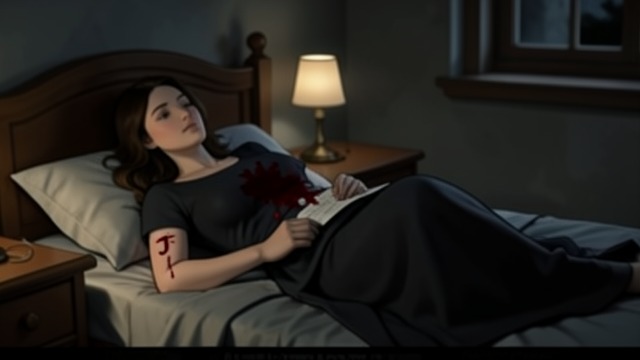
A Message Designed to Convince
The obvious reading
A J written in blood appears to identify Jacqueline as Linnet’s killer. Her earlier threat makes the clue seem emotionally persuasive.
A manufactured image
Poirot treats the theatrical letter as a likely attempt to mislead. What looks like a dying message may instead reveal the killer’s wish to construct a story for the investigators.
The Counterfeit Necklace
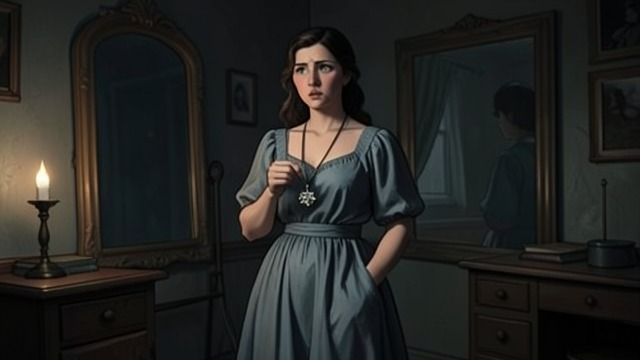
A Replica Returned
An apparent resolution
The necklace is recovered from Marie’s stockings, apparently confirming that her kleptomania explains the disappearance. The familiar story seems to close the question.
Another layer of deception
Poirot discovers the necklace is imitation. The false object reveals a separate substitution plot and warns that visible possession is not proof of authenticity.
The Final Unmasking
Identities Reconsidered
The lovers beneath the performance
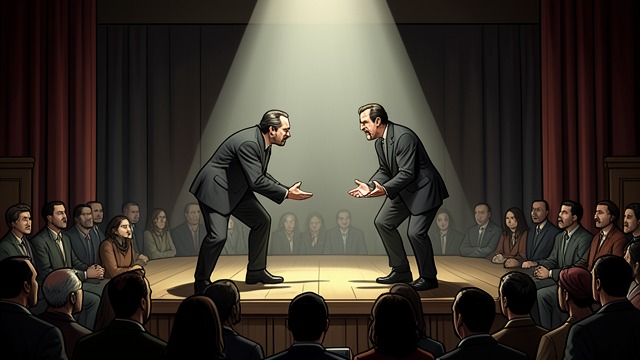
The apparent enemies, Simon and Jacqueline, are revealed as partners. Their staged conflict made witnesses believe what the conspirators needed them to believe.
A method of seeing
Poirot’s success comes from comparing appearances with physical details and human motives. The novel’s most convincing public story is not necessarily the truth.
At Wode Hall, early in the story
At the Cataract Hotel during the honeymoon
The morning after Linnet is found dead
During the search of Marie Van Schuyler’s belongings
Near the end of the return voyage
