Choice and the consequences of past actions
Death on the NileChoice and the consequences of past actions is a moral idea articulated by Hercule Poirot in his conversations with Linnet Doyle and Jacqueline de Bellefort. He treats wrongdoing not as an abstract stain but as a decision made at a moment when another course remains possible. Once that moment passes, the past cannot be revised; the person must face what the choice has set in motion.
Linnet and the choice already made
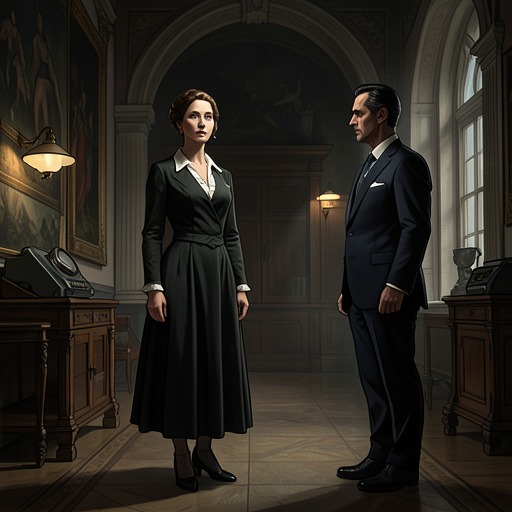
Poirot first applies this reasoning to Linnet’s response to Jacqueline’s pursuit. He distinguishes ordinary annoyance from the guilt he believes lies beneath Linnet’s unusually intense distress: Jacqueline’s appearances trouble her, he argues, because Linnet knows that she deliberately took her friend’s fiancé. His account stresses a pause before action. Linnet was attracted to Simon Doyle, but, Poirot says, there was a moment when she understood that she could either hold back or proceed. He places the initiative with Linnet, describing her as beautiful, wealthy, clever, and charming, and insists that she could have restrained the influence she chose to exercise.
The imbalance between the two women gives that choice its particular weight. Poirot says Linnet had everything life could offer, while Jacqueline’s life was bound up in one person. He casts Linnet’s act through the image of King David taking a poor man’s one ewe lamb: the injury was not simply that a relationship changed, but that a woman with abundance took what constituted another woman’s sole attachment. The image turns privilege into a responsibility. In Poirot’s interpretation, Linnet’s capacity to choose makes her accountable; her advantages do not lessen the harm.
Linnet initially rejects the accusation. She springs to her feet, challenges Poirot for daring to speak so plainly, and calls his judgment beside the point. Yet her anger subsides. When Poirot says that she has generally lived generously and kindly, Linnet answers that she has tried to do so; she then speaks simply, almost forlornly. The movement from indignation to exposed distress does not amount to a full confession. Rather, it gives force to the conflict between the person Linnet believes herself to be and the injury Poirot says she has caused.
The past cannot be revised
Linnet’s answer to Poirot’s charge shifts the discussion from guilt to the limits of action. Even if his account were true, she says, nothing could now be done about it: the past cannot be altered, and one has to deal with things as they are. Poirot agrees with the first part of this reasoning, but draws a sharper consequence from it. Acceptance, in his view, means accepting the consequences of past deeds, not escaping them because they can no longer be changed.
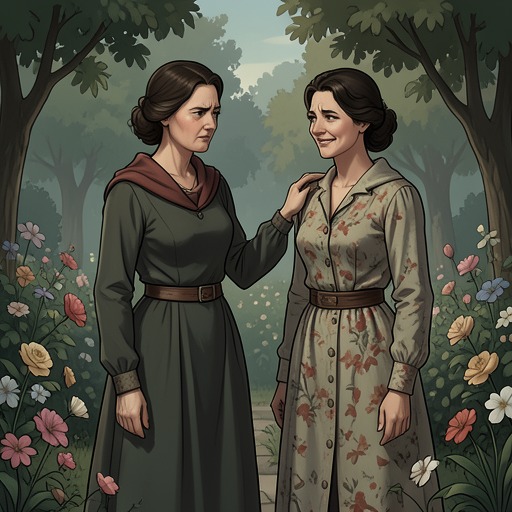
Linnet hears this as a possible sentence of helplessness and asks whether she can do nothing. Poirot instead tells her that she must have courage. His answer keeps two ideas in tension: a past choice is irreversible, but the present still demands a response. Linnet asks whether he might reason with Jacqueline, then wonders how she and Simon could extricate themselves. Poirot offers a practical alternative—returning to England and establishing herself in her own house—but Linnet immediately imagines Jacqueline planting herself in the village, where Linnet would see her whenever she went out. The proposed escape cannot erase the history between them or guarantee release from its continuing pressure.
Jacqueline at the threshold
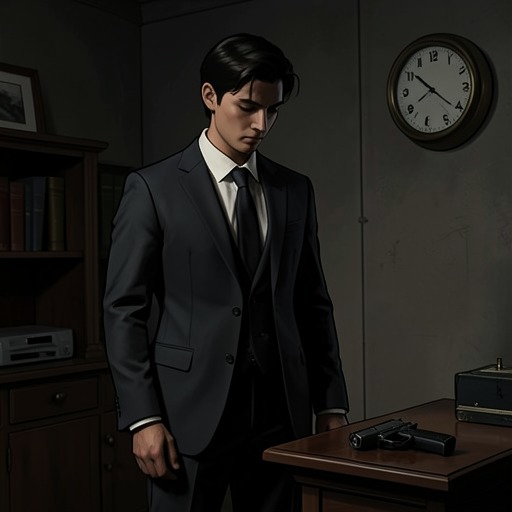
Poirot gives the same principle a forward-looking form when he speaks privately to Jacqueline. He begs her not to continue what she is doing and warns her not to open her heart to evil. His language makes evil an accumulating force: once admitted, it will enter, make its home within her, and eventually become impossible to drive out. Jacqueline’s lips part and bewilderment appears in her eyes; her glance wavers. The scene registers a possible moment of hesitation without claiming that the warning has changed her decision.
Jacqueline says, almost pleadingly, that she cannot do what Poirot asks. He rejects the idea that she lacks the ability to stop. There is always a moment, he insists. Linnet, too, had such a moment and let it pass; after that, she was committed to what she had begun, and there would be no second chance. Jacqueline repeats the final idea, stands brooding briefly, then lifts her head defiantly and says good night. Her response leaves the choice open only in the narrow sense that Poirot has identified: she has heard the warning, but the scene ends without showing her accept it.
A recurring pattern of agency
The two conversations form a deliberate parallel. Poirot describes Linnet looking back on an opportunity to refrain, while he addresses Jacqueline at the point where she may still refrain. The past choice becomes a warning about a present one. This structure distinguishes regret from prevention: Linnet cannot return to the moment she passed over, but Jacqueline, in Poirot’s account, has not yet passed hers.
The parallel does not make the women’s actions identical. Poirot condemns Linnet for taking Simon from her friend, then urges Jacqueline to leave Linnet alone; he recognizes Jacqueline’s injury without treating it as permission to continue. The principle is demanding precisely because pain and responsibility coexist. A person may have been wronged and still face a choice about what to do next. In this episode, the phrase no second chance names both the permanence of past action and the urgency of the present: once a person crosses a moral threshold, consequences may outlast the intention that first carried them across.