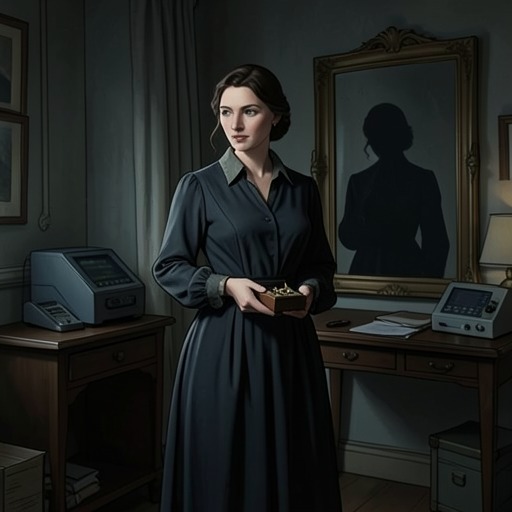
Kleptomania as a pathological condition
Death on the NileKleptomania is presented as a pathological compulsion, not merely as stealing treated as a moral failing. When Cornelia Robson learns that her cousin Marie Van Schuyler has a secret connected with kleptomania, Dr. Bessner’s explanation gives the condition a psychological cause and a possible method of treatment; Cornelia’s immediate fear, however, is that the family’s private trouble will become public scandal.
Dr. Bessner’s Explanation
Dr. Bessner tells Cornelia that people with kleptomania cannot simply help their behavior, and says he has treated such patients in his clinic. He explains the compulsion as a deep-seated neurosis, often rooted in the subconscious. In some cases, he says, its source may be a small incident from childhood, recovered by helping the patient remember what happened.
His account presents the act as the visible expression of a buried cause. Treatment, as Cornelia understands it, depends not only on restraining the behavior but on tracing it back through memory. She repeats the explanation with awe, especially the idea that a seemingly minor childhood experience may remain active beneath conscious awareness. Dr. Bessner says he has cured people through this process of recollection, though the account does not establish that every case can be treated in the same way.
Marie Van Schuyler and the Disclosure
The explanation reaches Cornelia after Miss Bowers tells her about Marie Van Schuyler. Cornelia is shocked to learn that the responsibility has weighed on Miss Bowers so heavily that she can no longer bear to keep it to herself. Dr. Bessner then helps Cornelia understand the matter in terms of illness rather than simple blame. The disclosure shifts the secret from private concealment toward a family member’s effort to comprehend it.
Cornelia’s response remains divided. She is moved by the possibility that the behavior has a psychological cause, but she is also distressed that the information could become known in New York. She imagines the tabloids publicizing the story and worries that Marie, her mother, and the rest of the family would suffer humiliation. The episode therefore places medical compassion beside the social pressure to protect reputation.
Wealth, Possessions, and Public Judgment
Elsewhere in the novel, property and valuable objects are conspicuous measures of status. Mr. Burnaby describes Linnet Doyle’s plans for extensive improvements to her estate, including swimming pools, Italian gardens, a ballroom, and rebuilding part of the house; he also expects the spending to bring money into the town. The scene makes wealth both a private resource and a public spectacle, attracting admiration as well as envy.
That spectacle becomes especially tangible when Joanna Southwood admires Linnet Doyle’s matched pearl necklace, learns that it is worth about fifty thousand pounds, and asks to wear it. Linnet says she habitually wears the pearls and that they are insured. Joanna’s request and her admission of envy show how openly valuable possessions invite attention, but the scene does not identify Joanna’s interest as kleptomania. Similarly, the observers who watch the newly married Linnet arrive in Egypt remark on her fortune, while Rosalie Otterbourne’s response is bitter. These moments establish a wider climate of visible wealth and judgment against which a concealed compulsion can be misunderstood as simple greed.
Secrecy and the Limits of the Explanation
The account of kleptomania offers Cornelia a way to interpret Marie Van Schuyler’s secret without reducing it to deliberate misconduct. Yet it does not remove the social consequences Cornelia fears: the possibility of exposure remains powerful even after Dr. Bessner has supplied a sympathetic explanation. The episode holds those pressures together—an attempt to understand behavior through its hidden causes, and a family’s anxiety about what public knowledge might do to its standing.