Murder of Salome Otterbourne
Death on the NileThe Murder of Salome Otterbourne occurs as Salome Otterbourne is about to disclose what she knows about the murder of Linnet Doyle. Her testimony offers a crucial lead: she had seen someone enter Louise Bourget’s cabin. Before she can identify that person, she is shot, and the weapon is later linked to Andrew Pennington’s revolver.
The Interrupted Disclosure
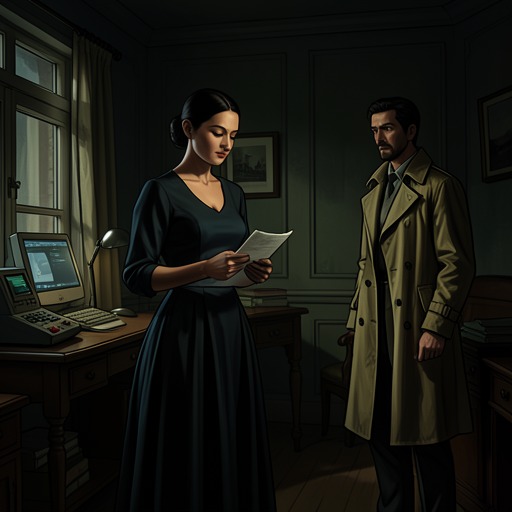
Salome enters Simon Doyle’s cabin insisting that she has vital information and knows who killed his wife. Poirot and Race are there questioning Simon about a telegram when she arrives. Simon, Poirot, and Race turn their attention to her as she prepares to explain what she has learned.
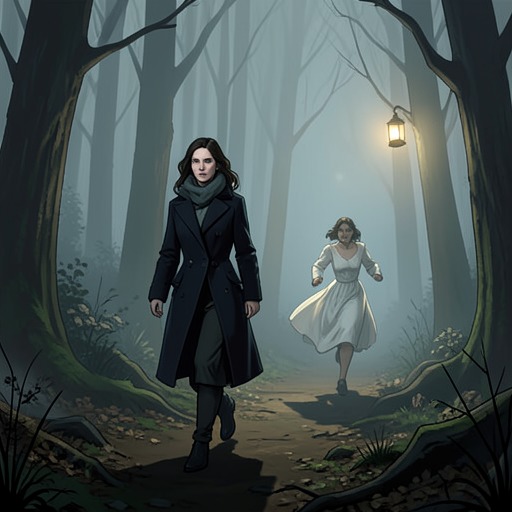
Salome says she had arranged to meet a man on the deck below, near the stern. On her way there, she saw Louise Bourget open a cabin door and look out. Louise appeared to be expecting someone; when she saw Salome instead, she seemed disappointed and went back inside. Salome then met the man, received some unspecified goods, paid him, and spoke with him briefly.
On her return, Salome saw someone knock on Louise’s door and enter the cabin. Race begins to ask who that person was. A shot cuts off the question before Salome can give an answer, leaving the identity of the visitor undisclosed.
The Shooting and Its Immediate Effect
Before the shot, Poirot notices a faint steel-blue gleam between the curtain and the door. The noise interrupts Salome’s account; she falls, and Race bends over her while Poirot moves toward the door and deck. The testimony that might have identified the person who entered Louise’s cabin has ended before the crucial identification is made.
The scene’s suspense turns on that abrupt break between evidence and explanation. Salome has described a sequence of observations, not named a suspect. Her death therefore makes the visitor’s identity a newly pressing question without resolving it, and her claim that she knows who killed Linnet remains unsubstantiated in the moment.
The Weapon and the Wider Investigation
Race later tells Andrew Pennington that Salome was shot with Pennington’s revolver. This identifies the weapon, but the evidence here does not establish who fired it. Pennington says he has been in his room and has not left; the accusation of a connection to his revolver consequently becomes part of the investigation rather than a complete account of the shooting.
The murder takes place against a case already troubled by a misleadingly clear sequence. Poirot had questioned why the pistol associated with Jacqueline de Bellefort, which appeared to implicate her in Linnet’s murder, was removed from the scene and thrown overboard. Race initially doubts Poirot’s revised reasoning, but Poirot insists that the investigation must begin again rather than force every clue into its first theory. He later explains that the murder of Linnet was carefully planned, not an impulsive crime. These deductions concern the earlier murder and its clues; they do not, on the evidence presented here, reveal Salome’s killer.
Significance
Salome’s death converts a potentially decisive eyewitness account into an unresolved lead. Her observations connect Louise’s cabin with an unidentified visitor, while the revolver ties the shooting to a separate piece of evidence that investigators must examine. The interruption preserves the central uncertainty: Salome had claimed to know who killed Linnet, but she dies before telling the others whom she meant.