Wadi Halfa
Death on the NileWadi Halfa is a point of arrival, departure, and return on the travellers’ Nile itinerary, but it also gives a seemingly minor misunderstanding a lasting place in the murder investigation. The party reaches it before an excursion to the Second Cataract; Signor Richetti’s separate trip to Semna divides him from the others. Later, a telegram mistakenly opened there by Linnet Doyle becomes the incident by which Simon Doyle explains Richetti’s anger and rudeness toward his wife.
Itinerary and departures
The party arrives at Wadi Halfa the night before travelling to the Second Cataract. The next morning, two launches carry the group there, with Signor Richetti as the exception. He insists on making his own excursion to Semna, a remote place he considers important because it had been the gateway to Nubia in the time of Amenemhet III. He also cites a stele recording that people entering Egypt had to pay customs duties.
The others try to dissuade Richetti on practical as well as touristic grounds: they argue that the expedition is not worthwhile, that reaching Semna by car is impossible, that no car can be obtained, and that any car would cost too much. Richetti rejects each objection in turn, eventually bargaining in Arabic and arranging transport. His departure is made secretly, lest other tourists be tempted to stray from the planned sightseeing. Wadi Halfa thus serves as the point from which the party’s shared itinerary breaks apart: while most travel together to the cataract, Richetti chooses an independent route.
Poirot and Race at Wadi Halfa
Wadi Halfa is also where Hercule Poirot encounters Colonel Race during the return journey toward Shellal. The two men had met a year earlier in London, as fellow guests at a dinner party that ended with their host’s death. Poirot knows Race as a man whose unpublicized movements tend to take him to outposts of the Empire where trouble is brewing. Their meeting at Wadi Halfa therefore joins an established professional acquaintance to the present journey: Race is not simply another traveller, and Poirot recognizes the significance of finding him there.
The exchange is brief but establishes their circumstances. Race says he is on the boat and will make the return journey with Poirot to Shellal. Wadi Halfa becomes a point of renewed contact between the two men, whose earlier encounter had already connected them with a death investigation.
The telegram misunderstanding
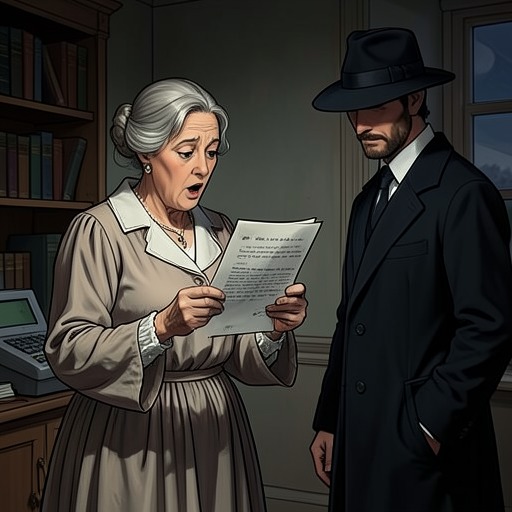
The incident most closely tied to Wadi Halfa occurs after the travellers have returned from the Second Cataract. Linnet thinks she sees a telegram for herself on the board and opens it. She has forgotten that she is no longer called Ridgeway; in the poor handwriting, Ridgeway and Richetti look alike. The telegram is not hers, and she cannot make sense of it. When Richetti arrives, he tears it from her hand and reacts with anger.
Linnet follows him to apologize, but he is markedly rude to her. The mistake is small and accidental, yet it leaves an impression: it gives Simon a concrete example of Richetti’s temper and of his hostility toward Linnet. Later, when Race asks Simon about the telegram after hearing that Richetti had been troublesome, Simon recounts the episode. Race also asks what the telegram contained. Simon begins to say that Linnet read part of it aloud, but before he can give the wording, Mrs. Otterbourne enters urgently, announcing that she has vital information. The interrupted disclosure makes the Wadi Halfa incident relevant beyond the embarrassment itself: the telegram’s contents remain a live question at the moment the conversation is cut short.
Narrative significance
Wadi Halfa gathers together details that first seem incidental: an independent sightseeing trip, a meeting between Poirot and Race, and an apparent error over a name on a telegram board. Their later importance depends on how the details are recalled. Simon’s account turns the mix-up into evidence of Richetti’s known behaviour, while the interrupted question about the telegram preserves uncertainty about what Linnet saw and what the message might reveal.
The place therefore functions less as a backdrop for a single dramatic event than as a junction in the journey and in the investigation’s recollections. Travellers leave it by different routes and return from excursions; later, its telegram incident is reconstructed as the investigators test what the passengers knew. The ordinary confusion between two names acquires weight because it connects Linnet, Richetti, and Simon’s explanation, while the unfinished question prevents the episode from being fully resolved in that conversation.