
The English Woman’s Marriage at the Breaking Point
DeceptionThis thread traces how the English woman’s distress over her husband’s affairs, her own uncertain desires, and financial dependence turns repeated divorce considerations into a shifting confrontation with the marriage itself.
increasing Bearing strength in each event
 decreasing
Bearing strength in each eventdecreasingA Marriage of Unequal Freedom
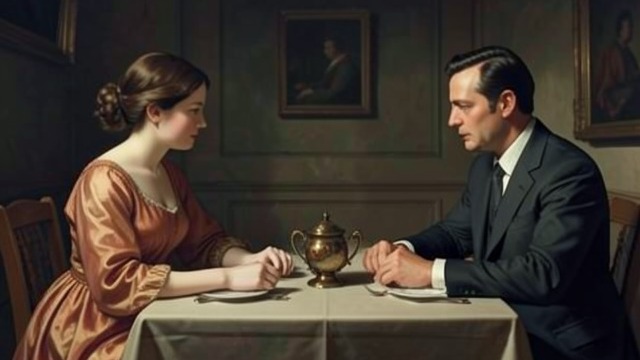
Unequal Freedom
The terms at home
The English woman describes a marriage in which her husband has a girlfriend and appears to retain freedoms she does not feel able to claim. At first, she frames his relationship as an important part of his life, and says it would be selfish to demand that he end it.
Her position unsettles the writer. He observes that she is assigning selfishness to herself for wanting exclusivity, rather than to her husband for maintaining an arrangement that hurts her. Their discussion makes clear that her apparent tolerance does not mean she is at ease.
Resentment beneath restraint
The English woman connects her distress to years of loneliness and depression, while also acknowledging that she has not always understood what she wants from her husband. Her careful reasoning competes with the emotional costs of living alongside his choices.
The conflict begins not with a decisive ultimatum but with a mismatch between what she says is reasonable and what she can bear. The writer’s questions press her to recognize that a marriage can be defended as fair while still feeling intolerable from within.
Sexual Disconnection
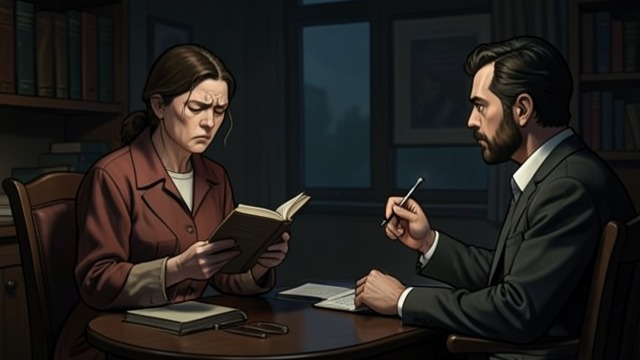
Sex Becomes a Dispute
A private difficulty becomes marital
The English woman tells the writer that sex with her husband has become lonely, difficult, and increasingly unwanted. She describes anger between them and says that her loss of interest is something her husband cannot bear.
The writer responds provocatively, urging her to treat sex less solemnly and to try harder to enjoy it. His advice does not resolve the disagreement; instead, it exposes the gap between his blunt prescriptions and her account of desire as something she cannot simply command.
The stakes of refusal
The English woman recognizes that her sexual withdrawal may contribute to the marriage’s deterioration, but she does not accept that restoring sexual performance would restore intimacy. She says she has decided to give up sex with her husband, while wondering whether celibacy might make her more focused and self-possessed.
This conflict turns a problem of physical intimacy into a question about agency. Her husband’s wish for a satisfying sex life, her own lack of desire, and the writer’s interest in interpreting the situation all pull her toward different answers, none of which settles whether she will leave.
The Solicitor and the Retreat
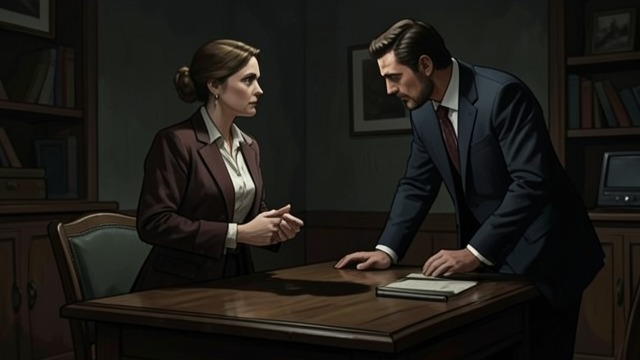
Divorce Becomes Practical
Testing the exit
The English woman visits a solicitor to learn what a divorce might involve. She reports that her husband’s adultery has lasted for years, but also learns that her long tolerance of it may make it difficult to present it as a new cause for divorce.
Rather than describing a settled plan to leave, she explains the arrangement she wants: her husband already has room for an affair, and she wants comparable freedom. The solicitor’s office forces her to translate an intimate and unconventional grievance into formal legal terms.
A return to uncertainty
The consultation leaves her wary of proceeding. She finds the process intrusive and feels that its expectations do not match the kind of relationship she is trying to describe. She also fears what a contested separation could mean for her child and financial security.
Her retreat does not erase the conflict. She considers whether to return to a lawyer and later says that she repeatedly rehearses the possibility of leaving. The marriage is now understood as a choice she might make, but the costs of acting make the choice feel dangerous.
The Valentine’s Night Confrontation
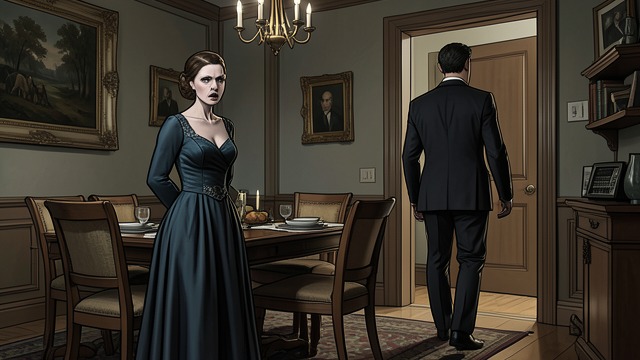
Jealousy and Contradiction
A public slight
The English woman recounts her husband leaving a dinner party with a young woman to go dancing. She says that he excluded her from the invitation in a subtle way and returned home around half past three in the morning.
She is furious, but also doubts her right to object because she does not feel sexually interested in her husband. He argues that she should not demand from him what she does not give him. His defense turns the conflict into a confrontation over whether sexual distance excuses his unilateral behavior.
The choice beneath the argument
The writer tells her that she has an option she refuses to accept: insisting that her husband stay home, or leaving the marriage so that he can live as he chooses without humiliating her. She recognizes that divorce is a recurring fantasy, but cannot make herself act on it.
Her jealousy complicates her claim that she no longer wants her husband. The episode reveals that the marriage still governs her sense of security and status, even as she feels emotionally and sexually detached from it. The quarrel therefore produces no resolution, only a sharper awareness of the choice she has been avoiding.
A Shift in the Balance
The Marriage Reasserts Itself
Improvement without certainty
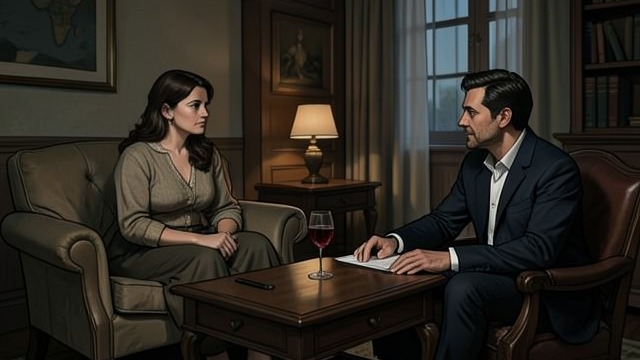
When the English woman returns after a period apart from the writer, she says that the balance of power at home has shifted in her favor. Her husband has begun treating her better, and she describes the change as slow and painful rather than as a clear reconciliation.
She remains unable to tell whether the improvement is permanent or merely another phase in a familiar cycle. The marriage still brings boredom, loneliness, and repeated thoughts of consulting a solicitor, but immediate separation no longer seems inevitable.
The unresolved dependence
The English woman explains that leaving would require her to secure an income and manage practical arrangements that she does not feel equipped to handle. The writer challenges her reliance on the marriage as a meal ticket, while she insists that income is inseparable from dignity and safety.
The conflict settles into neither rupture nor repair. A better period changes the pressure on her without answering whether she wants the marriage, whether she can afford to leave, or whether the temporary calm will hold. Her return to domestic life remains an unsettled decision rather than a final choice.
early in the affair
during the first year of the affair
after she first consults a solicitor
around Valentine’s Day
several months after the Valentine’s Day quarrel
