
The Woman and Her Husband
DeceptionThis thread follows the English woman’s strained attachment to her husband, from weary accommodation and jealousy through fantasies of separation to a later, more workable domestic arrangement.
increasing Bearing strength in each event
 decreasing
Bearing strength in each eventdecreasingA Life of Responsibilities
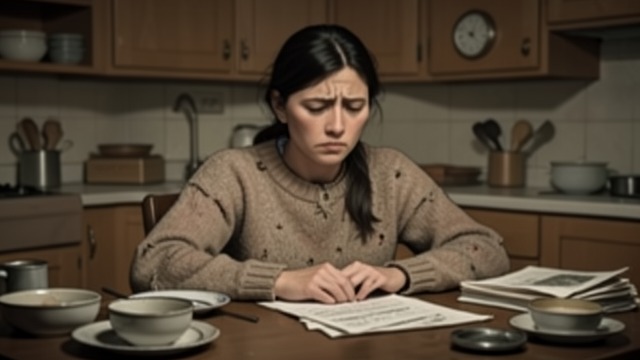
Marriage as Daily Burden
A Crowded Household
The woman describes a household filled with children, nannies, domestic work, and demands that leave her little time to herself. She feels accountable to everyone and longs for a holiday, privacy, and, at times, the ability to sleep alone. Her exhaustion is more than a passing complaint: it shapes her sense that there is not enough day left for a sexual relationship.
Affection Beside Fatigue
She does not present her husband as wholly without virtues. She says that she cares for him and would miss him, even as she recounts loneliness, conflict, and a dwindling desire for sex. That coexistence makes her distress difficult to reduce to a simple decision to stay or leave.
Her marriage is experienced as a bond whose emotional residue remains even when its daily form feels intolerable. The narrator listens to her describe the mismatch between affection and desire, while the woman searches for an explanation that might make her situation legible. Her uncertainty becomes one of the conditions that draws her toward the affair.
Jealousy at the Dinner Party

The Pain of Unequal Freedom
A Public Exclusion
After a dinner party, the husband leaves for a nightclub with a younger woman, subtly excluding his wife from the invitation. The English woman is angry and humiliated, even while acknowledging that she has not been offering him the same sexual enthusiasm he wants. Her jealousy unsettles her because she believes she has little standing to make demands.
The Marriage’s Unspoken Terms
She asks the narrator whether her husband is wrong to seek pleasure elsewhere and considers the possibility of accepting a bargain in which he acts freely but behaves kindly. The narrator presses her to name what she wants rather than borrowing her husband’s defense of his conduct. Their discussion shows how she tries to turn a painful situation into a reasonable arrangement before admitting how much it hurts.
The episode exposes the difference between abstract permission and lived experience. The woman can recognize the logic of sexual freedom and still feel wounded by the way it is exercised. Her marriage remains emotionally binding even when she believes her desire for her husband has disappeared.
The Lawyer’s Door

Separation Becomes Thinkable
Rehearsing a Departure
The woman consults a solicitor and later imagines returning to one, but each step toward divorce brings her face to face with the practical consequences of leaving. She fears financial insecurity and worries about the husband’s family, especially their influence over the children. In her mind, separation is not one decision but an uncertain passage into a life she cannot yet picture.
Paralysis and Attachment
She admits that the marriage may be over while also saying she does not want to leave. She continues to care about her husband and is frightened by the prospect of being alone and without income. The narrator tells her that her fear may itself indicate how much she wants change, but his certainty cannot settle the question for her.
The legal consultation intensifies rather than resolves her ambivalence. It provides a glimpse of an exit, yet the woman remains caught between emotional exhaustion and the material dependencies of family life. Their conversations make her crisis more explicit without allowing the narrator to decide in her place.
The Affair Enters the Home
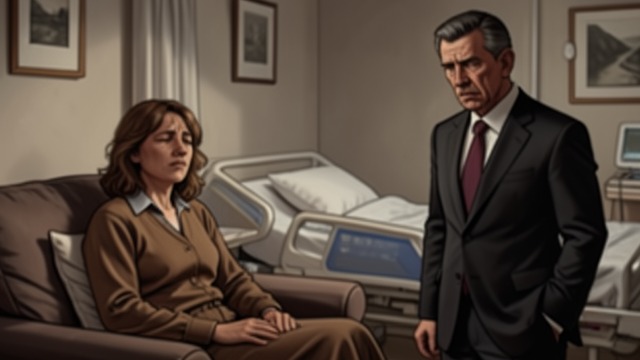
Competing Claims on Intimacy
Relief and Guilt
When the husband is in the hospital, the woman says she has finally slept well and awakened feeling normal. The relief does not erase her recognition that he has many good qualities; instead, it reveals how deeply the marriage has been exhausting her. She also worries about hidden traces of the affair, including a record she must keep concealed at home.
Desire Under Pressure
In another conversation, she describes her lack of pleasure with her husband and the anger that surfaces when he wants sex. The narrator urges her to make an effort, but she insists that desire and orgasm are not simply matters of will. Her account exposes the distance between the husband’s expectation of a satisfying sexual relationship and her own experience of loneliness and resentment.
The affair offers the woman a place to speak openly, but its presence also sharpens her awareness of what is absent in the marriage. She is not able to convert that awareness immediately into a decision. Instead, she moves between relief, guilt, affection, and resistance, each feeling complicating the others.
A Workable Return

An Imperfect Continuation
Home After the Crisis
When she speaks to the narrator again, the woman says that she and her husband still live together and get on much better. She describes herself as more positive than the character in the novel, and says that, apart from persistent loneliness and boredom at work, there is nothing immediately wrong. Her account suggests a marriage that has found a more tolerable balance without becoming free of its old limitations.
Blessings and Unresolved Distance
The woman is now the mother of two children and says she has been counting her blessings. She confirms that the younger child is her husband’s, making clear that the life she built continued outside the narrator’s imagined plot. Yet her description is measured rather than ecstatic: improved relations coexist with loneliness and the sense that some problems remain intractable.
Her later domestic life does not erase the earlier crisis or prove that the marriage has been transformed into an ideal union. It shows instead how people may remain together after a period of upheaval, carrying forward both practical attachments and unmet needs. The narrator’s memory of their affair meets a present in which the woman has continued to make a life without him.
In the early conversations about her marriage
Around Valentine’s Day and the husband’s late-night outing
After the nightclub incident and during renewed marital rows
During a period when the woman’s husband is hospitalized and household intimacy is discussed
Several years after the affair, during the reunion phone call
