
Evidence and Its Limits
Defending JacobThe novel repeatedly tests how physical traces, testimony, and missing evidence can support competing stories without delivering certainty.
increasing Bearing strength in each event
 decreasing
Bearing strength in each eventdecreasingThe Fingerprint
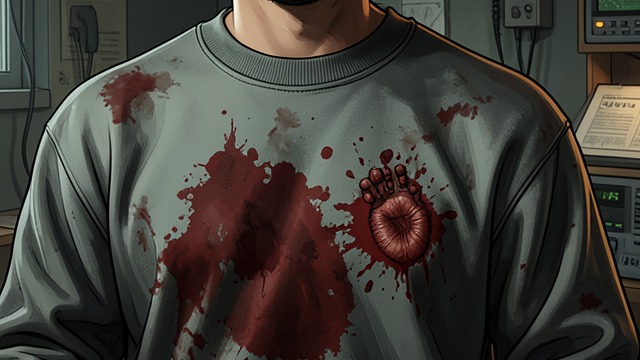
The Fingerprint
A strong trace
Jacob’s thumbprint is found in blood on Ben’s sweatshirt, a placement that seems to connect him to the attack. The laboratory match gives investigators a concrete fact in an otherwise quiet case.
A fact without a full history
The print cannot reveal exactly when or why Jacob touched the garment. It becomes powerful because a narrative supplies its meaning, not because the trace alone explains the event.
The Missing Weapon

The Missing Weapon
Search for certainty
Investigators and volunteers seek a knife that might connect a suspect to the wounds. A kitchen knife is found in a pond, but forensic comparison shows it is not the murder weapon.
Absence invites theories
The missing weapon can suggest concealment, but the found knife can also be an unrelated object. The case demonstrates how an incomplete scene encourages interpretations that exceed what the physical evidence can establish.
Blood and Timing
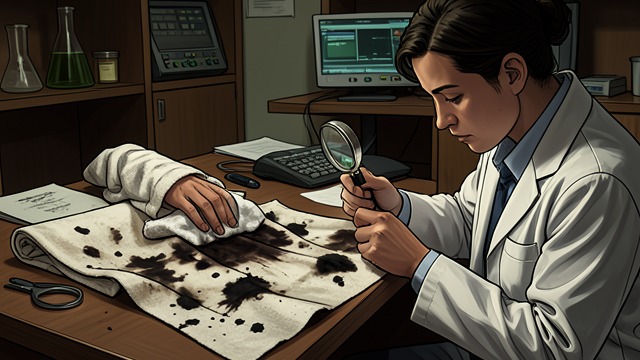
Blood and Timing
Expert interpretation
Karen explains that much of the blood may have drained after death and that an attacker need not have been visibly covered in blood. Her account weakens one defense argument about Jacob’s clean clothes.
Competing readings
The blood evidence does not independently identify the assailant. It gains force through expert interpretation, reminding jurors that scientific facts can narrow possibilities without naming a person.
A Story’s Provenance
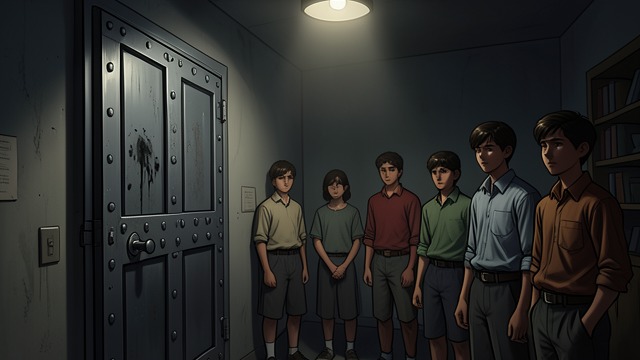
A Story’s Provenance
The prosecution’s claim
The state argues that Jacob’s online story contains details associated with the murder and is effectively a written confession. Derek says Jacob told him he wrote it.
Attribution remains disputed
The upload cannot be traced to Jacob’s computer, and the details may have circulated among students. The story is disturbing, but its existence and resemblance do not settle authorship or guilt by themselves.
Confession After Death
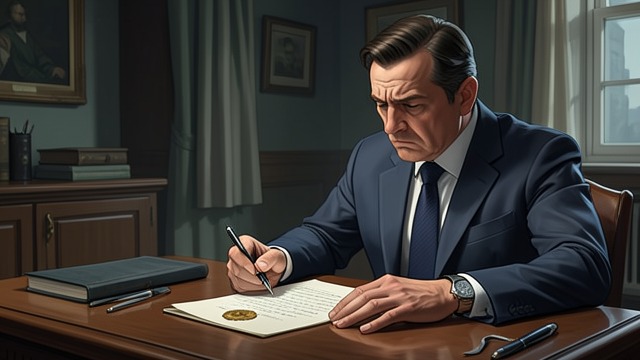
Confession After Death
A decisive document
Patz’s confession letter leads the prosecution to dismiss the case against Jacob. The letter arrives after Patz’s death, so the account cannot be tested through live testimony.
Resolution without full proof
The confession changes the legal outcome but does not reconstruct every event in court. The family receives release from prosecution, not a complete, publicly tested explanation of the murder.
April 2007, after laboratory comparison
April 2007, during the park search
Trial day five, mid-October 2007
Trial day six, mid-October 2007
October 25, 2007
