
Nature and Nurture
Defending JacobThe family’s debate about violence moves between inherited biology, childhood experience, personal responsibility, and the limits of prediction.
increasing Bearing strength in each event
 decreasing
Bearing strength in each eventdecreasingThe Family’s Red Thread
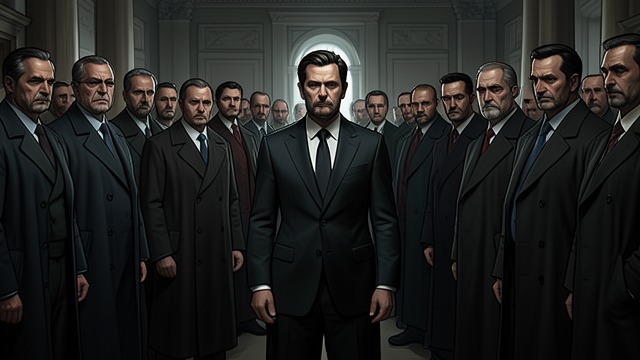
The Family’s Red Thread
A lineage of violence
Andrew recalls men across three generations committing serious violence. The history feels like a pattern, though the available stories are partial and shaped by family memory.
A private theory of prevention
Andrew believes he can stop the pattern by refusing to speak of it and by raising Jacob differently. His silence treats environment and identity as controllable, even while biology remains unknowable.
Childhood Behaviors
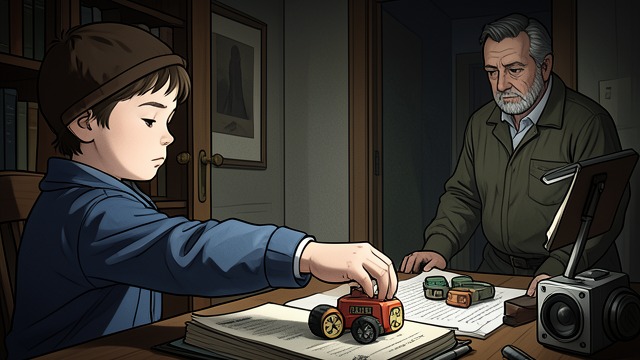
Childhood Behaviors
Retrospective evidence
Laurie recounts Jacob’s early roughness, stealing, and difficulty imagining other people’s feelings. Andrew argues that many incidents were ordinary childhood behavior that faded with age.
Meaning changes in crisis
The same memories take on new significance after Jacob is charged. The family cannot determine whether they reveal a pattern or merely look predictive because they know what happened later.
A Genetic Hypothesis

A Genetic Hypothesis
Science enters the defense
Dr. Vogel explains that gene variants may influence behavior through interaction with environment, without mechanically determining actions. The defense considers this evidence as possible mitigation.
A phrase overwhelms nuance
Andrew fears the public will reduce the science to a “murder gene.” The family’s debate shows how a qualified scientific hypothesis can become a moral label when translated into courtroom language.
The Leopard Argument
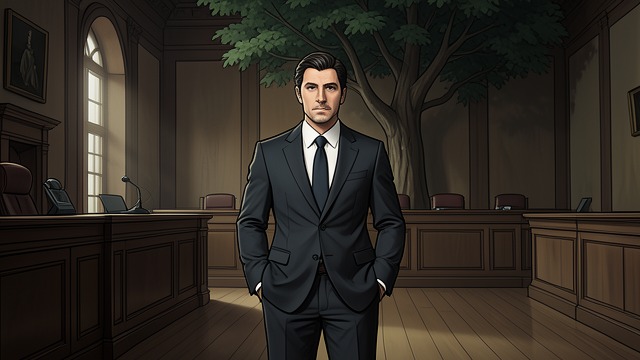
The Leopard Argument
Law and freedom
Andrew argues that criminal law punishes guilty intention rather than inherited traits. The law cannot fairly punish someone for a tendency or identity alone.
Responsibility remains difficult
The argument protects free will in principle but cannot tell the family whether Jacob’s choices were fully his own. Biological influence, personal agency, and legal responsibility remain in unresolved tension.
Prediction Fails
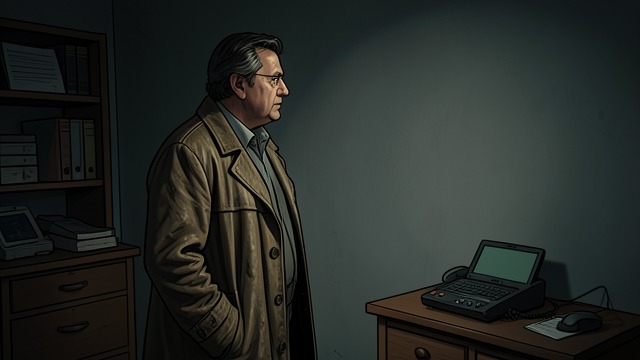
Prediction Fails
No theory explains the outcome
Neither family history, psychiatric assessment, nor genetic testing can establish what Jacob did in the park or what Laurie later intended. The available explanations remain partial.
Human beings exceed labels
Andrew is left with a son he loved and did not fully know. The novel resists turning either inheritance or environment into a complete answer about a person’s actions.
Andrew’s childhood and family recollections
During the family’s psychiatric evaluation, summer 2007
Late summer 2007, during DNA discussions
After Jacob learns the family history
After Jacob’s death, in Andrew’s later reflections
