“We are saying a mass”
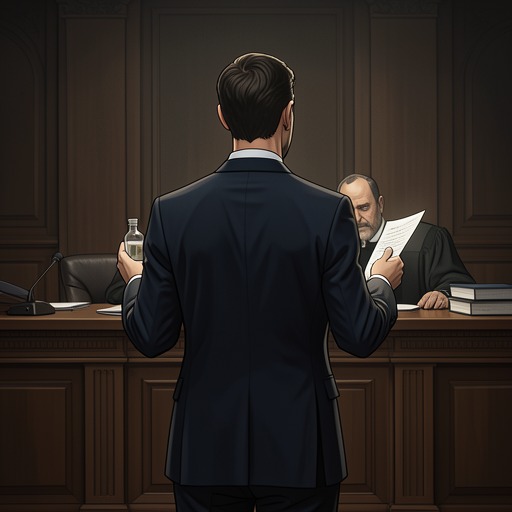
Defending Jacob“We are saying a mass” is Andrew Barber’s account of what a trial can mean when its ability to establish truth is doubtful. The phrase casts the courtroom as a secular religious ritual: an imperfect institution whose robes, architecture, and shared proceedings still embody a collective effort to do right and guard against danger. It also stands in contrast to the prosecutor’s effort to make an uncertain case feel like a single, decisive story.
A Ritual Distinct from Fact-Finding
Andrew acknowledges that his professed confidence in the court system is not literally true. He has seen too many mistakes and bad outcomes to consider a jury verdict a dependable way to distinguish fact from fiction; in his view, a verdict remains a guess, even when well-intentioned. Yet he continues to believe in the power of trial as ritual. The black robes and marble-columned courthouses evoke religious symbols and temples, and the proceeding gives people a way to gather, pray for a just result, and seek protection from danger. The phrase therefore separates the ritual’s civic and emotional value from any guarantee that it will uncover the truth.
Competing Stories in Court
The phrase resonates with the trial’s struggle over how the case should be understood. Neal Logiudice prefers the legal binary of guilty or not guilty and presses Andrew to remain within it. In his opening, he shapes the killing into a story of a teenager with a lethal temper who was pushed until he “snapped.” He presents the victim, Ben Rifkin, as an ordinary fourteen-year-old, while characterizing Jacob as an outsider whose temper supplied the explanation for the crime. Logiudice’s strategy shows how courtroom speech does more than enumerate facts: it gives jurors a narrative theme to carry into deliberations.
The Gaps Beneath the Narrative
Logiudice’s account supplies a trigger only as a possibility. He speculates that Ben may have insulted, threatened, or bullied Jacob, while conceding that the cause may never be known. Andrew recognizes the unanswered question as central to the jurors’ understanding: the alleged leap from a boy with no history of violence to a brutal act demands a motive, but the prosecution can offer only theories and probabilities. Against that unresolved gap, the polished story of a sudden snap demonstrates the distance between a persuasive explanation and established fact.
Meaning and Limits
The mass metaphor does not resolve whether the competing accounts are true, nor does it promise that ritual will produce a correct verdict. Instead, it explains why Andrew can distrust the system’s truth-finding capacity while still valuing the act of holding a trial. The courtroom’s shared forms make a public appeal to justice possible, even as the case exposes how verdicts depend on uncertain evidence, selective interpretation, and the stories people find convincing.