Andrew Barber's discovery and disposal of Jacob's knife
Defending JacobAndrew Barber’s discovery and disposal of Jacob Barber’s knife is a turning point in the investigation and in Andrew’s role as both father and former prosecutor. He finds the folding knife hidden in Jacob’s room, then removes it from the house and ultimately discards it instead of preserving it for forensic examination. Andrew describes the decision as an effort to protect Jacob from a misleading accusation, but his later grand-jury testimony exposes the cost of acting on conviction rather than evidence: he never tested the knife, and says he did not need a test because he already knew it was the wrong one.
Discovery in Jacob’s Room
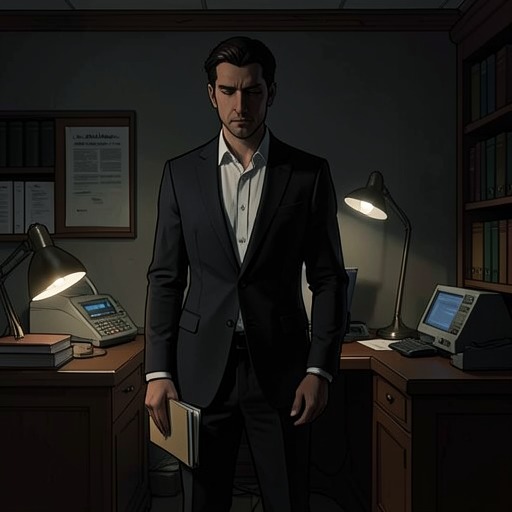
The discovery follows a message that has left Andrew staring at the screen, unable to move. The next morning, after Laurie and Jacob have left, he tells them he has a meeting at the Newton police station and searches Jacob’s room. In the top drawer of the bureau, inside an old white T-shirt, he finds a folding knife with a black rubberized handle. The concealment is casual rather than elaborate: the knife is simply wrapped and tucked away.
Andrew unfolds it and studies an object that resists being treated as an ordinary tool. It is about ten inches long when open, with a four-finger grip, a hooked blade, a serrated ripping edge, and a pointed tip; holes drilled through the blade appear designed to reduce its weight. He sees it as sinister and beautiful, a lethal thing whose shape makes it difficult to dismiss. The description gives the knife a physical presence before its evidentiary meaning is settled: it is not yet proof of anything, but it has become impossible for Andrew to ignore.
Confronting Jacob and Removing the Knife
Andrew brings the knife into a conversation with Jacob, setting it on the table between them. With the blade folded into its handle, its menace has receded; it looks like a tool. Andrew asks Jacob what it is, and Jacob answers that it is a knife. The exchange puts the object in the open between father and son, but it does not resolve what it means or why it was hidden.
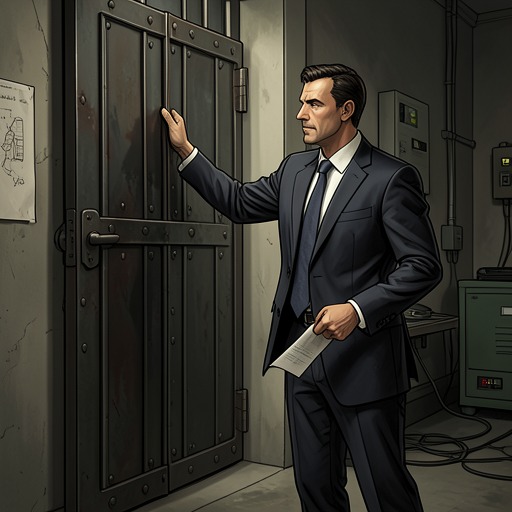
Later, Andrew is asked what he did with it. He says he got rid of it, then specifies that he threw it away in a dumpster somewhere, not at home. His stated reasoning is twofold: he wanted the knife out of his house, and he did not want anyone using it to make Jacob look guilty when, as Andrew believed, he was innocent. The disposal is therefore not a neutral act of tidying or safekeeping. It removes a potentially testable object from the chain of evidence at precisely the moment when Andrew’s certainty about Jacob is shaping what he considers necessary.
Grand-Jury Testimony and the Untested Claim
The episode is framed by Andrew’s testimony before the grand jury, where Neal Logiudice presses him on the choice. Andrew says he wanted the search for the real murder weapon to succeed because finding it would have helped prove his son innocent. Logiudice turns that explanation back on him: Andrew disposed of Jacob’s knife without submitting it for tests of fingerprints, blood, or fiber traces, even though he had threatened Jacob that such testing might occur.
Andrew’s answer is not that testing was impossible, or that the knife had already been examined. He maintains that it was the wrong knife and that he did not need a test to confirm that. Under questioning, he repeats that he already knew. The repetition gives his testimony its central tension: Andrew frames disposal as protection grounded in certainty, while the missing forensic examination means that certainty cannot be checked against the evidence he discarded.
Consequences and Narrative Significance
The knife’s route—from the bureau drawer to the table, then out of the house and into an unspecified dumpster—marks a shift in Andrew’s relationship to evidence. As a former prosecutor, he understands the value of testing; as Jacob’s father, he acts on his belief that the knife could be used against his son. The two roles do not simply coexist. In this episode, loyalty determines which questions Andrew refuses to ask of the object.
The later grand-jury account turns a private decision into public scrutiny. The examination makes Andrew explain not only what he did, but what he chose not to learn. His claim that the knife was the wrong one remains an assertion, not a forensic finding, because he disposed of it without testing. The scene thus complicates the distinction between evidence and interpretation: the knife may have appeared incriminating, Andrew may have believed it irrelevant, but his intervention ensures that the object cannot settle the question. Its decisive consequence is not proof of guilt or innocence; it is the loss of a chance to test Andrew’s conviction against material evidence.