Grand jury indictment procedure
Defending JacobGrand jury indictment procedure is presented as an investigative gateway to trial and, in theory, a check on prosecutorial power. Its formal task is to decide whether the prosecutor has enough evidence to bring a suspect before a court; its practical weakness is that jurors ordinarily hear only the prosecution’s side, and indictments are far more common than refusals to indict. The novel places that imbalance beside a case whose evidence has grown stale and compromised, making the procedure’s promise of scrutiny difficult to separate from its capacity to authorize a prosecution without resolving what happened.
Structure and Purpose
A grand jury is not a trial. There is no judge in the room and no defense lawyer, and the prosecutor controls the presentation. The jurors investigate whether the evidence warrants sending a suspect to court: if they find it sufficient, they return an indictment, which allows the case to proceed to Superior Court; if not, they return a no bill and the case ends before trial.
The distinction between the intended safeguard and the actual arrangement matters. The grand jury is described in theory as a restraint on prosecutorial power, yet its members hear only one side. The narrator notes that no bills are rare and most grand juries indict. Procedure therefore offers a decision point, but not an adversarial test of the prosecution’s account.
The Case Against Jacob Barber
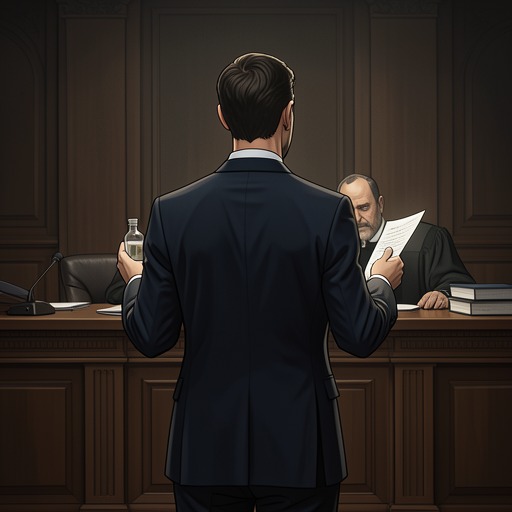
The grand jury’s limitations frame the prosecution of Jacob Barber for the killing of Ben Rifkin. More than a year had passed since the body of fourteen-year-old Ben Rifkin was found in Cold Spring Park. At the opening of the trial, Neal Logiudice presented the killing as a compact causal story: Jacob left home for Cold Spring Park with a knife and an idea, and, after some as-yet-uncertain provocation, his temper supposedly snapped. The account supplied jurors with a simple theme, but the narrator observes that the prosecution could offer only conjectures about the trigger and the motive.
The novel makes the construction of that story explicit. Logiudice’s task is not merely to recite facts but to shape them into an explanation the jury can carry into deliberations. He acknowledges uncertainty about what Ben may have said or done, while the narrator questions the force of an explanation built around what probably happened. The contrast shows how a legal case can depend on a coherent narrative even when the central causal link remains unproved or unclear.
Procedure, Evidence, and Delay
The grand jury episode takes place after the case has been damaged by delay and by what the narrator calls stale and tainted evidence. He suspects the jurors recognize that the case is no longer capable of yielding the truth, and stresses that the problem is not simply the passage of more than twelve months. The accumulated circumstances have made the proceeding feel too late to recover what the investigation failed to establish.
The investigation itself had been slowed by disputes over access to McCormick School and interviews with students. Questions arose about whether children needed lawyers present, whether investigators could enter the school and examine lockers without a warrant, whether the school was an appropriate interview site, and which students could be interviewed. The account records these obstacles as part of the procedural setting in which evidence was gathered, rather than treating the eventual prosecution as the product of an uncomplicated inquiry.
Human Stakes and the Limits of Resolution
For Ben’s father, Dan Rifkin, a resolved case promises relief from uncertainty. He tells Andrew Barber that knowing the accused has been identified and put away would help him and his family, and that they are looking to the prosecutor for closure. The appeal gives the procedure an emotional burden beyond its formal function: indictment and prosecution are expected not only to determine whether a case can go forward, but also to end a family’s waiting.
The encounter between the Rifkins and the Barbers at a market reveals how little a legal process can settle between families. Joan Rifkin’s reaction to Jacob’s continued presence makes the human division stark: one family still has its son, while the other has lost theirs. Later, after Leonard Patz confesses, the Barbers experience the development as proof of Jacob’s innocence; the charges are then dropped before the judge takes the bench. That reversal underscores the difference between a procedural outcome and complete repair. The case ends in court, but the families’ grief, suspicion, and damaged relations are not thereby resolved.
Narrative Significance
Grand jury indictment procedure belongs to the novel’s broader examination of how institutions convert uncertainty into a charge that can be tried. The formal question is whether enough evidence exists to proceed; the human demand is to know who is responsible and why. Those questions do not necessarily coincide. A one-sided screening process may authorize a prosecution without settling motive, while a persuasive courtroom story may supply a shape that the evidence itself cannot securely provide.
The procedure’s significance is therefore both practical and thematic. It moves a case from investigation toward trial, but it cannot guarantee that the prosecution’s account is true, that the investigation has been complete, or that a verdict will restore what the families have lost. The novel’s later dismissal following Patz’s confession sharpens that distinction: legal machinery can stop a prosecution when its basis collapses, yet neither indictment nor dismissal can make the uncertainty and suffering disappear.