Jacob Barber murder trial and dismissal
Defending JacobJacob Barber murder trial and dismissal is the courtroom crisis at the center of the case: a contest to make the murder of Ben Rifkin legible as a story, overturned when Leonard Patz’s confession leads the prosecution to abandon its charges. The trial’s decisive shifts are not simply changes in evidence but changes in what the courtroom believes the evidence means—first as a tale of a prepared killer who “snapped,” then as a case badly damaged by testimony, and finally as a prosecution the government no longer pursues.
The prosecution’s story
The trial begins from the unresolved problem of motive. In his address to the jury, Neal Logiudice presents Ben’s death as the culmination of a split-second choice: a fourteen-year-old boy, he argues, took a life after his temper finally snapped. Logiudice describes Ben as found in Cold Spring Park on a spring morning, and stresses how close the park was to both the school Ben was walking toward and the home he had just left. The setting and proximity turn the killing into a rupture of ordinary neighborhood life.
Logiudice’s account depends on a narrative that makes motive understandable to jurors. He tells them that they will hear Ben teased Jacob and acknowledges that Ben was not a saint; at the same time, he insists that ordinary adolescent meanness cannot justify a fatal response. He contrasts Ben, whom he describes as handsome, popular, and cool, with Jacob as quiet, lonely, and an outsider. The contrast gives the prosecution a social script for resentment, but it does not by itself establish what triggered the crime.
The missing trigger remains the weakness inside that script. Andrew Barber observes that Logiudice has to offer possibilities rather than a known explanation, speculating that Ben may have insulted, pushed, or bullied Jacob. The prosecution’s own story therefore exposes a gap between its confident theme and the uncertainty of motive. Andrew reflects that jurors want a logical answer to why a seemingly nonviolent boy would commit a brutal act; where the account cannot provide one, explanatory theories, including the idea of “murder genes,” threaten to stand in for proof.
A story built for the jury
The trial makes explicit that courtroom persuasion requires more than a collection of facts. Andrew describes Logiudice’s approach as the construction of a “story of the case”: a theme compact enough for jurors to carry into deliberations. Logiudice repeats the idea that Jacob snapped, reinforcing it with a finger snap. His physical manner is equally calculated: he makes eye contact with jurors, comes close to the defense table, and points at Jacob. Andrew considers the method skillful even while rejecting the prosecution’s account as dishonest.
That gap between performance and proof shapes the trial’s narrative tension. Logiudice’s scene-setting turns the case into a comprehensible sequence—teasing, a prepared state of mind, a final trigger, a fatal choice—while Andrew’s narration keeps drawing attention to what the sequence cannot establish. The jury is asked to accept a story that supplies a motive the evidence has not clearly resolved. The trial thus stages a conflict between the persuasive force of a coherent explanation and the criminal case’s need to establish its claims rather than merely make them imaginable.
The courtroom also becomes a public spectacle observed beyond the jury box. Andrew notes that there is, in effect, another jury on the other side of the television cameras. The formal proceedings and their performance for a wider audience coexist, making the trial both a legal contest and a struggle over the family’s public identity.
The witness and the turn toward conviction
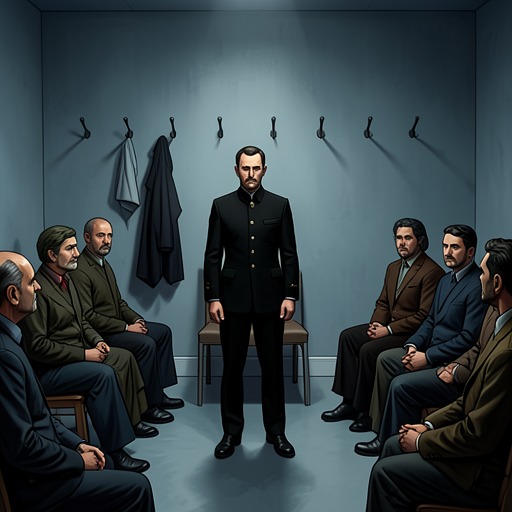
By the sixth day, testimony from Derek Yoo changes the atmosphere. After Derek’s direct testimony, the courtroom seems to Andrew to have reached a collective decision: the jurors and Judge French appear convinced that Jacob will not leave by the front door, and even a court officer watches him warily. The mood combines relief that the question of Jacob’s guilt seems settled with eagerness for revenge. This is Andrew’s perception of the room, not a verdict, but it marks a sharp emotional turn in his account.
Jonathan Klein’s cross-examination tries to narrow the effect of what Derek has said. He asks whether the troubling things Derek describes were serious enough to end the friendship, and whether the two boys remained friends for days and weeks after the murder. Derek answers no. Klein continues to test the limits and reliability of the testimony, but Andrew sees little reassurance in the jurors’ response: those who had taken notes during direct examination stop writing, and some look down rather than at the witness.
The apparent quiet does not restore Andrew’s confidence. He begins, for the first time, to picture Jacob in Concord prison and concludes that the defense cannot safely rely on reasonable doubt alone. In his judgment, Jacob’s story about the murder reads like a confession, while Derek’s account remains damaging despite the cross-examination. The trial has shifted from a defense hoping the prosecution’s case will fail to a defense that must present an affirmative answer to it.
Patz’s confession and the dismissal
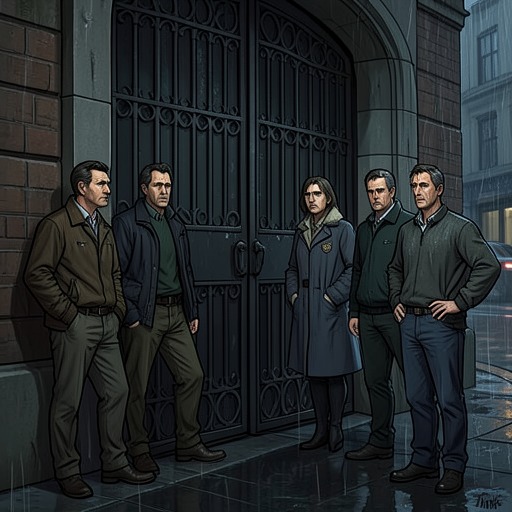
The reversal arrives outside the courtroom. At five-thirty in the morning, Andrew receives a call from Jonathan Klein. Jonathan reports that Leonard Patz, after being served with a subpoena, has died by suicide and left a confession. The handwriting has been checked, and Jonathan tells Andrew that the note is authentic. For the Barbers, the news changes the case at once, though the family waits for the legal consequence rather than treating the confession as sufficient by itself.
Before the judge takes the bench, Neal Logiudice files a nol pros, formally announcing the government’s decision to drop the charges. Jonathan does not have to make the dismissal motion he had expected to bring. At nine, Judge French tells Jacob that he is free, and the clerk reads the order discharging him from the indictment and returning the bail to the surety. The operative phrase, “go without day,” means that no further court date is scheduled in the matter. The indictment is dismissed, and the proceedings against Jacob end.
The release brings immediate relief: Jacob and Andrew embrace, and the family leaves amid reporters, running and laughing toward the garage. They thank Jonathan, who declines to claim credit, saying he had not actually done anything. Yet the legal ending does not erase the trial’s earlier uncertainty. The family experiences Patz’s confession as more than a not-guilty verdict—Andrew says it feels as if Jacob has been proven innocent—but the evidence presented here establishes the charges’ dismissal, not a complete account of every uncertainty that surrounded the murder.
What the trial leaves unresolved
The trial’s structure keeps two conclusions in tension. Inside the courtroom, Logiudice’s theme of a boy who snapped supplies a memorable explanation, while Andrew’s account exposes how much of the prosecution’s motive remains conjectural. Derek’s testimony then appears to persuade the room, and the defense’s attempts to qualify it do not prevent Andrew from imagining a prison sentence. Patz’s confession abruptly changes the legal course, but it arrives after the trial has already made guilt feel settled to those in the courtroom.
The dismissal consequently ends the prosecution without making the process itself a reliable instrument of certainty. A story can dominate the room before all the evidence is heard; a witness can alter the apparent balance of the case; and a confession can overturn that balance before the judge issues a verdict. Jacob leaves the courthouse legally free, while the sharply different courtroom stories remain part of the trial’s significance: the case concludes through the state’s withdrawal, not through a jury resolving the competing accounts.