Jacob Barber–Derek Yoo friendship
Defending JacobJacob Barber and Derek Yoo’s friendship is a childhood bond that survives mostly in name after the boys grow apart. Its history gives Andrew Barber a painful view of the limits of parental understanding: Derek knows things Jacob never told his father, yet even Derek cannot say with confidence who Jacob has become or what he is capable of.
Childhood and Family Friendship
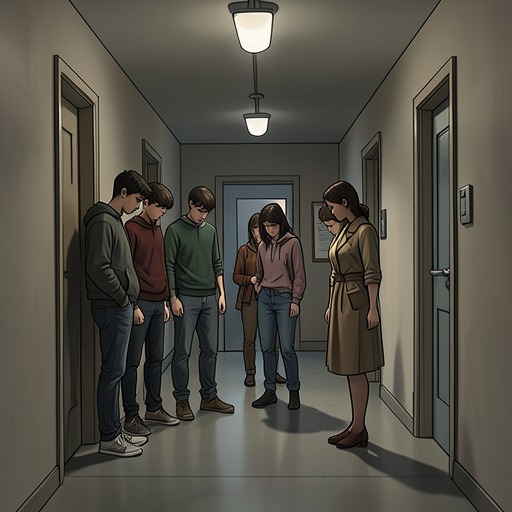
The boys first met in grade school, near the elementary school on a shady street behind the library where the Yoo family lived. The Yoos’ tidy white colonial, with black shutters and a brick shelter around its front door, had once been a familiar place to Andrew and Laurie Barber, who visited during the winter. In those years, parents tried to match families together—father to father, mother to mother, child to child—and the Barbers and Yoos were friendly, even if the fit was never exact. Derek had a younger sister, Abigail, three years younger than the boys.
That family connection faded without a quarrel or a formal break. As the children grew older, they socialized among themselves, and the parents had too little left in common to seek one another out. Andrew still thought of the Yoos as friends, a belief he later recognizes as naive. The distinction matters: the boys’ friendship did not end in a single rupture so much as recede alongside the parents’ relationship, leaving adults with an outdated picture of a bond that had already changed.
Fear, the Knife, and What Derek Knew
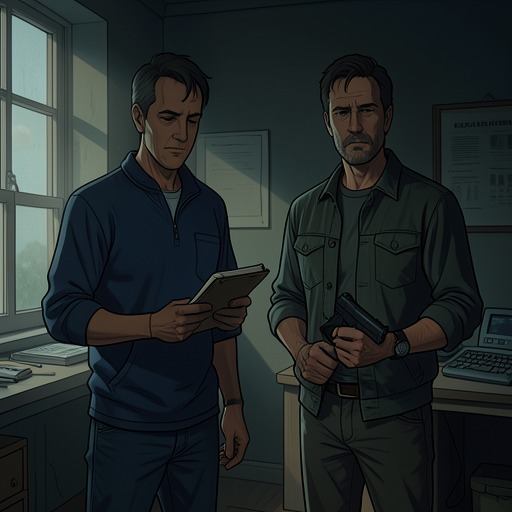
When Andrew asks Derek about Jacob’s knife, Derek explains that Jacob feared Ben Rifkin would eventually come after him and hurt him, and thought he might have to defend himself. Derek presents the knife not as a detached secret but as part of Jacob’s fear of Ben. Andrew had not known about any of this, and Derek confirms that Jacob never told him either. The boy’s private fear had therefore remained outside his father’s knowledge, even while it shaped a consequential choice.
Derek says that this fear was why he told people Jacob had obtained the knife. He is uncertain about his decision and cannot fully explain why he spoke, but Andrew interprets the disclosure as a wish to tell the truth. Derek tentatively accepts that explanation. The exchange exposes a conflict between childhood loyalty and public disclosure: Derek’s words contribute to the accusation against his former friend, but his account casts the disclosure as an attempt to make known what he believed had happened, not as a simple act of hostility.
A Friendship Recast by Troubling Knowledge
Derek also recounts an earlier episode that had unsettled him. He asked Jacob about a dog, and Jacob said he had had to bury it. When Derek asked whether the dog had died, Jacob did not really answer, repeating only that he had buried it. Derek stopped seeing Jacob for a while because he sensed something was wrong. The family that owned the dog put up posters, stapling pictures to phone poles and trees; Derek said nothing, and eventually the posters stopped appearing. He tried to forget the episode.
The memory changes the meaning of Derek’s continued connection to Jacob. Asked how the two could still be friends if Derek knew all this, he distinguishes their present bond from their childhood closeness: they are old friends, but not friends as they once were. At moments he wonders whether Jacob had ever truly regarded him as a friend, or had simply known him from school without caring much either way. The relationship has become uncertain even in retrospect: Derek can name its history, but cannot confidently say that its intimacy was mutual.
Doubt and the End of Closeness
When Andrew asks directly whether Derek thinks Jacob committed the murder, Derek’s body turns away from him. His answer is not a confident denial. He allows for a very small chance—roughly one percent—and illustrates how little with his fingers held a millimeter apart. The gesture gives physical form to a doubt Derek does not want to enlarge but cannot eliminate. His uncertainty is especially consequential because it comes from someone who knew Jacob as a child and also knew things Andrew had never heard.
Derek’s final judgment about their past is less a revelation than a forecast: he had always expected Jacob to get into trouble someday, though he imagined it would happen when they were grown. After the conversation, neither Derek nor Andrew speaks. Andrew understands the encounter as the end of something that cannot be undone by withdrawing the things just said. He drives home slowly through the town center, prolonging the ride and its brief appearance of normality. The friendship’s ending is thus registered indirectly, through Andrew’s recognition that the old connection—and his own confidence in knowing his son—cannot simply be restored.