Laurie Barber’s bridge-abutment crash that killed Jacob
Defending JacobLaurie Barber’s bridge-abutment crash that killed Jacob is the devastating final reversal in the Barber family’s story: after Jacob is cleared of murder, his mother drives their minivan into a concrete abutment, killing him and surviving with serious injuries. The novel reveals the collision first through Andrew Barber’s testimony about the news he received, then returns to the road in an imagined reconstruction shaped by his grief. The separation between what Andrew knows as a witness and what he repeatedly pictures as a father makes the crash both a fatal event and an enduring, unresolved memory.
Causes and Circumstances
The crash follows the family’s return from Jamaica and the collapse of any easy prospect of normal life after Jacob’s release. Their vindication brings a brief euphoria, but it does not restore what the trial and its aftermath have taken from them. The family settles into a narrow routine, avoiding public places where they feel watched; Laurie in particular will not risk meeting the Rifkins at the market. Jacob’s future is constricted too. Schools are reluctant to accept him, and the town will not fund homeschooling under a special-education plan until other options have been exhausted. The interviews arranged for him feel less like genuine opportunities than repeated occasions to be rejected and inspected as a notorious former defendant.
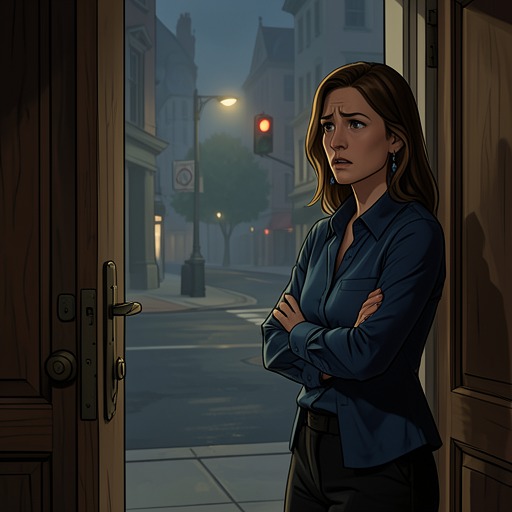
On the morning of the collision, Laurie is driving Jacob to an interview at a private school in Natick. Their silence in the car reflects the damaged trust between them. Since the family’s return from Jamaica, Laurie has been quiet and withdrawn; Jacob gives her space, while understanding that he has lost her trust even if he has not lost her love. They exchange only a few strained words on Route 128, then fall silent as they join the Massachusetts Turnpike traffic. The school interview is another likely humiliation for Jacob, but neither passenger speaks openly about the strain between them.
The collision is presented with two kinds of knowledge kept sharply apart. In the courtroom, Andrew reports what Lieutenant Paul Duffy told him: there were no other cars involved, and other drivers saw Laurie steer toward the bridge abutment without braking or swerving away. They reported that she accelerated toward it. Their first explanation was that the driver must have lost consciousness or suffered a heart attack. The witness account establishes the deliberate-seeming course of the vehicle, but the novel does not provide a separate explanation from Laurie for why she drove into the barrier.
The Drive and Collision
Andrew was not in the minivan. He nevertheless reconstructs the final ride in detail, returning in thought to a scene he says he relives every day and dreams about at night. In his imagined account, Jacob is stretched out in the middle row, as he habitually was, and is not wearing his seat belt. Laurie would ordinarily have told him to buckle up, but that morning she does not. The small omission becomes part of the awful sequence Andrew cannot stop replaying.
As the drive continues, Laurie begins to cry and grips the steering wheel. Jacob does not notice; his attention is fixed on the road ahead. Laurie signals, moves into the less crowded right lane, and accelerates through the high seventies and eighties. She unclips her seat belt and passes it back over her shoulder. When the minivan exceeds 85 miles per hour, Jacob remarks that she is going fast. Her answer is an expression of love for him and for Andrew, not an explanation of her actions. Jacob reaches for the belt only when he realizes that something is seriously wrong, but there is no longer time to fasten it.
The minivan keeps accelerating as it enters the breakdown lane and descends a slight hill, reaching the upper nineties. Jacob calls for Laurie to stop. She drives directly at a molded-concrete abutment set into the hillside. A Jersey barrier is meant to guide a vehicle away from a direct impact, but the minivan approaches too fast and at too direct an angle. The barrier lifts its right-side wheels; the van skitters up the wall, vaults over the barrier, and rolls almost upside down. Laurie retains her grip on the steering wheel as the vehicle loses control and overturns.
Andrew’s reconstruction ends at the instant the van is airborne. He imagines Jacob thinking of his father and understanding, at last, that Andrew loved him regardless of what he might have done. That imagined recognition is not evidence of Jacob’s actual thoughts; it is the grieving father’s effort to place his love inside the final seconds of a death he did not see. The narration makes the limit explicit even as it crosses it: Andrew knows he was absent, but cannot keep himself from picturing what happened.
Death, Testimony, and Aftermath
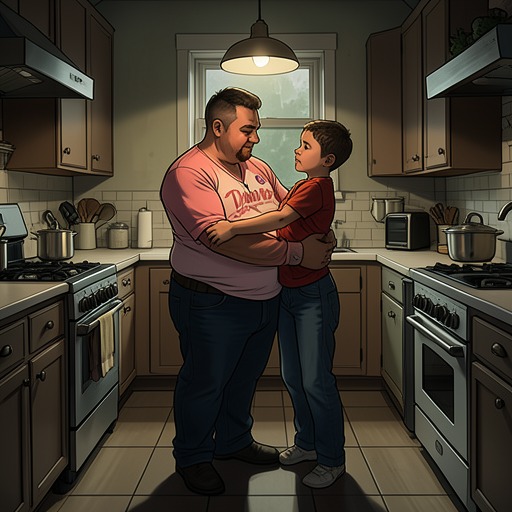
The news arrives at Andrew’s door around nine in the morning. Paul Duffy asks to come in and sit down, but Andrew insists that he tell him there. Duffy says there has been an accident on the turnpike: Laurie and Jacob were in the car, the vehicle left the road, Jacob is dead, and Laurie is badly hurt but expected to survive. At the later testimony, Andrew’s account breaks off after he reports the news. When asked whether anything else happened, he says he is all right, but his pauses register the difficulty of turning that disclosure into a courtroom narrative.
The prosecutor, Neal Logiudice, states directly that Laurie murdered Jacob. Andrew does not respond. The testimony thus places a legal interpretation beside the bare facts Duffy conveyed and the observed acceleration, but does not dissolve the uncertainty of motive. The crash is presented as a death caused by Laurie’s driving; the courtroom accusation cannot make Andrew’s loss intelligible or give the reader access to Laurie’s private reasoning.
The end of the family’s legal ordeal had once seemed like a decisive new beginning. Andrew reflects that Jacob’s exoneration was one of the few days that mattered in a life otherwise made up of repetitive, forgettable days, but that the ordinary days continued afterward. “The End” was not the end: vindication did not return the family to normal, and the crash turns the hoped-for future into another irreparable before-and-after. Andrew’s account leaves the reader with no recovery or reconciliation to follow, only the father’s continuing return to the last moments of Jacob’s life and the love he imagines his son recognizing as the vehicle strikes the wall.