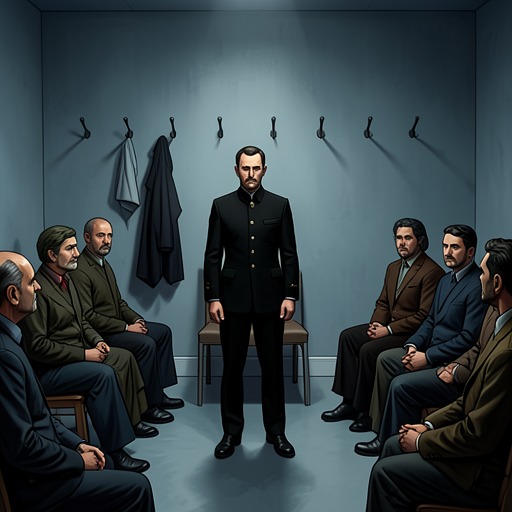
Malice aforethought
Defending JacobMalice aforethought is presented in Neal Logiudice’s closing argument as the conscious decision to kill that constitutes the mental element of first-degree murder. His central contention is that the decision need not be prolonged: intention can form in a single instant, making the distinction between a fleeting temper and murder, in his account, a matter of what the defendant chose to do in that moment.
Meaning in the Argument
Logiudice defines malice aforethought as the conscious decision to kill, whether the intention forms quickly or remains in the murderer’s mind only briefly. The phrase “aforethought” therefore does not, in his explanation, require extended planning. He presents the doctrine as covering an intention formed in the same second as the act, and uses that interpretation to argue that a momentary decision can still meet the standard for first-degree murder.
The Closing Argument’s Illustration
To make the legal principle immediate, Logiudice describes the decision to take a life as something that can take only a second. He lets the phrase hang, snaps his fingers, and says, “One split second and”—then “snap.” The gesture compresses the argument into a physical instant: losing one’s temper, forming an intention, and committing murder are presented as developments that may occur within the same brief interval.
Application to Jacob Barber
Logiudice applies the doctrine to Jacob Barber by contrasting the defendant’s advantages—a good family, good grades, and a beautiful home in a wealthy suburb—with what he characterizes as Jacob’s lethal temper. He depicts the alleged provocation as ordinary school teasing and rough treatment, not an exceptional assault, and argues that Jacob was pushed only a little too far before his temper “snapped.” The concept thus anchors the prosecution’s account of the killing: a rapid, conscious decision, he maintains, could constitute malice aforethought and support a first-degree murder charge.