The Illusion of a Vacation Paradise
Defending JacobThe Illusion of a Vacation Paradise is the Barber family’s effort to step outside the fear and scrutiny that have shaped their lives by retreating to Waves, a resort in Jamaica. Its promise works, for a time: the family feels lighter, shares routines, and can imagine itself as ordinary among other vacationers. But the escape depends on a deliberately manufactured dreamworld, and the family’s brief happiness ends when a girl disappears.
The Promise of Escape
The Barbers choose Waves on the night they decide they need to be somewhere else. None of the three has been to Jamaica or even heard of the resort before. They rely entirely on its website, whose polished images present a fantasy of tropical ease: bright hotel buildings designed to suggest a Caribbean village, interconnected pools with fountains and swim-up bars, and a beach and small cay framed by a seemingly endless blue horizon. The resort appears less like a particular place than a world arranged to keep ordinary concerns at bay.
That artificiality is part of its appeal. The family recognizes that the pictures are conspicuously idealized, yet their obvious unreality makes them irresistible. They do not want a destination that might invite thought or attention to the outside world; they want somewhere that seems to offer fun without interruption. Waves promises not merely a change of scenery but temporary release from the selves formed by the previous year.
The decision itself begins to lighten their mood. Booking a long, two-week stay provides the first sense of relief; leaving Boston and arriving in the warmth of Montego Bay deepen it. The narrator acknowledges that their troubles remain real, but distinguishes their reality from the temporary emotional truth of the holiday: the family has endured a prolonged strain and feels entitled to rest. Paradise is less a factual description of Waves than the name they give to a respite that, for a while, genuinely works.
A Manufactured Holiday World
At the resort, the Barbers encounter a self-contained performance of vacation. On arrival, a driver holding a Waves guest list greets them with repeated island-style phrases, and the vacationers, including the Barbers, join in. At check-in, they exchange money for the resort’s own silver tokens, called sand dollars; a staff member in a pith helmet serves rum punch. The details turn the resort into a small, staged world with its own currency, rituals, and expected good humor.
The family willingly takes part. The narrator’s account of the first days grows indistinct, and the family settles into a pattern of beach mornings, pool afternoons, evening entertainment, and abundant buffet meals. The performances invite guests to cheer, dance, and display a conspicuous kind of sociable enjoyment. Laurie and the narrator spend sand dollars on drinks, while Jacob tries beer for the first time and calls it good, though he does not finish it. The holiday is not simply scenery: it offers a schedule of shared activities in place of the anxious routines that have governed their lives.
The family’s laughter and playfulness carry a particular weight because they have been warned against showing happiness in public. Jonathan has instructed them not to laugh or smile lest observers think they fail to take the situation seriously. At Waves, the narrator says, the accumulated strain loosens; they feel relieved and even exhilarated. Yet he does not claim that the underlying circumstances have changed. Ben Rifkin is still dead, Jacob has been accused, and the family remains widely suspected of wrongdoing. Their happiness is real, but it exists alongside facts the resort cannot undo.
The Family at Sunset
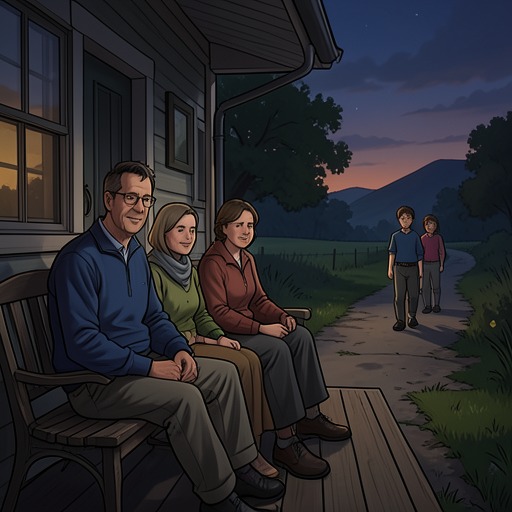
The most meaningful routine is quieter than the resort’s staged entertainment. Each evening, the three Barbers carry beers and drag three beach chairs to the water’s edge, where they sit with their feet in the water and watch the sunset. The setting gradually empties as other guests leave to prepare for dinner; lifeguards stack the chairs and depart, while the remaining family looks toward the bay. The ritual gives the holiday a recurring image of togetherness distinct from its busy, organized amusements.
Hope joins the family for one sunset, sitting beside Laurie, but generally the scene belongs to Laurie, Jacob, and the narrator. Around them are children and parents, and the Barbers seem, in the narrator’s retrospective vision, to blend into the ordinary crowd of families and holidaymakers. He wants to freeze the story at this point: the three of them appear normal, like everyone else, which he says is what he had always wanted. The resort’s fantasy briefly supplies not only distance from home but an image of belonging.
The Disappearance and the Limits of Paradise
The account’s form overturns the wish to preserve that sunset scene. The narrative returns from the family’s recollection to the grand-jury room, where Neal Logiudice presses the witness to continue. The witness’s answer is stark: the girl disappeared. The shift from the remembered family tableau to the terse disclosure makes the holiday’s apparent safety feel provisional. Paradise does not conclude the story; it becomes the setting from which the next crisis emerges.
The episode’s central contrast is therefore not between a false holiday and false happiness. The family’s relief is described as genuine, even as it is built on a temporary suspension of attention to troubles that remain. Waves can offer routines, pleasure, and a momentary sense of normality, but it cannot make the Barbers’ circumstances disappear. The disappearing girl decisively breaks the frame they had hoped to hold: the imagined refuge becomes part of the account of what happened next.