
From Abused Refugee to Night Watchman
Der goldene HandschuhThis thread traces Fiete’s childhood and flight, brief experiences of care, repeated abuse, and fragile attempts to build a more ordinary adult life.
increasing Bearing strength in each event
 decreasing
Bearing strength in each eventdecreasingFlight from East Germany
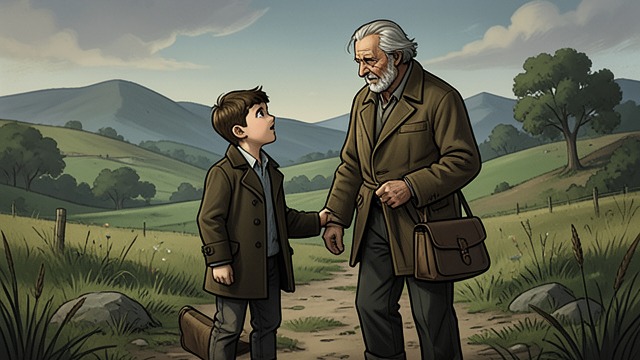
Flight from East Germany
Leaving home
At sixteen, Fiete escapes East Germany and arrives in the West with little protection and few prospects. His flight is a bid for a different life, but it places a vulnerable boy at the mercy of adults who control his shelter and work.
The first refuge
For a time, he finds work and accommodation in the countryside. The apparent chance to begin again proves unstable: the people responsible for him can exploit his dependence, and his hopes of safety are repeatedly disappointed.
A formative pattern
The early years establish a recurring pattern in Fiete’s life: he longs for care, encounters domination, and has few resources for understanding or resisting it. The novel presents this history as part of his formation without treating it as an excuse for the violence he later commits.
Two Years of Kindness
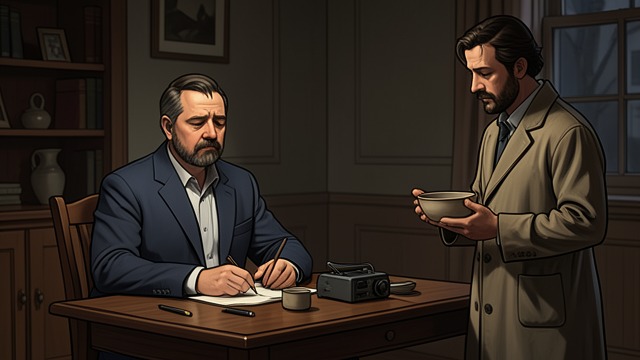
Two Years of Kindness
A rare safe household
After leaving East Germany, Fiete spends two years at Brockhöfe with Bauer Geerdes, who accepts him as a son. For the first time, Fiete feels that someone takes an interest in him and meets him with patience and affection.
An idealized memory
Fiete repeatedly returns to this brief period in his imagination, wishing he could set a time machine to make its happiness begin again. The memory becomes a measure against which later hardship seems even more unbearable.
Care without a cure
The bond shows that Fiete can respond to gentleness and that his life was not uniformly without kindness. Yet the novel does not suggest that a single loving experience can repair the damage of abuse or determine what he will do. The memory persists as both comfort and lost possibility.
The Frerk Farm Ordeal
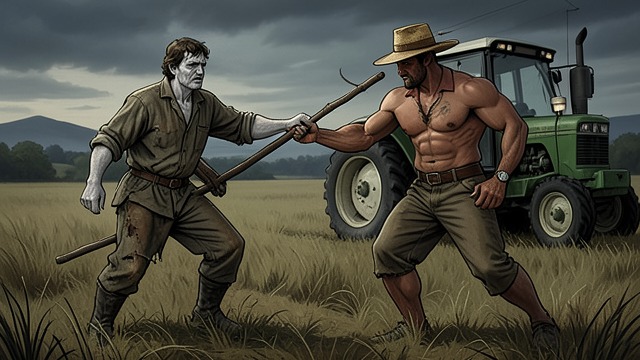
The Frerk Farm Ordeal
A violent employer
Fiete finds agricultural work with Bauer Frerk, but the arrangement becomes a sustained ordeal. Frerk beats him without needing a clear reason, and the farm becomes a place where work and shelter are inseparable from fear.
A failed escape
Fiete escapes on an old bicycle, only to be caught by police and returned to the man abusing him. The authorities’ intervention does not protect him; it places him back within Frerk’s reach and makes his first attempt at freedom feel futile.
The second flight
Fiete tries again, this time racing toward a wood where Frerk’s tractor cannot follow. The tractor strikes him before he reaches safety, leaving him gravely injured and without his teeth. He survives only because he is found many hours later and taken to Ginsterhof Hospital.
Abuse and the Apprentice Dormitory
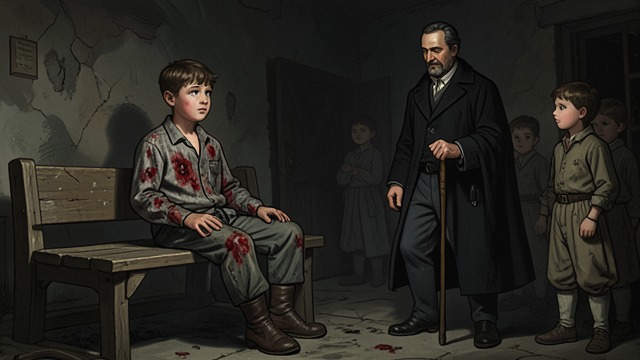
Abuse and the Apprentice Dormitory
A blocked future
Fiete hopes to become a motor mechanic, but he struggles with the theoretical work and is redirected into a bricklayer apprenticeship. He is held in the apprentice dormitory, where his limited choices deepen his sense of confinement.
Illness and punishment
A severe skin reaction to cement covers his body with painful sores. Rather than report his condition, Fiete endures it until a supervisor punishes him with a cane in front of the other boys.
A failed attempt to die
At the end of his endurance, Fiete tries to hang himself in a tool shed. His brother Siggi finds and saves him. The episode foreshadows both Fiete’s capacity for despair and the continuing importance of a family bond that can briefly interrupt his isolation.
The Violent Years in Hamburg
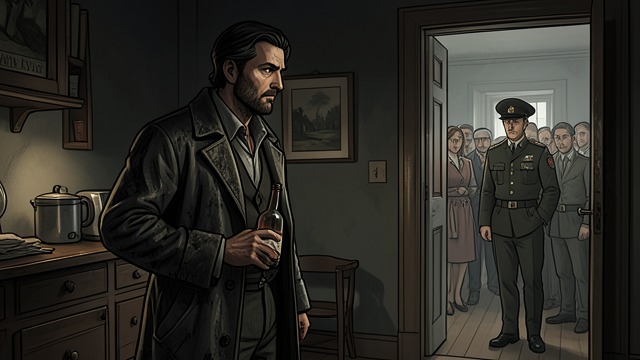
The Violent Years in Hamburg
Repeated injury and unstable work
In Hamburg, Fiete survives through physically demanding jobs and life in the city’s poorest districts. Chronic illness, injuries, and his disfigured appearance compound his vulnerability, while drinking increasingly shapes how he spends his time.
A brief institutional foothold
The night-watchman job at Shell offers a uniform, a fixed workplace, and a sense of social legitimacy. Fiete imagines that ordinary routines will separate him from the men and women among whom he has spent years.
The return to isolation
The new job cannot withstand his drinking, compulsive sexual behavior, and resentment. Failed relationships and self-imposed plans that collapse under pressure return him to the tavern world. The sequence matters because each apparent opening to a different life becomes another fragile hope rather than a durable change.
1951, at age sixteen
1952, at Brockhöfe
After Fiete's arrival in the West, before his move to Hamburg
During Fiete’s early adolescence
After his arrival in Hamburg and into the mid-1970s
