
Alcohol and the Erosion of Self
Der goldene HandschuhThis thread traces alcohol from a shared routine and apparent refuge into a force that erodes judgment, relationships, work, and bodily and mental stability.
increasing Bearing strength in each event
 decreasing
Bearing strength in each eventdecreasingThe tavern’s ordinary intoxication
The tavern’s ordinary intoxication
Drinking as social routine
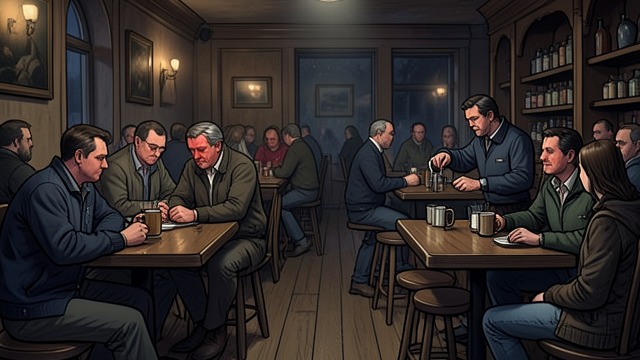
At The Golden Glove Tavern, drinking structures the day as much as work or sleep does. People remain at the counter for hours, and familiar mixtures and songs give the crowded room a repetitive rhythm that can feel like belonging.
The routine also conceals deterioration. Some customers sleep for long stretches in their seats, neglect their bodies, and become so impaired that others may mistake death for ordinary drunkenness.
Relief with a cost
Alcohol can quiet loneliness for a moment, but it also blurs thought and deepens the conditions from which people seek relief. Fiete’s word for the resulting mental fog, Schmiersuff, captures a state in which concentration and self-direction become harder to sustain.
The tavern is neither an uncomplicated refuge nor a simple symbol of vice. It offers a place among other people while making visible how repetitive drinking can consume the time, health, and choices of those who depend on it.
Control through the bottle
Control through the bottle
Alcohol as ration and leverage
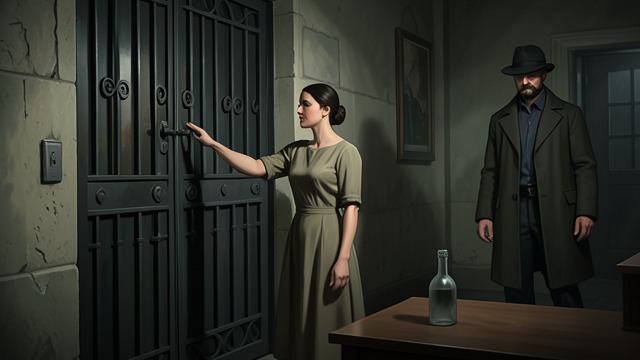
After Gerda moves into Fiete’s flat, he takes her identification and controls access to drink. He presents this restriction as protection from temptation, but the arrangement also gives him power over her movement and daily choices.
Gerda’s dependence and Fiete’s own drinking coexist uneasily. She tries to measure and conceal what she drinks, while he decides when she has earned a glass and treats obedience as evidence of gratitude.
The contradiction of mastery
Fiete imagines that he can discipline Gerda and remake her body and habits, yet his own need for alcohol remains constant. He cannot reliably wait, stop, or tolerate the discomfort of a day organized without drinking.
This contradiction sharpens the book’s account of domination. The drink is both the instrument by which Fiete exerts control and the dependency that compromises his claim to command himself.
A fragile experiment in normality
A fragile experiment in normality
Work creates structure
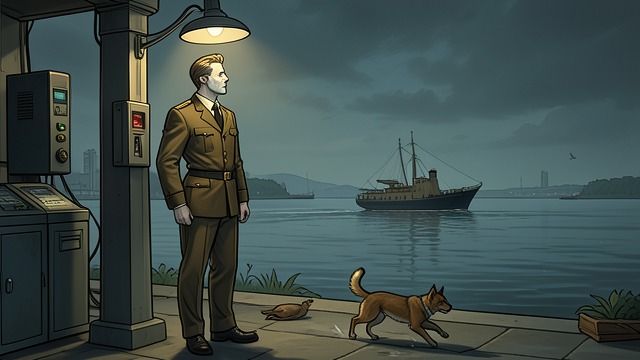
When Fiete becomes a night guard at Shell in City Nord, he imagines that the job will move him away from the tavern and the disreputable world associated with it. Its schedule initially reduces his drinking and offers a routine in which he can picture himself as a respectable worker.
He tries to make use of his free time in ordinary ways, including visits to the harbor and the zoo. These outings bring him into contact with experiences that sobriety had long obscured, while also exposing him to embarrassment and disappointment.
The return of compulsion
A celebration at work introduces drinking back into the night shift. Fiete tells himself it will be a single exception, but boredom and the available alcohol soon defeat that promise.
The episode shows how narrow his new stability is. Employment briefly changes his environment, yet it does not resolve the dependence or the underlying loneliness that made the tavern and alcohol so compelling.
Intoxication and collapse
Intoxication and collapse
Compulsion overwhelms intention
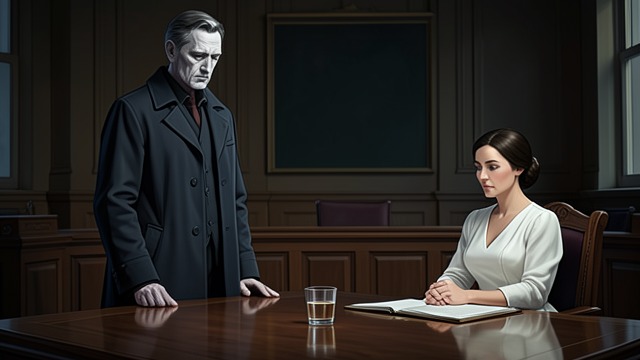
Fiete repeatedly promises himself moderation, yet he drinks until he is unable to manage his work, relationships, or impulses reliably. His dependence becomes inseparable from the routines through which he seeks sex, companionship, and temporary relief.
As his self-control weakens, his interactions with women grow more coercive and dangerous. Alcohol does not erase the harm he causes; it contributes to the deterioration in judgment that makes his escalating violence harder to contain.
The aftermath of the pattern
After the killings are discovered, the trial and subsequent psychiatric assessments describe severe alcohol misuse and its physical and psychological effects. The clinical record depicts a man whose capacity and personality have deteriorated over years, without suggesting that the damage can undo the deaths.
The story’s final movement therefore treats intoxication as both a lived dependency and a matter of legal and medical scrutiny. It helps explain the conditions of collapse while leaving the victims’ deaths and the question of responsibility in view.
During the opening nights at The Golden Glove Tavern
During Gerda’s first days in Fiete’s flat
After Fiete begins night work at Shell
As Fiete’s relationships and violence deteriorate
