
Fiete Honka’s Descent into Murder
Der goldene HandschuhThis thread traces how Fiete Honka’s early abuse, longing for an ordinary life, and dependence on alcohol culminate in serial murder and institutional confinement.
increasing Bearing strength in each event
 decreasing
Bearing strength in each eventdecreasingA Childhood of Violence

A Childhood of Violence
A damaged beginning
Fiete grows up marked by abuse, deprivation, and physical difference. His face, speech, and body become sources of shame, while the people who might have protected him instead make him feel unwanted and unsafe.
The novel presents his later brutality without pretending it is inevitable or excusable. His childhood helps explain the injuries he carries into adulthood, but the violence he commits remains his responsibility.
A brief refuge
After fleeing East Germany, Fiete is taken in by Bauer Geerdes at Brockhöfe. For two years, the farmer offers him something he has rarely known: patience, care, and the sense that another person is genuinely interested in his life.
Fiete later treats this interval as a lost paradise. His belief that another benefactor or angel might appear becomes a fragile source of hope, but it also leaves him longing for rescue rather than building a stable life of his own.
The Frerk Farm Ordeal
The Frerk Farm Ordeal
Captivity on the farm
Fiete finds work with Bauer Frerk in Billwerder, only to discover that the farmer repeatedly beats and humiliates him. The farm becomes a place of confinement, hunger, and constant fear rather than a path to security.
When Fiete first escapes, police intercept him and return him to the man abusing him. Their intervention, meant to restore order, instead delivers him back into danger and deepens his conviction that escape may be impossible.
The second escape
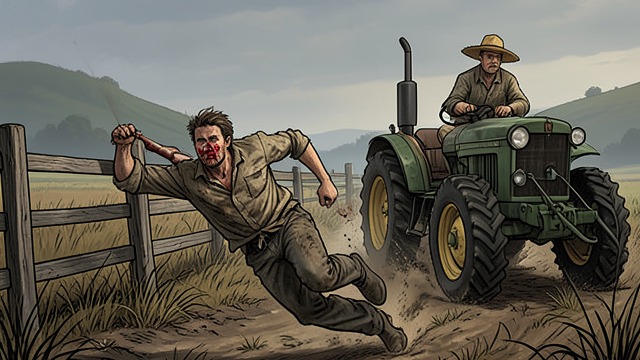
Fiete eventually breaks free again and rides toward the woods, pursued by Bauer Frerk on a tractor. The farmer rams his bicycle, throwing Fiete against a fence and leaving him gravely injured in the mud.
He survives only because he is found by chance many hours later and taken to Ginsterhof Hospital. The collision leaves lasting damage, including the loss of his upper teeth, while reinforcing a pattern in which desperate attempts at self-preservation end in further injury.
The Failed Promise of Normality
The Failed Promise of Normality
A new occupation
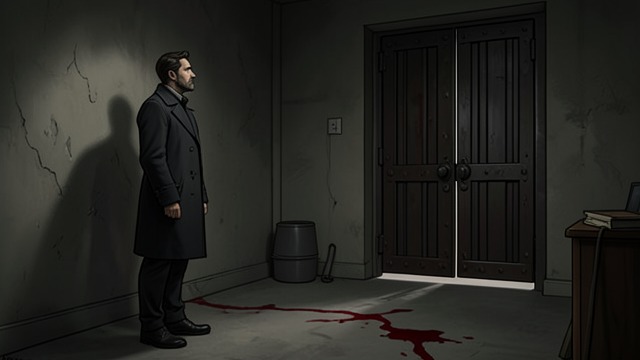
At thirty-eight, Fiete obtains a night-watchman job with Shell in City Nord. He imagines the post as a decisive break from the barroom world: respectable work, disciplined routines, and a chance to become an ordinary person.
For a short time, he tries to honor that hope. He plans modest outings, makes purchases for a new wardrobe, and ventures to the harbor and the zoo, discovering how much of the city he has never seen clearly while drunk.
Relapse and rejection
The new life proves fragile. Drinking during a night shift begins with a social celebration and grows into a renewed compulsion, while Fiete’s fixation on Helga Denningsen turns his desire for companionship into entitlement.
When he assaults Helga, she flees and leaves her job. Her rejection destroys the future Fiete had invented around her, and his growing isolation feeds the resentment and fantasies that he can no longer control.
Murder and Concealment
Murder and Concealment
A private world of violence
Fiete’s worsening dependence on alcohol and compulsive sexual behavior narrow his life to the apartment, the tavern, and a series of increasingly degrading relationships. He imagines domination as a way to reverse his own powerlessness, but his fantasies become practical threats to the women he brings home.
The novel traces four murders across several years. Gertraud Bräuer is the first victim; Anna Beuschel, Frida Roblick, and Ruth Schuld follow. Their deaths emerge from Fiete’s violence and control, not from any fault of the women he targets.
A home turned into a hiding place
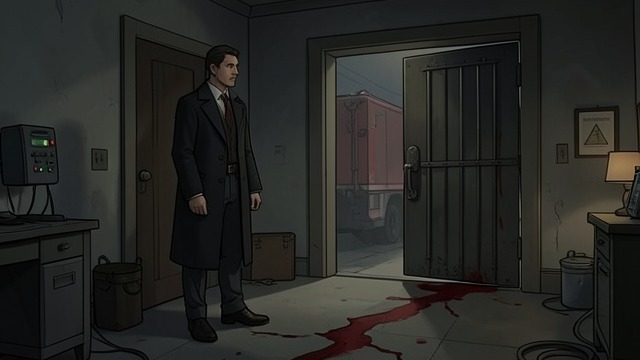
After killing his victims, Fiete conceals their remains in and around his residence. He continues ordinary routines amid the bodies, while the odors and the hidden evidence accumulate behind walls and in storage spaces.
The concealment does not restore control; it marks the final collapse of the life he had hoped to improve. On July 17, 1975, firefighters discover human remains while responding to a fire at the building, and suspicion quickly turns to Fiete.
Trial and Institutional Afterlife
Trial and Institutional Afterlife
Confession and judgment
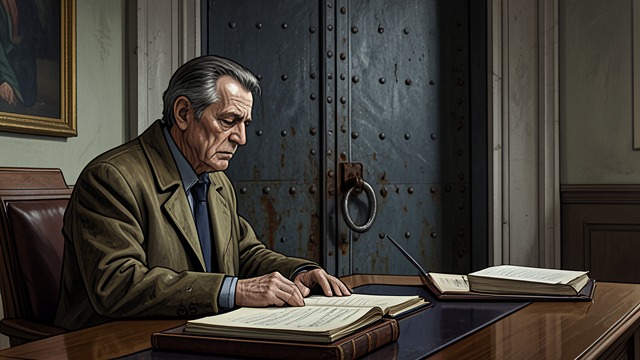
After days of silence, Fiete confesses to the murders on July 29, 1975. At trial, Rolf Bossi emphasizes his severe alcoholism, damaged development, and diminished responsibility, presenting his crimes as the culmination of a destructive life history.
On December 20, 1976, the court convicts Fiete of murder in one case and manslaughter in three, sentencing him to fifteen years and ordering psychiatric confinement. The judgment recognizes impairment while still naming the killings as crimes.
Confinement and decline
Fiete is transferred to Ochsenzoll General Hospital. Reports describe a man who remains guarded and emotionally disengaged, shows little critical understanding of his crimes, and is considered dangerous if returned to alcohol and his former circumstances.
In 1993, under the name Peter Jensen, he moves to a care home in Scharbeutz. His health and vitality continue to decline; after a later return to hospital, he dies on October 19, 1998. His final years bring neither public reintegration nor a meaningful reckoning with the harm he caused.
Childhood and adolescence, before his flight from East Germany
After Fiete’s flight from East Germany, in the early 1950s
June 1974 and the months that follow
From late 1970 through the first half of 1975
July 1975 to October 1998
