
Gerda Voss’s Narrowing World
Der goldene HandschuhThis thread follows Gerda Voss from homelessness and a brief search for warmth into captivity, exploitation, and eventual disappearance.
increasing Bearing strength in each event
 decreasing
Bearing strength in each eventdecreasingA Life on the Margins

A Life on the Margins
Cold and homelessness
Gerda arrives at The Golden Glove Tavern in winter, physically depleted and without money or secure shelter. Her worn clothing, failing teeth, and dependence on alcohol make her seem almost invisible to the people around her.
She carries a past of hardship and remembers her daughter Rosi, but the two have been estranged for years. Gerda’s account of her daughter’s life is affectionate and hopeful, even though she does not know where Rosi is.
An offer of shelter
Fiete buys Gerda a drink and invites her to his apartment. The invitation appears to offer warmth and refuge on a freezing night, and she accepts because the alternatives are few.
The walk through the cold to his home already shows the imbalance between them. Fiete thinks chiefly about his own plans, while Gerda struggles to keep moving and carries her belongings without help.
Shelter Becomes Captivity
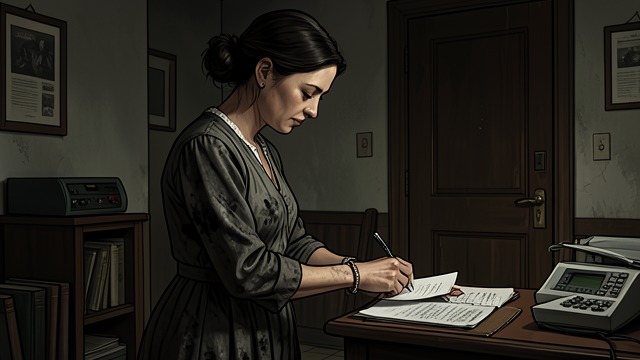
Shelter Becomes Captivity
A room without freedom
Fiete tells Gerda she can stay, then takes her identification papers and locks her inside while he goes to work. What begins as temporary shelter becomes a system of confinement in which he claims authority over her movements and choices.
He insists that she has no independent will and treats domestic work as payment for food and lodging. The apartment’s filth and putrid smell form the environment in which this control takes hold.
Written submission
Fiete makes Gerda sign a declaration stating that she is grateful, will accept whatever he does, and will bring her daughter Rosi to him. Gerda signs while exhausted, hungry, and dependent on him for shelter and alcohol.
The document gives Fiete a prop with which to rationalize domination, but it does not make Gerda’s situation freely chosen. Her signature records how thoroughly her options have been constrained.
The Cost of Appeasement

The Cost of Appeasement
Labor as survival
Gerda cleans Fiete’s apartment and later works at a fish factory, surrendering her wages to him. In return, she may receive small rewards such as cigarettes or sweets, while access to drink and freedom remain subject to his permission.
Her efforts briefly alter the household. Fiete is moved by the clean rooms and by a meal she prepares for his brother, but his gratitude does not undo the underlying imbalance of power.
Abuse and attrition
Fiete’s control extends to Gerda’s appearance, food, alcohol, and body. He breaks her dentures during an assault, then uses her vulnerability to justify further restrictions and humiliation.
Gerda adapts by watching his moods and rationing her own expectations. She prays for a future in which the state might provide warmth and food, but survival in the present consumes nearly all of her energy.
A Brief Return to Company

A Brief Return to Company
The meal with Siggi
Gerda cooks a chicken stew for Fiete’s brother, Siggi. For the evening, the three share food, jokes, and a rare stretch of unforced company in an apartment usually governed by hunger and fear.
Siggi praises Gerda’s cooking and recognizes the difference her cleaning has made. His warmth suggests that ordinary kindness is still possible, although his presence cannot change Fiete’s authority over the household.
Hope without protection
The meal gives Gerda a moment of relief. She interprets Fiete’s affectionate family bond and his brother’s kindness as signs that Fiete may not be entirely beyond reach.
That hope is short-lived. Once the visit ends, Gerda is again dependent on Fiete, and her brief experience of being treated as a person cannot secure her safety or independence.
Flight and Disappearance

Flight and Disappearance
A household unraveling
After Fiete suffers another work accident and spends six weeks in hospital, Gerda begins visiting Elbschlosskeller. She accepts money from an older man, and the apartment gradually turns into a place where other men come to her for sex.
Her circumstances deteriorate rather than improve. The work, alcohol, and disorder become difficult to manage, while she increasingly doubts she can endure the situation until she qualifies for state support.
An uncertain escape
A visiting man from Hanover offers Gerda the possibility of leaving with him. She asks whether she may go, and he agrees; afterward, her trail disappears from the narrative.
Her departure is an escape from Fiete’s immediate control, but the novel gives no secure account of what becomes of her. The unresolved ending preserves the precariousness of a life in which even leaving does not guarantee safety.
Winter 1974, before Gerda meets Fiete
The days immediately after Gerda moves into Fiete’s apartment
During Gerda’s first weeks in Fiete’s apartment
After Gerda has settled into the apartment, on a Wednesday evening
After Fiete is hospitalized for six weeks
